What this covers
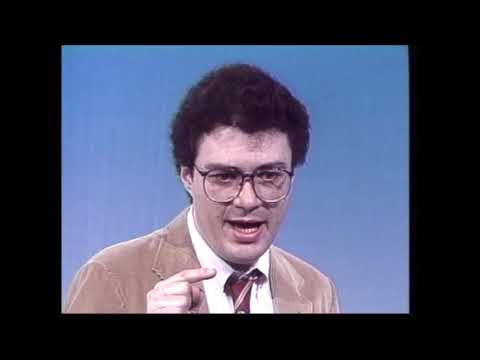
Michael Sugrue's lecture on Kant's moral philosophy treats it as a response to a specific problem: how to keep Christian belief and divine justice intact after Newtonian mechanics, without giving up rationality. The lecturer frames David Hume as the provocation. Hume grounds moral judgment in feelings of approval toward what is useful or agreeable, and the lecture says Kant was so troubled by the resulting moral relativism that he spent eleven years working through Hume. Kant's answer locates a action's moral status in the agent's intention, the state of the will, rather than in its consequences.
The middle of the lecture lays out the machinery. Kant splits the cosmos into a phenomenal world of space, time, and strict causation, where Isaac Newton's f = ma holds, and a noumenal world of freedom. In a wholly determined universe, praise and blame make no sense, so moral agency needs the second realm. The categorical imperative says to act only on maxims one could will as universal law. The lecturer reads every moral failure, from murder to tax evasion, as the same move: endorsing a rule for everyone else while exempting oneself. Heteronomy is acting from passion and desire, which is unfree. Acting from rational law is autonomy, so freedom means making and obeying one's own law.
The lecture then turns outward. Nations count as moral agents, so they must leave the state of nature between them through international law, an idea the lecturer traces from Kant's "league of nations" to Woodrow Wilson. Kant is set against Machiavelli's preference for seeming good over being good, and against Hume's conservative, risk-averse politics. He is aligned with Plato, for whom the ordered soul and the ordered city mirror each other. The lecturer also argues that Kant's thinking is already familiar. Kindergarten teachers ask "what if everyone did that?", and the legal distinction between murder and accident reflects the same emphasis on intent.
Kant synthesizes Christian moral theology with Enlightenment rationalism by grounding universal moral obligations in pure reason rather than sentiment, establishing the categorical imperative as a binding law for all rational agents that transcends Hume's subjective, sentiment-based ethics.
- Kant rejects Hume's reduction of morality to subjective feeling and utility by rooting moral judgment in rational intention and universal law
- The categorical imperative—act only on maxims you could will as universal law—provides a quasi-mathematical moral algorithm independent of individual desire or circumstance
- Kant's metaphysical split between the phenomenal (causal, determined) and noumenal (free, rational) realms makes moral agency and responsibility possible where Humean determinism makes them incoherent
This asset isn't compiled yet
You're seeing its claims, ranked. Compile it to build the argument threads, weight them, and check each claim against your library — the full view.
Kant's moral theory is extraordinarily complex and difficult to grasp on first reading, yet it also expresses a simple truth that is taught to and understood by six-year-olds in kindergarten when teachers ask 'what if everyone did that?' when a child behaves selfishly.
“what's remarkable about this treatment of morals is a the fact that it is extremely difficult to grasp the first time you look at this when i teach this to my college class i say read it again nobody understands kant the first time it's not my fault i'm doing my best with you and then after they read it again i tell them now let me give you the big scoop on this you're being taught here a something you already know and everybody already knows it and b we teach it to six-year-olds all the time in other words this is not only a profoundly complex and rich intellectual system but it's also the kind of thing that any six-year-old can understand in fact we teach it in kindergarten every day”
Kant's primary goal is to reconcile Christian religious belief and the existence of divine justice with the intellectually serious demands of Western culture after the development of Newtonian mechanics, without requiring the abdication of rationality.
“kant is trying to create a rapprochement between christian religious belief and the intellectual state of western culture once it had developed newtonian mechanics and its social and political and moral concomitants so kant is trying to reconcile his faith in the god of the bible his belief in heaven and ultimate moral justice and he's trying to do it in an intellectually serious and sophisticated way one that doesn't pound on the desk and demand the abdication of your rationality but rather is the high point in perfection of rationality”
All evil acts and moral failures, from murder to tax evasion, follow the same pattern: the agent recognizes a universal moral rule (e.g., 'no one should murder') but makes an exception for themselves, wanting universal application of the law to everyone else while exempting themselves.
“when we do something wrong let's say uh let's say a mafia hitman is going to murder someone for money this mafia hit man is going to do something that implicitly he recognizes as being evil he recognizes that there's a universal moral rule that says i couldn't wish that everybody should commit murder whenever they want to no i agree that i don't want everybody to murder everyone else i couldn't wish that that should become a universal law of nature that people should constantly be murdering each other i want to live in a world where everybody else is really good where they're all real nice to me and where none of them are going to murder me on the other hand although i recognize the universality of this moral law i want there to be one exception me”
In Kant's system, humans are elevated above the rest of nature and share something in common with God and the angels—the capacity for rational moral agency—rather than being mere mechanical automata.
“in khan's system we are elevated above the rest of nature and we share something in common with god and the angels an interesting sidelight to kant's ethical theory is that it's connected to kant's political theory”
Moral agency and moral personhood adhere not just to individual persons but also to nations as collective rational agents, obligating all nations to eliminate the state of nature between them by creating international law, just as individuals must create civil law.
“kant wants to allow for the possibility that moral agency that moral personhood and by implication the obligation to obey the categorical imperative the universal moral duty that this obligation adheres not just in individuals like this person and this person and this person it adheres in god and the angels and also in nations nations are moral agents for kant and this is very important because this means that not only do individuals have an obligation to get rid of the dubious and contingent liberties of the savage in the state of nature and form lawful freedom by creating a government out of the state of nature this is also since it is demanded by the categorical imperative and nations are moral subjects who are obligated to obey the categorical imperative all the nations of the world is one of khan's great discoveries and arguments are obligated to eliminate the state of nature between nations”
We teach Kantian moral principles to children because Kant's conception of right and wrong is profoundly built into our understanding of rationality, freedom, and virtue, and because our entire culture is saturated with Judeo-Christian moral judgments that Kant's system articulates rationally.
“and i think we do believe it a because kant's conception of right and wrong is profoundly built into our conception of rationality and freedom and virtue and also because he's one of the greatest interpreters one of the greatest athenian interpreters of the intellectual tradition that comes out of jerusalem and that one way or another our culture is saturated in the moral judgments that come from the judeo-christian tradition”
Autonomy (from Greek autonomous, 'making laws for oneself') is freedom conceived as regulated freedom under rational law, not as arbitrary liberty; freedom is the activity of creating a moral law that one obeys.
“remember autonomy comes from the greek words autonomous making laws for oneself that's kant's conception of freedom it's an idea derived from rousseau freedom is not the arbitrary liberties of the savage in the state of nature for kant freedom is free is regulated freedom under law freedom is the activity of making a moral law that you yourself obey”
The state of nature can be understood metaphorically as the state of pure heteronomy, pure animality, and pure passion before human beings discover their potential for rational, free, autonomous behavior.
“the state of nature can be viewed metaphorically as the state of pure heteronomy of pure animality of pure passion pushing around human beings when they haven't discovered in some respects their own potential for rational free autonomous behavior”
Philosophers' moral theories from two to three hundred years ago, though seemingly abstract and removed from practical life, can have profound and pervasive influence on actual patterns of thought and the everyday language we use to formulate our thinking, as demonstrated by Kant's influence on 20th century political institutions.
“we are often inclined to suggest that mere moral theory that the mere cogitations of philosophers two and three hundred years ago have little or no influence on everyday life in fact that's not the case in some circumstances there are some philosophers whose influence has been not only profound but pervasive they have influenced the patterns of our thought and the everyday words that we use to formulate our thoughts and in the case of kant his ideas about political philosophy his ideas about the connection between morality and politics did in fact influence the highest reaches of practical politics in this century”
David Hume's moral theory holds that morally praiseworthy actions are those which are agreeable to ourselves or to others, or useful to ourselves or to others, and this theory grounds moral judgment in subjective feelings of approbation derived from utility or pleasure.
“ultimately the foundation of our moral judgments in hume's view is our feelings of approbation that come from the utility or pleasure we derive from the behavior of ourselves or other people”
Kant is one of the first thinkers to formulate the idea that rationality, freedom, and moral virtue demand the creation of what he called a 'league of nations,' which became the philosophical foundation for Woodrow Wilson's League of Nations proposal after World War I.
“kant is one of the first people to formulate the idea that rationality that freedom that moral virtue demand the creation of what he called the league of nations the league of nations ideas was formulated by woodrow wilson at the end of the first world war is a strictly kantian conception”
For metaphysicians like Plato and Kant (in contrast to naturalistic philosophers like Hume), politics and ethics dovetail together perfectly: the structure of the good soul determines the structure of the good city, and the virtue that orders the individual psyche is the same virtue that orders the state.
“which we will find among the germans the metaphysicians and also the metaphysical elements in the greeks and we don't find that in the one world naturalistic philosophers like hume and other skeptical thinkers people who deal with the problems of politics and ethics for plato politics is ethic is ethics writ large the main metaphor of the republic is that the city is like the man and that the soul of the city is like the soul of the man that there is a rational a spirited and an emotive part in the human soul in the human psyche and that human virtue is the organization of the parts of the soul so that rationality dominates the other elements well there's a perfectly analogous consideration when he puts together the ideal city because for all metaphysicians politics and ethics dovetail together perfectly”
Machiavelli developed the one-world naturalistic perspective claiming it is better to seem good and be bad than to be good all the time, while Kant argues it is always wrong to prioritize seeming over being, insisting that morality applies uniformly whether one is observed or not.
“i believe it was machiavelli who developed this one world perspective when he said that it was appropriate it was better to seem good and be bad than to be good all the time khan says that that's always wrong it is best to be good because that's obligate obligatory upon all rational moral agents and not only is it is it necessary and morally appropriate to seem to be good but if you seem good that's okay if you don't seem good that's okay how you seem is entirely irrelevant because the only thing that is good is the good will”
David Hume roused Kant out of his dogmatic slumbers and made him truly understand the strength and profundity of English empiricism and skeptical approach to morals and politics
“kant wrote that it was david hume who roused him out of his dogmatic slumbers who made him really understand the strength and the profundity of english empiricism”
Kant rejects the idea that moral judgment should be based on feelings about consequences (Hume's view) and instead proposes that the moral status of an action depends entirely on the intention of the agent—the state of their will.
“kant says in the beginning of the foundations of the metaphysics of morals that the only good thing is a good will and that's a profound and important and essentially christian idea”
Kant is a metaphysical thinker who divides the cosmos into two ontological realms: the noumenal (or intelligible) world of freedom and morality, and the phenomenal world of sense perception, space, time, and causal determination governed by Newtonian mechanics.
“what i mean by a metaphysical thinker is a thinker that splits the cosmos splits the world into two parts this is somewhat analogous to the distinction plato makes in the divided line between the world of sense and the world of the form some extra some world outside of space and time kant believes that there's some similar distinction in in ontology there's a numeral world and a phenomenal world the numeral world is the world of sense perception the world's or the phenomenal world is the world of sense perception the world of space and time the world which is accounted for by newtonian mechanics and which is completely connected by the principle of causality one thing causes another there's a completely determinate relationship between all events in the physical world of space and time”
In a purely determined Newtonian universe governed by causal necessity, moral judgments become impossible because human beings are merely mechanical automata, and praising or blaming someone for actions they are causally determined to perform makes no sense.
“if the war if the newtonians and the humans are right and the world is simply the set of space-time events there is no freedom freedom is an impossibility... well then what does it mean to praise or blame someone for what they did they're as determined they're as mechanical as anything else in an entirely mechanical newtonian universe human beings are essentially elaborate soft machines they're internal clockworks that do what they do because they have to”
Kant formulates the categorical imperative as a universal moral law that obliges all rational agents to act only on maxims that they could will to become universal laws of nature, applying universally to all rational beings under all circumstances independent of space, time, and individual desire.
“that rational agents have an obligation to act such that the maxim that they could wish that the maxim of their action could become a universal law of nature now that's a very complicated formulation it's not easy or intuitive the way much of human morals is so let's unpack this idea kant says that we have an obligation to act such that we could wish that the maxim of our action the general rule under which we're behaving could be universalized could happen all the time and could happen to us as well as the other people were doing it”
When we behave heteronomously (passionately, driven by desire to make exceptions for ourselves), we are not truly free and are behaving irrationally; when we behave rationally in accordance with the categorical imperative, we are behaving freely and autonomously.
“kant's point is that that's irrational that that is literally speaking heteronomous in the human sense when you make these arbitrary exceptions to the universal moral rule what you are really doing is succumbing to heteronomy succumbing to the lure of your passions succumbing to your desire to be an exception to the moral rules that you really deep down know apply to everybody”
The distinction between intentional murder and accidental death is built into our legal system, which recognizes intent to commit murder, conspiracy to commit murder, and accidents—suggesting that our legal and moral intuitions are implicitly Kantian
“that's the distinction between intentionality and accidental behavior and we have this idea built right into our legal system there's not just murder but intend to commit murder conspiracy to commit murder if a man was working on this roof and threw the brick down intentionally we'd put him in jail if he accidentally knocked the brick off we would say it was an accident”
Hume's political philosophy is conservative and empiricist, accepting things largely as they are because empiricists are rational risk-minimizers who know the past and don't trust radical change, and have no ultimate moral law that politics must refer back to.
“hume is essentially an empiricist and rather a conservative with regard to political philosophy he likes things more or less as they are and you can see how that would appeal to an empiricist empiricists being rational risk minimizers know what's happened in the past they know what we can anticipate if we don't make too many radical changes and they don't have any utopian ideals about changing the world there's no ultimate moral law that politics or ethics has to refer back to”
The subsequent development of human history progressively moves toward enlightenment, where free, untrammeled human reason ascends to its rightful place and begins to dominate mythical and religious systems, revising and reviewing earlier ethical and political systems.
“the subsequent development of human history progressively moves along until we come to the enlightenment the enlightenment disappear is a period in which free reason untrammeled human reason finally ascends to its rightful place in human thought and human life and it begins to dominate the old metaphorical mythical systems of religion and political legitimacy it starts to review and revise the earlier systems of ethical judgment”
The phenomenal world is completely determined by the principle of causality, where one event causes the next in a completely determinate relationship, as Newton showed with the formula f equals m times a
“the world which is accounted for by newtonian mechanics and which is completely connected by the principle of causality one thing causes another there's a completely determinate relationship between all events in the physical world of space and time this is newton's great achievement”
Kant was so disturbed by Hume's moral relativism and its implications for divine justice that he spent 11 years reading and trying to work through Hume's philosophy, demonstrating that one only engages in such sustained study of a philosopher if they deeply trouble you.
“kant wrote that it was david hume who roused him out of his dogmatic slumbers who made him really understand the strength and the profundity of english empiricism and the skeptical approach to morals and to politics that's characteristic of it”
Hume believes reason is exclusively instrumental, telling us how to satisfy our desires once we have them, while our desires themselves—the ends of our actions—come from irrational, arbitrary sources like feelings and passions
“reason being a slave of the passions means that i'm exclusively going to use my reason in an instrumental fashion this is the instrumental conception of reason and what it means is that reason tells you how to satisfy your desires once you have them so if you want a cup of coffee reason can tell you that the right means by which to do that is to go out in the hall and pour yourself a cup right so reason tells you how to get what you want but it doesn't tell you what to want”
Moral opinions and judgments change across geography and history—people's moral judgments in China differ from those in England, and English morals at the time of Roman conquest differed from 18th-century English morals—which relativizes and subjectivizes ethics, turning moral judgment into 'wretched anthropology'
“since these judgments these aggregate judgments of good and evil change across geography perhaps people's moral judgments in china are different from the ones made in england perhaps the ones made in england at the time of roman conquest were different from the ones made in the 18th century what it does is relativize and subjectivise ethics”
Kant came from a pietist family of German Protestants extremely devoted to religious values, and this religious background is essential to understanding Kant's philosophical rejection of Hume's moral relativism.
“kant is a strong religious believer in contrast to hume kant is a very pious almost solemn thinker”
A hypothetical imperative is a conditional command in the form 'if you want X, then do Y,' where compliance depends on the agent having a prior desire—it does not apply to someone lacking that desire.
“a hypothetical imperative is an imperative that you yourself happen to want simply because you are the person you are doing the things that you're doing for example you happen to be thirsty you might say i want to go get a drink of water i want to go get a cup of coffee it's a hypothetical imperative if you want to get a drink of water go out to the water fountain if you want to get a cup of coffee go out to the coffee machine if you want a hamburger go to mcdonald's”
Example: A workman on a roof sees a loose brick, hates someone on the ground, intentionally throws it and kills them. Hume disapproves because it makes us feel bad for the victim; Kant disapproves because the workman intended to do ill, focusing on intention rather than outcome
“imagine a workman working on the roof of a building he's standing up there and he notices a loose brick he sees somebody on the ground says i don't like that guy i've always hated that guy he throws the brick down and kills him now hume would say we don't like that because it makes us feel bad for the poor guy that got hit in the head with a brick kant would say the reason we disapprove of that behavior is because he intended to do ill to someone it's the intention that he had”
The origin of human history, according to Kant, is the Garden of Eden story: when Adam and Eve were expelled and 'put on the fig leaf,' humans became human by deciding to curb their desires and distance themselves from immediate passionate demands, which is what separates humans from animals and makes them rational and free.
“the origin of human history is in quote the garden of eden when people decide when people got kicked out of the garden adam and eve had sinned and they decided to put the fig leaf on what that means metaphorically putting on the fig leaf is that human beings become human they become rational when they disto when they decide to start curbing their desires and curbing one's sexual impulses is what is what kind of um archetypically separates us from the animals we are distant from our immediate passionate demands from the demands of heteronomy and that's what makes us free that's what makes us human that's what makes us rational”
Kant's theory is profound, provocative, brilliant, subtle, and insightful in its moral, epistemological, and ontological dimensions, yet its practical simplicity makes it the greatest contribution to Enlightenment moral theory, a high point in German idealism, and one of humanity's greatest intellectual achievements.
“khan's theory is a profound provocative brilliant subtle insightful moral epistemological ontological theory that we teach to kids every day homage to kant all right the simplicity of it and the complexity of it is what makes it probably the greatest contribution to the moral theory of the enlightenment one of the high points in german idealism one of the great achievements of the human spirit”
All of our universal moral rules, all our attempts to create moral order and moral knowledge independent of subjectivity and relativism and wretched anthropology, are homage to Kant whether we like it or not
“so all of our universal moral rules all of our attempt to create moral order and moral knowledge that's independent of subjectivity that's independent of relativism that's independent of a kind of wretched anthropology is all homage to kant like it or not”
Kant wraps up moral truth in an armor of idealism and logic and presents it in a way he believes is unassailable to anyone who really understands his argument
“kant wants to wrap up moral truth in an armor of idealism and logic and present it to a way that he believes unassailable to anyone who really understands his argument”
German philosophical prose tends to lack clarity and elegance of style, whereas easier and more directly accessible philosophers tend to write in English
“one of the problems with german philosophy as a whole is that there's not much in the way of clarity or elegance of style the easy and directly accessible philosophers tend to write in english for better or worse the more difficult philosophy like that of kant you find among the german right the german-speaking authors”