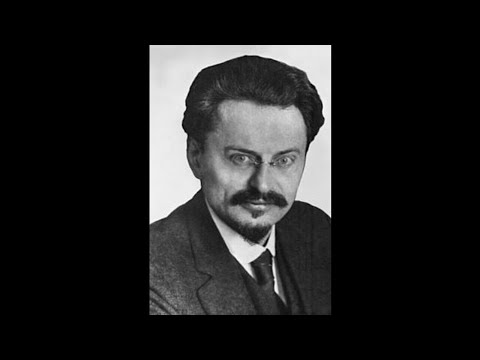
Robert Service on Trotsky 07/26/2010
What this covers
Robert Service of Stanford's Hoover Institution and Oxford University discusses his biography of Leon Trotsky with Russ Roberts, ranging across Trotsky's role in the Russian Revolution, his policymaking alongside Lenin, his 1928 expulsion from the Soviet Union, and his assassination in 1940. Service's central argument rejects the Western intellectual's tendency to view Trotsky as a soft, martyred idealist. Instead, he portrays Trotsky as a primary architect of Soviet state terror who supplied both the orders and theoretical justification for extrajudicial brutality—including a book defending terror as an effective tool of revolutionary dictatorship. Service contends that Trotsky never reckoned with his own role in creating the conditions that enabled Stalin's later atrocities, and that the three paramount Bolshevik leaders shared far more common ground than their historical rivalries suggest.
The conversation traces how this ideological alignment manifested across specific policy domains. Service examines Trotsky's economic prescriptions, particularly his push to forcibly collectivize the peasant majority into state farms—a solution his contemporaries correctly warned would require coercion rather than persuasion, anticipating the brutal collectivization Stalin would later execute. The discussion also covers Trotsky's geopolitical thinking, his belief that advanced Germany (not backward Russia) was revolution's true target, and the implications of his assumption that Soviet military intervention would be necessary there. Service emphasizes moments revealing Trotsky's intellectual limits: his class-based underestimation of Stalin, his idealistic faith that communist revolution could transform human nature into producing "millions of Shakespeares," and his dismaying support for the 1939–40 Soviet invasion of Finland—a decision that fractured the American Trotskyist movement. Service concludes that Lenin, Stalin, and Trotsky were "blood brothers" in their commitment to one-party dictatorship and terror as governance, despite Trotsky's distinct utopian temperament.
Service argues that Trotsky should not be romanticized as a soft intellectual martyr but recognized as a co-architect of Soviet state terror who, like Lenin and Stalin, was committed to one-party dictatorship; the differences among the Bolshevik leaders mattered far less than their shared belief in terror and total state control.
- Trotsky supplied both orders and the intellectual rationale for state terror, including a book defending it
- Trotsky never acknowledged his responsibility for creating the conditions that enabled Stalin's terror
- Lenin, Stalin and Trotsky were 'blood brothers' in believing in the one-party, one-ideology terror state
This asset isn't compiled yet
You're seeing its claims, ranked. Compile it to build the argument threads, weight them, and check each claim against your library — the full view.
Trotsky and his followers worshipped the party and the USSR to such a degree that they could not question the basic aspects of the previous 20 years, because doing so would have been 'like wishing away their entire lives'; this servile attitude — that the party must always be right — broke the Trotskyist movement when Trotsky defended the 1939-40 Soviet invasion of Finland and demanded rigid Leninist orthodoxy from his American followers.
“they couldn't bring themselves to question basic basic aspects of the previous 20 years because it would have been like wishing away their entire lives”
When the USSR invaded Finland in the 1939-40 Winter War, Trotsky supported the invasion, which dismayed many of the brightest young American Trotskyist intellectuals who saw it as Stalinist imperialism; Trotsky's rigid Leninist defense of the one-party state and bland justification of Stalin's foreign policy in response more or less broke up the Trotskyist movement.
“when the Winter War of 1939 to 1940 occurred and the USSR invaded Finland a fact that is little known right ... Trotsky was in favor of it”
Lenin, Stalin and Trotsky were 'blood brothers' sharing the same mentality, but Trotsky alone held a near-religious idealistic faith in the malleability of human nature — believing that after the communist revolution there would be hundreds of Darwins, thousands of Aristotles, perhaps millions of Shakespeares, transforming humanity into a paradise.
“Lenin Stalin Trotsky are Blood Brothers and Trotsky at least wrote... that that human beings would change there was just a huge romance about the malleability of the human enterprise”
By charging in real terms three times more for state-factory industrial goods than those goods had cost under private ownership before WWI, the Bolsheviks created a price scissors that peasants rationally evaded by withholding grain from the market — eating more bread, fattening livestock, distilling vodka, or simply storing it — because the regime failed to anticipate that peasants had other uses for their grain.
“they charged in real terms three times more for the industrial products coming out of the state factories then had come out of those factories when they were in private hands before the first world”
Trotsky, an economic prognosticator, argued that appeasing the peasantry had to stop because they would otherwise hold the regime hostage by withdrawing from the market; his solution was to forcibly consolidate the 85% of the population who were peasant farmers into large state-owned collective farms, claiming education and propaganda — not force — combined with tractors and fertilizer would make peasants grateful, a belief his critics rejected as requiring exactly the coercion Stalin later applied.
“the period of appeasing the peasantry has to soon stop because they're going to have us by the throat forever we're never going to be able to sell our industrial products at three times the market rate ever again”
After 1905 Trotsky concluded the workers could take power, keep it, never share it, and run a revolutionary administration that would permanently deny civil rights to the enemies of Marxism — a fully formed program of one-party dictatorship he held by the time he reached Vienna.
“I'm utterly convinced that the workers can take power keep power never share it with anyone maintain a revolutionary administration which will deny civil rights to the enemies of Marxism permanently”
Stalin was systematically underestimated by Trotsky and many others because of class snobbery and surface impressions (his Georgian accent, lack of foreign languages, poor table manners, pipe smoking, lesser education), yet he in fact had real talents — fluent writer, two languages, editor of Pravda, a secondary education from priestly training.
“Trotsky massively underestimated this man as did many others wasn't alone he wasn't alone you could it's a long list”
Trotsky believed advanced industrial Germany, not backward Russia or Ukraine, was the country most 'ripe for revolution', but he assumed a German revolution would still require Soviet Red Army intervention because the German middle classes were more determined to resist and the German army less demoralized than Russia's had been in 1917 — which would trigger another European war involving Britain, France and possibly America.
“he thought that from the end of the 19th century onwards the great advanced industrial countries were in his phrase ripe for revolution and he thought the right best country of all was Germany”
Trotsky's father was a spectacularly successful Jewish farmer in the south of present-day Ukraine, defying the pattern in which Jews relocated from towns to the countryside (in a Russian policy to 'Russify' them) mostly failed at farming because they lacked an agricultural tradition.
“a spectacularly successful Jewish farmer in the south of what we now call Ukraine really an economic hero”
State terror — dealing with political or economic opponents outside the law using the most brutal repression — was a feature of Soviet rule from its very first year, not a later Stalinist development; Trotsky as much as Stalin supplied the orders and the intellectual rationale, with Trotsky writing a book, 'Terrorism and Communism', arguing terror was an effective way to start a revolutionary dictatorship and quicken the revolutionary schedule.
“terror is a system of dealing with your political or economic opponents outside the law and applying the most brutal methods of repression to them that was going on right from the start that was going on from the first year of Soviet rule onwards”
Although Trotsky did not physically sign many execution warrants (the Cheka under Dzerzhinsky did that), his role as architect of one of the most gruesome state terror dictatorships of the 20th century is obscured by his romantic reputation as a Garibaldi-like revolutionary; he formulated the rationale that reconciliation between proletarian and middle-class parties was impossible, so violence should be inflicted first and big.
“you're never gonna get reconciliation between the party of the proletariat and the parties of the middle classes... you might as well get your violence in first get your retaliation in first and get it in big before the counter-revolution is attempted”
Stalin's assassination of Trotsky in 1940 succeeded despite an elaborate security apparatus (American-built alarm system, guard posts, Mexican police, guard towers) because Trotsky was, in the end, a stupid man who let an acquaintance he barely knew into his study alone, wearing a Macintosh concealing a long dagger and an ice axe.
“he was a stupid man I mean he lets this man come into his study who he barely knows wearing a Macintosh in which he not only has a huge dagger... and an ice axe”
Trotsky's solution to the peasant problem — forcibly amalgamating the 85% peasant population's farms into huge state-owned collective farms, providing tractors and fertilizers, and creaming off the proceeds while claiming peasants would be grateful — was essentially the collectivization that Stalin would implement a decade later, and Trotsky's contemporaries warned correctly that it could only be achieved through force, not persuasion.
“we've got to do is change the whole basis of the economy so that the peasants who are eighty-five percent of the population don't work on their own farms but have all of those farms brought together into a large number of huge farms which will be collectively run”
Trotsky predicted there would be a second world war and foresaw the possibility of a Nazi-Soviet pact, but Trotskyists overstate his prescience since many people foresaw the war; what they conveniently forget is that he supported the Soviet invasion of Finland in 1939-40.
“he thought there was going to be a second world war he did make a few predictions that were right he saw the possibility of a nazi-soviet pact and trotskyists tend to praise him in an excessive way for this”
Trotsky believed Germany, not Russia, was the country most 'ripe for revolution' because of its advanced industry, but he privately assumed a German revolution would still require Soviet Red Army intervention since the German middle classes and army were more resolute than Russia's had been in 1917 — meaning his program implied another European war and mass carnage to produce a multinational revolutionary state.
“Trotsky all through the nineteen twenties made it the assumption that there would be a revolution in Germany it would be a better revolution than in Russia but it would still need Russian help and that would mean that there would be another European war”
Trotsky never acknowledged any connection between the terror he condoned and helped create in 1917-1919 and the later Stalinist terror or even his own extrajudicial murder in 1940; he never put the question of his own responsibility to himself, regarding the early revolutionary period as his glory.
“Trotsky when he looked back never said to himself what I helped create the conditions for this this scale of Terror to come about he never even put the question to himself”
State terror was present from the very first year of Soviet rule, not just under Stalin; Trotsky as much as Stalin supplied the orders and the intellectual rationale, writing a book ('Terrorism and Communism') arguing that state terror was an effective and good way to start a revolutionary dictatorship and quicken the revolutionary schedule by physically eliminating problems.
“Trotsky for example wrote a book called terrorism and communism where he said that state terror was a good way of starting off a revolutionary dictatorship it was very very effective in quickening the revolutionary schedule and getting rid of problems physically”
The Soviet state set industrial prices three times higher in real terms than under private ownership before WWI, but failed to anticipate that peasants would respond by withdrawing grain from the market — eating more bread, feeding livestock (visibly fattening their cattle and pigs), turning grain into vodka, or simply storing it — which created the 'scissors crisis' that enraged Trotsky.
“they charged in real terms three times more for the industrial products coming out of the state factories then had come out of those factories when they were in private hands before the first world”
Trotsky lost the succession struggle by 1927 partly because he was a snob who massively underestimated Stalin, dismissing him as an uneducated, pockmarked Georgian with bad manners — yet Stalin actually had real talents: he was a fluent writer, spoke Georgian and Russian, had edited Pravda, and had a priest's secondary education.
“Trotsky massively underestimated this man as did many others”
Trotsky, Lenin and Stalin all wrote glorified accounts of their own lives, so a politician's self-description cannot be taken as a mirror of reality; Trotsky in particular 'sculpted everything' to fit the heroic statue he wanted built of himself.
“there's nothing that gets my goat worse than Trotskyists who assumed that when he wrote about himself it was a mirror of reality well what politician ever mirrors reality and Trotsky was no exception he sculpted everything to fit to fit the statue that he wanted to put up to himself”
Despite real differences (Bukharin was more open to private property, prices and markets than Stalin), the Bolshevik leaders — Bukharin, Stalin, Trotsky, Zinoviev, Kamenev — were fundamentally alike: all believed in the one-party state, terror, a single ideology, and society as a resource to be mobilized by the leadership; their similarities far outweighed their differences, like German monks arguing over how many angels can dance on a pinhead.
“they were all Bolsheviks they all believed in the one-party state they all believed in terror they all believed in the one ideology state... so the differences among them are not so significant as the similarities”
There is nothing in the writings of the Bolsheviks explaining how a single central state planning authority could ever gather information quickly enough and process it well enough to run an entire economy permanently; they acted 'on a wing and a prayer,' assuming they could work it out as they went — which vindicates Hayek's twin arguments that socialist central planning was impractical and would lead to despotism.
“I can't see anything in the writings of the Bolsheviks that said how on earth this central state planning mechanism was ever gonna have enough information quickly enough and be able to process it well enough to run a whole economy like that on a permanent basis”
The Tsarist regime's relative leniency toward revolutionaries — administrative exile with a stipend and part-time work rather than penal servitude, and easily bribed, poorly paid police — was driven less by humanity than by lack of resources: Russia was poor and vast, and the UK had seven times more policemen per capita than the Tsar, who lacked time and money to build a proper policing apparatus.
“if you take the Russian Empire and its population and compare it with the size of the police force then actually the United Kingdom had seven times more policemen then azar than the Tsar had and the reason they didn't have as many policemen as he might have wanted was that he didn't have the resources this was a poor country”
The Tsarist regime's relative leniency toward revolutionaries (administrative exile with stipends and easy escape) stemmed largely from a lack of resources rather than humanity: Russia was a poor, vast country with seven times fewer policemen per capita than the United Kingdom, and underpaid police were routinely bribed, which is how revolutionaries escaped exile.
“the United Kingdom had seven times more policemen then azar than the Tsar had and the reason they didn't have as many policemen as he might have wanted was that he didn't have the resources this was a poor country”
European communist revolutions in the 1920s failed largely because everyone could see what communism would bring; priests, factory owners, shopkeepers, and religious or property-owning workers, forewarned by the Russian example, became far more resolute in staving off communism, fueling widespread reactionary and far-right movements that by the 1930s reduced democracy to a fragile minority phenomenon across Europe.
“if you were a priest or a factory owner or a shopkeeper or just a member of the factory work force who believed in God who believed in private property who didn't want a country to be savaged by dictatorship and terror then you knew what was coming and you knew what you had to do about it which was to be much more resolute in staving off communism”
The October Revolution was ultimately a disaster because it had a 'bounce on' effect: everyone could now see what communism meant, so anti-communist forces (priests, factory owners, workers who believed in God and property) became far more resolute, fueling widespread reactionary and far-right movements that made democracy a fragile minority phenomenon across 1930s Europe and led to the Second World War.
“the october revolution in russia of 1917 was a disaster because it had this bounce on effect of giving an opportunity for fascism and for far-right very far-right conservative politics to take a grip on so many countries and in the end the result of all of that was the Second World War”
Trotsky, despite elaborate security (a sophisticated alarm system, guard posts, guard towers, Mexican police) financed largely by American Trotskyists, was killed because he was, in matters of personal judgment, a stupid man: he admitted a man he barely knew, wearing a Macintosh concealing both a long dagger and a mountaineering ice axe, into his study alone, where the assassin drove the ice axe into his skull.
“it's all still in place but he was a stupid man I mean he lets this man come into his study who he barely knows wearing a Macintosh”
The 1917-1924 Soviet system had no blueprint: the world's first one-party state was improvised, with a chaotic, disorganized party that, faced with running an economy and politics across one-sixth of the earth's surface amid revolting peasants and striking workers, had to fall back on its pre-revolutionary doctrines of centralism, discipline and hierarchy to regularize control over the early 1920s.
“there had been no one-party state anywhere they had no model”
Stalin defeated his rivals because, despite everyone knowing he bugged their telephones and had the Cheka following them with informers and provocateurs, the oppositionists still foolishly talked in their houses and dachas and passed messages, allowing Stalin — being vengeful, ruthless, cunning and well-organized — to learn that they despised and wanted to remove him, and to set the party and police on them to ruin their careers and eventually arrest them in the mid-1930s.
“everyone knew that Stalin was bugging everybody that he had listening devices on their telephones and yet they still stupidly taught in their houses than in their dachas”
Trotsky deliberately cultivated public oratory to large mass audiences well before any revolutionary upheaval, at a time when most of his party comrades did not regard public speaking as a valuable asset, because he correctly anticipated that mass oratory would be decisive in a revolution.
“he recognized very early on that he really was a great orator in the making and he worked at being an orator he worked at his public speaking at a time when most of his party comrades didn't think that was a great asset to have”
Trotsky's autobiographical writings cannot be taken as accurate reflections of reality because, like any politician, he sculpted his self-narrative to fit the heroic statue he wished to erect to himself.
“there's nothing that gets my goat worse than Trotskyists who assumed that when he wrote about himself it was a mirror of reality well what politician ever mirrors reality and Trotsky was no exception he sculpted everything to fit to fit the statue that he wanted to put up to himself”
Trotsky was an extreme revolutionary who sought not merely a communist Russia but a world revolution: he wanted a dictatorship installed by state terror in Russia as the first step, then its spread to Europe, North America, and ultimately the entire world.
“he was a revolutionary of a very extreme kind he wanted a dictatorship in Russia he was almost eager for that dictatorship to be installed by state terror he thought of Russia as just being the first country in the world that would have such a revolution”
The conditions imposed by the Communist International — requiring European and North American socialist splinter groups to form disciplined, centralized communist parties subordinate to Moscow — transformed these parties into instruments Trotsky believed could be used to accelerate revolutionary transformation, leading him to urge the Soviet leadership to take risks and make revolutions.
“the price of that was that they had to assure Moscow that they would form proper communist parties and subordinate themselves to Moscow which is what duly happened”
Trotsky was not merely a revolutionary but an extreme Marxist who believed big changes could come overnight: because Tsarism was weak and the middle classes not yet powerful enough to take power, Marxists could lead the workers and seize a workers' dictatorship at the first opportunity.
“he becomes a Marxist he becomes an extreme kind of revolutionary and he doesn't just become a Marxist he becomes an extreme Marxist because he says that the the big changes can come in our country not over decades not even over years but can happen overnight”
Lenin's deathbed 'testament' proved prescient on two points: that Trotsky would make a bid for power, and that Stalin would quietly accumulate and aggrandize enough power to challenge for the succession — even though Lenin, being arrogant, thought none of his colleagues fit to succeed him and wanted a collective leadership.
“Lenin had been very prescient at least about two things one was that Trotsky would make a bid for power and the second thing was that Stalin quietly would exercise a lot of power and could and grande eyes that power to the point that he could challenge for the succession”
Many young Russians and Ukrainians turned to revolution because Tsarism was a political dictatorship with no trade unions, no legal political parties, no free press and preventive censorship, while rapid economic modernization left many people worse off — and Trotsky went further, becoming an extreme Marxist who believed a workers' dictatorship could transform the country overnight rather than over decades.
“the only way that we can get rid of economic exploitation and this was course was a political dictatorship Sarazen was a political dictatorship there were no trade unions no legal political parties no Free Press there was a preventive censorship”
The policy clash between Trotsky and Stalin was substantive, not merely personal: Trotsky prioritized European socialist revolution and was willing to take risks with Soviet security to achieve it (believing the Russian Revolution couldn't survive without a German revolution), while Stalin wanted to settle the country and continue Lenin's New Economic Policy, which gave peasant farmers and small traders breathing space within the one-party state.
“Trotsky want an emphasis on European socialist revolution above all else and he wanted a policy that would take risks with Soviet security in pursuit of that ultimate objective... Stalin by contrast wanted to settle the country wanted to pursues a new economic policy”
Trotsky was one of the great political writers of the 20th century, comparable in prose quality only to Winston Churchill, and he deliberately cultivated oratory early because he foresaw that mass public speaking would be crucial to revolution before most party comrades valued it.
“by any standards he was one of the great political writers in the 20th century the only person I think who comes near to him in the quality of his prose is is Winston Churchill”
Trotsky was an extreme revolutionary who wanted an immediate workers' dictatorship in Russia installed by state terror, viewing Russia merely as the first domino in a world revolution that would spread to Europe, North America, and eventually the entire world.
“he wanted a dictatorship in Russia he was almost eager for that dictatorship to be installed by state terror he thought of Russia as just being the first country in the world that would have such a revolution”
The Bolsheviks created the world's first one-party state with no model or blueprint to follow; the party itself was a chaotic, disorganized shambles, so it deliberately turned back to its pre-revolutionary doctrines of centralism, discipline and hierarchy over the early 1920s to make itself capable of controlling a country covering one-sixth of the earth's surface.
“the party turned back to its pre-revolutionary doctrines of centralism of discipline of hierarchy and it it achieved a change in itself steadily over the early 1920s so as to fit itself out to be able to control the revolution”
The Bolshevik leaders knew Stalin bugged their telephones and that the Cheka used informers and provocateurs, yet still talked indiscreetly in their houses and dachas and passed messages around the country — giving Stalin the knowledge that they all despised him, which a vengeful, ruthless, cunning and organized Stalin used to ruin their careers and eventually arrest them in the mid-1930s.
“everyone knew that Stalin was bugging everybody that he had listening devices on their telephones and yet they still stupidly taught in their houses than in their dachas”
The Trotsky-Stalin conflict was not merely personal but a genuine policy dispute: Trotsky wanted to prioritize European socialist revolution and take risks with Soviet security to achieve it, while Stalin wanted to settle the country by pursuing Lenin's New Economic Policy (allowing limited private trade and peasant commerce) to buy a breathing space; Trotsky lost by 1927 partly because he massively underestimated Stalin as a 'pokey little pockmarked Georgian'.
“Trotsky want an emphasis on European socialist revolution above all else and he wanted a policy that would take risks with Soviet security in pursuit of that ultimate objective”
Trotsky never recognized his own responsibility: even after Stalin's far more ruthless dictatorship killed millions, and even after Trotsky himself was assassinated in 1940, he never asked whether he had helped create the conditions for that scale of terror, and never saw the connection between his own extrajudicial murder and the methods he had condoned in 1917-1919.
“Trotsky when he looked back never said to himself what I helped create the conditions for this this scale of Terror to come about he never even put the question to himself”
European welfare states, social insurance and healthcare measures in Germany, Britain and (under Roosevelt) the United States were built up partly in reaction to the Russian Revolution, as governments sought to deprive Communists of anti-capitalist propaganda opportunities by addressing workers' grievances.
“the European states built up their welfare mechanisms partly in reaction to the Russian Revolution that the Communists undertook there was fear that the Communists might be right that the workers of Europe might throw out their governments”
The October Revolution of 1917 was ultimately a disaster because of its knock-on effect: by provoking far-right and fascist reaction across Europe, it created the conditions for the Second World War, a calamity for mankind, in addition to inflicting a terrible seventy-year run on the Russian people.
“whichever way you look at it the october revolution in russia of 1917 was a disaster because it had this bounce on effect of giving an opportunity for fascism and for far-right very far-right conservative politics to take a grip on so many countries and in the end the result of all of that was the Second World War”
Trotsky was one of the great political writers of the 20th century, comparable in prose quality only to Winston Churchill, and like Churchill he repeatedly turned his own experiences (such as his escapes) into written accounts that earned money for the revolutionary cause while flattering his own legend.
“I think by any standards he was one of the great political writers in the 20th century the only person I think who comes near to him in the quality of his prose is is Winston Churchill”
Trotsky's reputation as a romantic figure (likened to Garibaldi or Bolívar) rests on his role inspiring the Red Army in the Civil War and the fact that he did not personally sign many death warrants (Dzerzhinsky ran the Cheka), but this overlooks his role as one of the architects of one of the most gruesome state-terror dictatorships of the 20th century, justified by his conviction that violent struggle between proletariat and middle classes was inevitable, so one should strike first and big.
“What Trotsky did do though was help set the policy and formulate the intellectual rationale for it which was simply that you're never gonna get reconciliation between the party of the proletariat and the parties of the middle classes”
Stalin himself was not inevitable, but had Trotsky come to power instead it would still have been a one-party, one-ideology terror state; given his brutal use of force in the Civil War, Trotsky too would have used state terror — perhaps less intensive in the countryside — because he shared Lenin's and Stalin's fundamental attitudes, making the three 'blood brothers'.
“I don't think he would have turned into a Stalin as a personality because there was something deeply disordered about stonings personality ... I think if Trotsky had mounted to power in his stead though it would still have been a one-party state it would still have been a terror state”
European welfare states and America's New Deal were built up partly as a defensive reaction to the Russian Revolution: governments in Germany, Britain and the US created social insurance and healthcare measures to deprive Communists of anti-capitalist propaganda opportunities and to see off the threat of workers overturning capitalism.
“the European states built up their welfare mechanisms partly in reaction to the Russian Revolution... a lot of the governments of the larger powers in in Germany in and in Britain built up social insurance and various healthcare measures so as to see off this threat”
The Bolsheviks' scheme for total state ownership and central planning of all economic sectors was fatally unworkable because, as Hayek argued, no central planning authority could ever gather enough information quickly enough or process it well enough to run an entire economy on a permanent basis; they acted on a wing and a prayer, assuming they could work it out as they went, which would either fail in practice or require despotism.
“I can't see anything in the writings of the Bolsheviks that said how on earth this central state planning mechanism was ever gonna have enough information quickly enough and be able to process it well enough to run a whole economy like that on a permanent basis”
It is psychologically extremely difficult for a person with a historical legacy to admit fault, because doing so would mean conceding that one's life was a lie; the common strategy is instead to insist one was right and seek confirming evidence — a pattern visible across leaders historically and in the current world.
“it's very rare that anybody with an historical legacy admits fault... I think psychologically it's it's extremely difficult for a human being to say my life was a lie”
By the time Trotsky returned in 1917 the provisional government was doomed: it had introduced civic freedoms and promised only a defensive war (a popular policy), but the economy was collapsing, food shortages spread, peasant soldiers died en masse, and the state lacked an army and police willing to impose its will, making the circumstances ideal for a lunge at power.
“the economy was collapsing the administration was in chaos food shortages were spreading to the cities there were so many deaths of peasant soldiers on the Eastern Front and the government was really on a hiding to nothing in the absence of an army and a police force that would impose its will”
The 1917 conditions were ideal for a 'lunge at power' because, after the Tsar's abdication, the liberal provisional government had no loyal army or police, the economy was collapsing, food shortages spread, and the institutions had fallen to pieces — so Trotsky and Lenin used the workers' Soviets as a blind behind which to install the party in power on 25 October 1917.
“the circumstances could not have been better for a lunge at power”
Trotsky and Lenin engineered the October 1917 seizure by using the restored workers' Soviets as a blind behind which they put the Bolshevik party in power, exploiting the fact that Kerensky's moderate-socialist provisional government lacked the garrison support to resist.
“they'll use the workers and these restored Soviets these restored workers councils as a blind by behind which they would put the party in power”
It is extremely rare for any leader with a historical legacy to admit fault; the psychologically dominant strategy is to insist 'I was right' and seek confirming evidence, because for a human being to concede 'my life was a lie' is nearly impossible.
“it's very rare that anybody with an historical legacy admits fault it's the strategy that most people take is I was right and I'm gonna find evidence that that proves it”
Trotsky's followers, like Bukharin's, exhibited a servile worship of the party and the USSR such that they could not question basic aspects of the previous 20 years, because to do so would have meant wishing away their entire lives — a need for the party always to be right that made being 'against the party' unthinkable.
“they worship the USSR they couldn't think there was any life outside the party and the October Revolution in the USSR and they couldn't bring themselves to question basic basic aspects of the previous 20 years because it would have been like wishing away their entire lives”
Trotsky's terrifying combination was a genuine, quasi-religious idealism about the malleability of human nature — believing communist revolution would liberate talents and produce hundreds of Darwins, thousands of Aristotles, millions of Shakespeares — held by a man with blood on his hands, illustrating how some of the bloodiest killers in Soviet history wrote poetry.
“there would be a great liberation of the talents and there would be hundreds of Darwin's thousands of Aristotle's perhaps millions of Shakespeare's and it would be a paradise for humankind”
Despite their disputes, Bukharin, Stalin and Trotsky were all Bolsheviks who shared belief in the one-party state, terror, a single state ideology, and society as a resource to be mobilized by the leadership; their differences (e.g., Bukharin's relative openness to private property and markets) were far less significant than these similarities, making them 'blood brothers' alongside Lenin.
“they were all Bolsheviks they all believed in the one-party state they all believed in terror they all believed in the one ideology state they all believed in society as a resource mobilize a ball by the political leadership”
Had Trotsky won the succession instead of Stalin, his rule would still have been a one-party, one-ideology terror state requiring brutal force against the peasants (given his Civil War record of using brutal force), though the countryside terror might have been somewhat less intensive; he would have had to openly embrace mass violence to pursue his ideological aims.
“I just don't believe that he with his record in the civil war when he'd used a lot of brutal force that he wouldn't have used brutal force on the peasants as well now it might not have been as quite as intensive a terror as it was under Stalin”
Trotsky is best understood as an intellectual entrepreneur whose defining trait was an entrepreneur-like overconfidence in his 'product' — the inevitability of world revolution — which he held with quasi-religious certainty and acted upon especially during 1905-1917.
“all entrepreneurs really was really an intellectual entrepreneur no that's what I think of him and entrepreneurs always have a lot of faith in their own product”
Trotsky was essentially an 'intellectual entrepreneur' whose certainty that world revolution was inevitable mirrors the overconfidence of entrepreneurs in their own product, leading him to act on that faith especially in the 1905-1917 period.
“all entrepreneurs really was really an intellectual entrepreneur no that's what I think of him and entrepreneurs always have a lot of faith in their own product”
The killer Ramón Mercader maintained for decades, through years of Mexican imprisonment until his 1960s release, the false story that he was a disillusioned Trotskyist who turned against Trotsky after finding he had feet of clay; the Soviet Union and the killer denied the order came from Stalin, though everyone who disliked Stalin assumed it, and many leads traced back to Moscow.
“the killer himself Rahman naka dare always claimed that he was a disappointed trotskyist who had turned against Trotsky after meeting Trotsky in Mexico City and finding that he had feet of clay”
Trotsky's father was a spectacularly successful Jewish farmer in southern Ukraine — an economic hero who renting land from Poles, Ukrainians and Russians and succeeding magnificently where most Jews resettled to the countryside failed, because there was no Jewish farming tradition.
“trotsky's father succeeded magnificently so that he he was renting land from poles and from Ukrainians and from from Russians as well as his own land”
Lenin's final 'testament' showed his prescience on two points: that Trotsky would make a bid for power, and that Stalin had quietly accumulated power he could aggrandize to the point of challenging for the succession — both of which came to pass.
“Lenin had been very prescient at least about two things one was that Trotsky would make a bid for power and the second thing was that Stalin quietly would exercise a lot of power and could and grande eyes that power to the point that he could challenge for the succession”
Tsarism was a political dictatorship without trade unions, legal political parties, a free press, or freedom from preventive censorship; this absence of legal outlets, combined with the hardships of rapid economic modernization, turned many young people like Trotsky into revolutionaries.
“Sarazen was a political dictatorship there were no trade unions no legal political parties no Free Press there was a preventive censorship you had to submit things before you publish them so that the combination of all of this turned a lot of people into revolutionaries”
Petrograd was renamed from St. Petersburg because the original name sounded too German, an example of linguistic patriotism during wartime — parallel to the British royal family changing its name from Saxe-Coburg to Windsor in the First World War.
“some people sanded a bit German... it's one of the examples of linguistic patriotism during wartime”
Trotsky put revolution before everything and was physically brave, risking and willing to sacrifice his life for the cause far more than Lenin or Stalin, who never put themselves in danger.
“he was physically brave he would have sacrificed himself in the revolutionary cause certainly risked his life in many ways for that cause... far more so than the other great leaders of the Russian Revolution Lenin and Stalin who never put themselves in the way of danger”
Herbert Hoover was one of the greatest philanthropists and humanitarians of the post-WWI period; had he died in 1922-23 he would be remembered solely for his enormously important food relief work, which is still honored in Belgium and Holland today.
“Hoover was one of the greatest philanthropists and humanitarians of that period he if he had died in 1922 23 he would now be remembered just for that in the most fulsome way”
Stalin notably did not brag about ordering Trotsky's assassination and the Soviet Union denied it, even as the assassin Ramón Mercader maintained for years in Mexican prison that he was merely a disillusioned Trotskyist; the truth that Stalin ordered it was nonetheless universally inferred at the time and Mercader was later spirited to the USSR and feted as a hero.
“Stalin did not brag about it that's a very interesting point”
Herbert Hoover was one of the greatest philanthropists and humanitarians of the post-WWI period; his coordination of food relief in Europe was so significant that had he died in 1922-23 he would be remembered solely and most fulsomely for that humanitarian work, as he still is in Belgium and Holland.
“Hoover was one of the greatest philanthropists and humanitarians of that period he if he had died in 1922 23 he would now be remembered just for that in the most fulsome way”
Stalin had a gross personality disorder and was a thoroughly wicked, really wicked man, which made his particular brand of dictatorship more ruthless, vengeful and violent than it would have been under another leader.
“there was something deeply disordered about stonings personality I think he had a gross personality disorder... bad man yeah really wicked I am thoroughly wicked man”
Our subject today is Trotsky, an elusive figure for many in the West who know he was involved in the October 1917 revolution, broke with Stalin, was exiled and murdered on Stalin's orders.
“many of our listeners probably know he was involved in the Russian Revolution of October 1917 that he eventually broke with Stalin and was exiled and later murdered on Stalin's orders”