What this covers
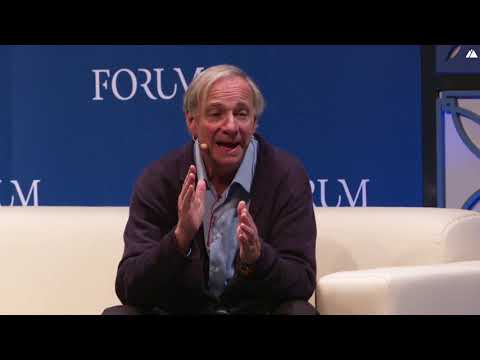
Ray Dalio and Garry Kasparov chat AI. Artificial intelligence is making more and more of our decisions for us. Is this capacity limitless or are there some things only human intuition can determine? Wish you were here? Sign up for 2 for 1 discount code for #WebSummit 2019 now: https://news.websummit.com/live-stream
Source description (no synthesized summary yet).
Ray Dalio and Garry Kasparov argue that human-machine collaboration, not competition, is the path forward, requiring deep understanding of when to trust algorithms (closed systems) versus when human wisdom must guide decisions (open-ended systems), with the broader imperative that technological change demands leadership with a coherent plan to manage wealth inequality and educational reform.
- Machine learning works reliably only in closed systems with sufficient sample size; in open systems where the future differs from the past, human deep understanding is essential
- Job displacement from automation is accelerating but lacks a comprehensive policy response; the solution is pairing domain experts with coders to encode human principles
- The US-China technological competition will be won by the country that balances data access with individual creativity, requiring coordinated leadership across education, infrastructure, and inclusive economic policy
This asset isn't compiled yet
You're seeing its claims, ranked. Compile it to build the argument threads, weight them, and check each claim against your library — the full view.
In the investment area, trading rules that would have worked in the past will not work in the future by definition, because anything that becomes known gets bid up and reflected in the price, and thus the profitable pattern reverses once discovered.
“in the investment area if you come up with rules that would have worked in the past and even others come up with rules those same rules that would worked in the past they won't work in the future by definition because anything that is known then gets bid up and reflected in the price and then because of that you almost could do the opposite of what can be found in the future”
In the past 100+ years, technological displacement has repeatedly disrupted labor markets (agriculture, blue-collar manufacturing, white-collar work), but the middle class expanded from the 1930s through the post-WWII period as productivity gains were shared with workers through manufacturing jobs and wage growth.
“100 years ago we had technology you know aggressively you know replacing jobs and helping people just you know to build new industries the gap between the Rockefeller and and JPMorgan and in working class was pretty big as well but somehow the capitalism has been working for bigger and bigger segments of the society not for all but you could see the expansion of the other circles where people could feel the benefits now it seems to me that it's it's shrinking pie that's right there was the building of the middle class yeah in other words a street that's right there was the building of the middle class in from the 30s war years in the post-world Leigha period”
In closed systems where humans identify targets and create rules, machines will eventually outperform humans because machines make fewer mistakes, even though the complexity of business and investment is vastly greater than chess.
“the moment you are talking about closed system where you as humans we identify the targets we create the rules machines will eventually have a better performance simply because that steady hand they make fewer mistakes but of course chess is not as nearly as complex as business as investment”
Capitalism is failing not because of inherent flaws but because market rules are being violated; the question is whether capitalism is failing us or whether we are failing capitalism by violating the fundamental rules of free markets.
“is it because capitalism is failing us or is because we're failing capitalism by violating the fundamental rules of the free market”
Chess became the test case for machine learning in early computer science because Alan Turing, Claude Shannon, and Norbert Wiener saw chess as a Drosophila (model organism) for studying machine learning, and they believed that the day when machines beat the strongest human players would mark the dawn of artificial intelligence.
“in chess we had one of the first fields where machines could compete with humans and it's it's quite an interesting you know is historical fact that the founding fathers of computer science Alan Turing Claude Shannon Norbert Wiener they all saw chess as a kind of a Drosophila a fly test for for machine learning and they believed that the day when not if when machine would beat the strongest human players that could be the dawn of AI”
Millions and millions of jobs will be eliminated through automation, which is a natural historical process that has happened repeatedly (agriculture, blue-collar work, white-collar work), and according to McKinsey studies of 2016, only 4 percent of U.S. job market requires minimal human creativity, meaning most jobs are vulnerable to automation.
“there will be millions and millions of jobs that will be chopped on the on the block of automation and and I think that is just it's it's a natural process it happened with agriculture it happened with a blue-collar jobs it's happened with white-collar jobs one of the one of the reasons in the poor few last few decades we have been teaching new generations the the educated class how to work like machines and now many of these jobs you know they will be redundant because the amount of human creativity immediately human creativity required for the work activities is minimal I think according to McKinsey studies of 2016 u.s. job market is it's 4 percent”
22 percent of high school students in Connecticut are either 'disengaged' (attend but don't learn or study) or 'disconnected' (don't know where they are), meaning they will graduate without education and without jobs, becoming a permanent underclass.
“disengaged and disconnected youth disengaged student is a student who attends a public school and doesn't learn they just attending they don't study disconnected is they don't know where they are 22 percent of the students in Connecticut high school students are one of those those students are going to be with not only without jobs they won't graduate high school that will be without education”
In China, data collection is unrestricted by privacy laws or privacy concerns; AI applied to all collected data enables efficient top-down management of society, representing a trade-off where more data and fewer restrictions lead to better statistical results but at the cost of privacy and individual freedom.
“there will be the collection of all data free collection of all than in that place with no respect of privacy or privacy laws there will be right now that's what one thinks of that is a question of a pro and a con if you were Chinese leadership and you say listen I want the best technology I want the best information power let me gather all of that forget about privacy date but I know all data and let me turn loose AI on all of that data to make our society as efficient as it passes like it's like an oil”
Historical patterns of the past 500 years show that dominant world powers rise through technological superiority, such as the Dutch dominance based on boat-building technology that enabled global trade and naval power.
“I've studied through an economic lens the last 500 years of history very very carefully and there are cycles of what makes a country ascend and so on it always starts with technology like if you go back to the Dutch okay the Dutch were the dominant world power accounted for half of all trade in the world their technology was to be able to build boats that could go all around the world and they put on those guns and then the world was their oyster”
How technology is used and deployed will depend significantly on the country in which it is implemented, with bottom-up decisions in the Western world versus top-down decisions in countries like China with different cultural values.
“I think that how technology will be used will very much depend on the country that you're in let me and I think it's a big big issue okay technology data big data and big technology powerful force that decision will be made more as a bottom-up decision in the Western world and more as a top-down decision for example in China”
40 percent of Americans could not raise $400 in case of a medical emergency, while the top one-tenth of one percent of the population controls net worth equal to 90 percent of the bottom 90 percent combined, indicating extreme wealth concentration.
“you have a situation in the United States the Federal Reserve did a survey forty percent of Americans could not raise $400 medical emergency an emergency the top one-tenth of one percent of the populations net worth is equal to ninety percent combined”
Europe is not a significant competitor in the US-China technology race, meaning the 21st century technological competition is primarily between the United States and China.
“whereas in China which is a competitor and that in that space Europe is not much of a competitor if you look at the statistics or so on it's it's China in the United States in that technological race”
Machine learning algorithms can be trusted when there is sufficient sample size in a closed system where the future resembles the past, but in situations where the future could differ from the past and deep understanding is absent, trusting machine learning becomes very dangerous.
“I think you can trust the algorithm if you have enough sample size in a closed system if you have a situation in which the future can be different from the past and you don't have deep understanding to accompany the deep the decision-making you're in a very dangerous area”
Human-machine collaboration, rather than competition, should be the focus; the key to optimal performance is not the strongest and smartest human or the fastest machine, but rather the quality of the synthesis and interface between them, with the human role being to identify machine deficiencies and channel machine brute-force computing in the right direction.
“my my lesson that I learned from 1997 match is that it's time to start stop thinking about human versus machine but looking for human machine collaboration so how how can we find the most effective formula of synthesis of human and machine working together and what we found out throughout this in many experiments in the game of chess is that in the human machine combination it's not about the strongest and smartest human it's not about the fastest machine but it's about the synthesis it's about an interface so how humans and machines could reach the best performance while humans roll had to be to actually identify so the machines deficiencies and use this massive brute force to channel in in the right direction”
Without intervention on education and inequality, the next economic downturn will trigger a clash between rich and poor comparable to the 1930s, with potential for social upheaval.
“if we don't have those when we have the next economic downturn we're going to have it you know a clash between the rich and the poor we're talking about the nineteen thirty”
Historical analysis of the past 500 years shows that when an established power faces a rising challenger, wars result in about 8 out of 12 cases (66%), while in about 4 out of 12 cases (33%) no war occurs, making the outcome uncertain and contingent on how the countries relate to each other during that period.
“history has shown in last 500 years that we are in a situation where when you have an established power at the end of a war there's some established power brings about a peace and the reason you have a peace is because nobody wants to fight the established power that's why at the end of World War two... and so you had an era dominated by the United States we now have a situation in which we have as that kind of rivalry developing... and it's developing in a number of areas geopolitically”
In Connecticut, the wealthiest state in the United States, there are significant educational disparities: some wealthy segments have excellent schools while others have struggling public schools serving disadvantaged populations.
“there are parts of the united large parts of the United States I live in Connecticut Connecticut is the richest state in the in the United States and but it's one segment is very rich and the rest of this for my wife helps in public school system to help the most disadvantaged”
The post-WWII international order was established by US dominance: the US had nuclear monopoly, 80% of world gold reserves, and the world's reserve currency, leading to the placement of the UN in New York and World Bank/IMF in Washington.
“at the end of World War two United States had nuclear weapons and monopoly in those and the United States had the world's reserve currency 80% of the world's gold that's why the United Nations is in New York and the World Bank and the IMF are in Washington”
Wealth gaps are driven by structural factors: (1) replacement of people with technology, (2) central bank money printing (15 trillion dollars) driving asset inflation that benefits asset holders relative to wage earners, and (3) disparities in education systems funded through local property taxes.
“it's because of a number of structural things first it's that we're replacing people with technology secondly the wealth gap is a function of also central bank's printed fifteen trillion dollars of assets bill drove asset prices higher people who hold assets did well in relationship to those that did not... the education system education in the United States there's a Constitution so it's a it's a state issue then it goes to the tax district so richer tax districts have better education systems”
Writing down decision principles allows traders to evaluate how those rules would have worked in the past and to pull information from all over the world about similar configurations of circumstances, dramatically improving decision-making quality.
“I wrote down my criteria for making a trade so that every time I would closed out the trade I would then go back and look at it and what I discovered was by writing it so clearly I could see how that decision rule would have worked in the past and then I'm making it very clear I was able to pull in information from all over the world about where that same configuration of circumstances was”
When Deep Blue defeated Kasparov in 1997, it was not a demonstration of artificial intelligence but rather a brute-force computational approach; the key lesson learned was that machines should not be expected to replicate human intelligence perfectly, but rather to be better than humans in specific, bounded domains.
“what it's happened in 1997 when I faced the blue in the second match after winning the first one and I lost the match it was not a bearable AI but it was just about a brute force and this is one of the things that I learned 20 20 years later 20 years that is just in in the 90s is that it's we should not expect machines to be perfect it's all about machines being better”
Making algorithms crystal clear and understandable to everyone creates terrific learning, because algorithmic understandability is a tremendously powerful force for building understanding.
“we found that by making these algorithms crystal clear so everybody can understand them it produces terrific learning the understandability of algorithms is a tremendously powerful force”
Problems in society (social, financial, political, technological, job markets) are now so interconnected in a globalized world that they must be understood holistically rather than in isolation, and current institutions treat them as separate domains.
“I think that the society are now just you seeds from different angles that looks at the problems separately social problems financial problems political problems technologic problems job markets while I think we should start and understanding that in the globalized world they all are interwined well connected”
The United States retains strategic advantages over China: diversity, immigration, rule of law, and a creative environment that enables innovation, allowing the US to remain competitive in the technology race if governance is effective.
“what's unique about the United States myself is that it brings in all types of people you live in New York it can brings in a diversity it's a country of immigrants that work well together in a creative environment there's rule of law there's all of those things that's the uniqueness of somebody that I know is I won't mention but it works at the top of both both worlds in technology he says in that world the United States is a very competitive one when you have that freedom that creativity it's fantastic”
The term 'Artificial Intelligence' carries problematic connotations due to Hollywood narratives about killer robots and extinction, and 'Augmented Intelligence' is a more precise and less alarming term that better describes human-machine collaboration.
“I strongly advise to use not artificial intelligence but augmented intelligence because I think it's both more it's more precise and describing human machine collaboration but also it's not it doesn't sound so scary the moment is artificial people think about this Hollywood brainwashing production it's about the terminators the matrix the killer robots”
Pairing an intelligent domain expert with a skilled coder to convert domain principles into code is highly effective, because it allows human expertise expressed in natural language to be translated into executable algorithms, creating a powerful partnership.
“the main issue is where does the algorithm come from because they can it can come from your brain or it can come from quote machine learning and well the what is that I found it to be very effective is to take a really intelligent person and put a great coders like great engineer next to that person and have that partnership so that that thinking could be expressed and rather than just in words but in this new language which is so important that everybody in the new generation speaks which is code”
Capitalism is not working for the majority of people in the United States, which is difficult for Dalio to say given his status as a professional capitalist, but the situation demands leadership and metrics addressing this failure.
“capitalism does not right now work for the majority and people unfortunately and I'm a professional capitalism it makes me difficult to say that but we need leadership and metrics so that there is that”
A coherent plan requires great political leadership that can tie together multiple policy domains (education, inequality, technology, geopolitics) and present people with an actionable vision they can approve and support.
“the only way you get a plan is you get great leadership... it's about political leadership that can tie all those ends and present people with a plan that they can approve”
Individual preparation is essential alongside collective strategy: people must think about how to take care of themselves in the geopolitically uncertain world being described, as collective policy changes are uncertain.
“if you hope for a better world you also have to think individually how do you take care of yourself in that world and that's a whole other subject”
The future is a self-fulfilling prophecy: outcomes are not predetermined but depend entirely on the choices made by individuals and leaders in the present moment.
“I think we can summarize it saying that the futures self-fulfilling prophecy and it's everything is in our hands”
The area in which humans remain superior to machines is shrinking very rapidly, causing significant job loss that will continue unless education systems prepare workers for human-machine collaboration roles.
“the ability of what's happening now is the question of where is the human superior and the area that the human is superior in is shrinking at a very fast pace and that's causing job loss and that will continue to cause job loss”
There is no good plan—in fact, no plan at all—for addressing the job displacement and educational challenges created by automation, and this issue is connected to populism, wealth gaps, and many other social problems.
“I don't think there's a good plan for that I think that has to do with the educational system we're going into another domains I'm not optimistic about the unemployed being able to fill in that gap... it's an issue of our time it's connected to populism it's connected to the wealth gap it's connected to many things”
A Chinese leader described the fundamental difference between US and China by saying the US values individualism and individual property rights while China views the state as the primary family unit, allowing for top-down paternalistic governance that is not constrained by individual property rights as in the US.
“one of the Chinese leaders describe to me how the difference the essence of the difference in China and the United States I think in a very well way which would be bottom-up he said well you in the United States value the individual and individualism and that's why you have individual property rights if you want to build a highway some way and it's bothering some it'll stand in the way of individual property rights it'll be difficult to do that because you know that we in the United States and China view the primary organization or the unit as the family he said that the word country is to Chinese characters state family and so him in a leadership position views it paternally and it's going to come top-down”
The free world lacks a coherent plan and vision for managing technological competition with China, geopolitical rivalry, and domestic inequality, which places it at a strategic disadvantage.
“I think summarize it because we're running out of time now is this it's the free world needs a plan as as as we discussed you know this 20 last 27 minutes is that the lack of a plan a lack of the vision strategy puts us in the disadvantageous position”
There are no current signs of machines threatening humanity despite widespread doomsayer predictions, and fear-based messaging about AI extinction sells but misleads public discourse on technology policy.
“I don't see any signs of machines threatening humanity yet but doomsayers they're running the show it sells and that's why at many conferences you can hear this this predictions about about the dark future and about the extinction of humanity because we will never control this these new machines”
The combination of early coding education and partnership between people with deep domain knowledge but no coding skills is the most powerful new employment pathway, but the educational system is not prepared to deliver this combination.
“and that will continue to cause job loss and yet at the same time if you have coding education at a very early age and build coding and you have that working together with people who don't know coding but have learned a lot I think that that's the new most powerful employment and I economics is what I study employment is what I study I don't think there's a good plan for that”
The US-China competition goes beyond trade war and trade negotiations; it involves potential independent supply line development, restriction of student flows, capital controls, and economic sanctions that create a broader geopolitical division.
“now we are going to trade we're not about a trade war okay we're beyond a trade war this goes way beyond trade this goes back to questions in terms of other forms of conflict and so economically it can affect supply lines because in other words both countries are actually thinking about the possibility of should they have independent supply lines should those things that are being produced in China be instead produced in the United States for independence and that covers supply cut supply lines yet things like should Chinese students be educated in American universities are questions that are actually occurring so you're having this division take place now in many many ways”
Leadership must integrate responses across domains—treating wealth gaps, populism, technological productivity, and education as a unified problem—so that capitalism benefits the majority of people rather than concentrating gains among asset holders.
“a leaders a leader should say we have a wealth gap we have a popular we have a gap here we have a technology that is producing productivity and how do we take that in the best possible way so the capitalism works for the majority of the people”
Resolving education and inequality crises requires defining these as emergencies, creating metrics to track progress, and implementing broad programs including microfinance and education reforms.
“it requires leadership it requires the definition that this is an emergency and that we should put create metrics in other words what is that percentage and then through other programs I would say through microfinance through many other programs of education there should be changes”
Whoever wins the technology race will also win in war, economics, and other dimensions of competition, because technology is the cutting edge of power projection.
“technology cuts the end if you win the technology race the technology and war the technology and anything”
The next economic downturn is expected to occur between 1 and 3 years from the time of this interview, because unemployment rates are at historically low levels and central banks are beginning to tighten monetary policy after 9 years of expansion.
“we're nine years into the expansion we're at the part of the expansion in which because of unemployment rates being lower and so on that they touch the brakes central banks are tightening monetary policy so it would probably be between one and three years from now”
Kasparov and Dalio agree that closed systems versus open-ended systems is a critical distinction for understanding when machines can operate reliably.
“you emphasize closed system and I think it's very important for us to you to actually agree on the terminology”