What this covers
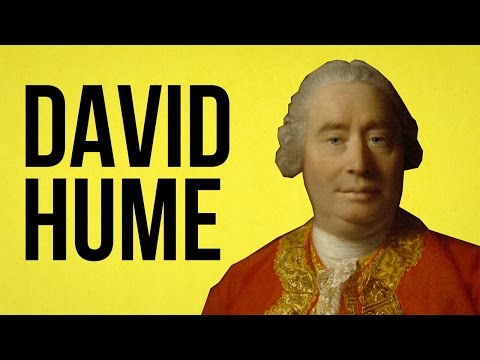
This School of Life film is an 11-minute portrait of David Hume, told as much through his life as through his ideas. It presents him as a man of the world rather than a cloistered academic: a dinner guest, a backgammon player, an adviser to the British ambassador in Paris, and a conversationalist nicknamed "Le Bon David." His first book, A Treatise of Human Nature, fell "dead-born from the press." He then retrained himself to write in a more popular manner and found an audience and money. The film treats his philosophy as an answer to a personal question: what makes a good life, and how can one shape one's own character and other people's?
The ideas cover several areas. On belief, the film says we usually reason backward, deciding an idea is nice or threatening and then recruiting argument afterward. On the self, Hume is a skeptic (philosophical)) who looks inward and finds only passing perceptions of heat, love, pain or pleasure, not a core self. The film sets this against the rationalist project of René Descartes. Hume's alternative is that most common-sense beliefs deserve keeping because they work, and that insisting on rationality about everything is a kind of madness.
The contentious turns are religious and educational. Hume found no compelling rational case for God, drifting between mild agnosticism and mild theism, and the film uses this to explain his defense of religious toleration: believers are emotion-driven creatures, not people who have made a logic error, so arguing them out of belief misses the point. The same logic shapes the practical programme. Passions can be educated toward benevolence, patience and ease through example, encouragement and sympathy, and the film argues that dry lectures cannot do this. That is also why it gives the public intellectual, who must win attachment through charm and wit, a role the professor lacks.
David Hume argued that human behavior and belief are fundamentally driven by feeling and passion rather than reason, and that effective education and persuasion must therefore appeal to emotions and sentiments rather than logical argument.
- Reason is the slave of passion; we decide major life questions (who to love, what career to pursue, moral judgments) based on feeling before rationality post-hoc justifies those choices
- Public intellectuals succeed by exciting passion-based attachment through good writing and charm, not through rigorous logical proof
- Education must address the passions—teaching benevolence, patience, and sympathy—rather than attempting to train rationality alone
This asset isn't compiled yet
You're seeing its claims, ranked. Compile it to build the argument threads, weight them, and check each claim against your library — the full view.
Hume argued that morality is not about having moral ideas but about being trained from an early age in the art of decency through emotional habituation; being good means acquiring good habits of feeling.
“Hume took a great interest in the traditional philosophical topic of Ethics A conundrum of how humans can be good. He argued that morality isn't about having moral ideas It's about having been trained from an early age in the art of decency through the emotions Being good means getting into good habits of feeling.”
Hume was a philosophical skeptic who doubted the concept of 'personal identity'—the common-sense idea that we have an enduring, graspable, and definable self that persists through life.
“Hume was what is technically known as a skeptic someone committed to doubting a lot of the common sense ideas of the day. One of the things he doubted was the concept of what is technically called "personal identity". The idea that we have that we can understand ourselves and have a more or less graspable and enduring identity that runs through life.”
Hume observed that we very often reason backward from our convictions: we find an idea nice or threatening and declare it true or false on that basis, and reason only comes in later to support the original emotional attitude.
“Hume was deeply attentive to the curious way that we very often reason from not to our convictions. We find an idea nice or threatening and on that basis alone declare it true or false. Reason only comes in later to support the original attitude.”
David Hume identified that humans are more influenced by their feelings than by reason, and argued that understanding and working with this fact rather than denying it could lead to greater individual and collective calm and happiness.
“The 18th century writer, David Hume, is one of the world's great philosophical voices because he hit upon a key fact about human nature- that we are more influenced by our feelings than by reason. This is, at one level, possibly a great insult to our self image, but Hume thought that if we could learn to deal well with this surprising fact, we could be both individually and collectively a great deal calmer and happier than if we denied it.”
Hume's philosophy emerged as an attempt to answer the personal question of what makes a good life and how to influence one's own character and that of others for the better, rather than from abstract philosophical speculation.
“Hume's philosophy always emerged as an attempt to answer a personal question. What is a good life? He wanted to know how his own character and that of those around him could be influenced for the best. And oddly, for a philosopher, he didn't feel the traditional practice of Philosophy could really help.”
Few of our leading convictions are driven by rational investigations of the facts; instead, we decide whether someone is admirable, what to do with our spare time, what constitutes a successful career, or who to love based primarily on feeling, with reason playing only a secondary supporting role.
“Few of our leading convictions had driven by rational investigations of the facts. We decide whether someone is admirable, what to do with our spare time, what constitutes a successful career, or who to love on the basis of feeling above anything else. Reason helps a little, but the decisive factors are bound up with our emotional lives, with our passions, as Hume calls them.”
Hume's first book, 'A Treatise of Human Nature', received a dismal reception, falling 'dead-born from the press,' but he subsequently retrained himself to write in a more accessible and popular manner, which eventually brought him both an audience and significant financial success.
“His first book, 'A Treatise of Human Nature', for which he had the highest hopes, met with a dismal reception. "Never literary attempt was more unfortunate than my Treatise", he wrote. "It fell dead-born from the press, without reaching such distinction as to even excite a murmur along the zealots."”
Hume argued that when examining himself intimately, he never finds a 'core self' but only particular perceptions—of heat or cold, light or shade, love or hatred, pain or pleasure—and that we are not the neat, definable people reason tells us we are.
“When I enter most intimately into what I call "myself", I always stumble on some particular perception or other, of heat or cold, light or shade, love or hatred, pain or pleasure. I never can catch "myself" at any time without a perception and can never observe anything but the perception. Hume concluded that we aren't really the neat definable people reason tells us that we are and that we seem to be when we look at ourselves in the mirror or casually use that grand and rather misleading word " I ".”
Hume lived not in intellectual seclusion, as philosophers traditionally did, but deeply embedded in the company of other humans, dining, chatting about love and career, and playing Backgammon, which exemplified his philosophical belief in the importance of social engagement.
“he insisted. That's the way Hume lived. Not in the intellectual seclusion of a monastery or ivory tower, But deeply embedded in the company of other humans, dining. He especially liked roast chicken, chatting about love and career and playing Backgammon.”
Being able to follow complex arguments or deduce trends from data does not make a person sensitive to the sufferings of others or skilled at managing their temper; these qualities are the work of our feelings, not our intellect.
“He was hugely struck by the fact that a person and here again, he was thinking of Descartes could be ostensibly rational and yet, not that nice. Because being able to follow complex argument or deduce trends from data doesn't make you sensitive to the sufferings of others or skilled at keeping your temper. These qualities are the work of our feelings”
Hume believed not that all feelings are acceptable and equal, but rather that the passions can and should be educated; people must learn to be more benevolent, patient, at ease with themselves, and less fearful of others through an education system that addresses feelings rather than reason.
“What Hume didn't believe however was that all feelings are acceptable and equal. that's why he firmly believed in the education of the passions. People have to learn to be more benevolent, more patient, more at ease with themselves and less afraid of others. But to be taught these things they need an education system that addresses feelings rather than reason.”
Hume did not think it was rational to believe in God; he found no compelling logical arguments for the existence of a deity and himself floated between mild agnosticism and mild theism, regarding the idea of a vindictive God as a cruel superstition.
“Hume didn't think it was rational to believe in god. That is - he didn't think there were compelling logical arguments in favor of the existence of a deity. He himself seems to have floated between mild agnosticism (there might be a god, I'm not sure) and mild theism (there is a god, but it doesn't make much difference to me that there is). However the idea of a vindictive god, someone ready to punish people in an afterlife for not believing in him in this one, this he considered a cruel superstition.”
To encourage people to behave well, education systems must be rethought to influence the development of feeling by encouraging benevolence, gentleness, pity, and shame through appeal to the passionate sides of human nature, not through dry, logical lectures.
“So, if we want people to behave well, what we need to do is to rethink education We have to influence the development of feeling We have to encourage benevolence, gentleness, pity and shame through the seduction of the passionate sides of our nature, without delivering dry, logical lectures.”
Hume was not primarily an academic philosopher; he was a man of the world who disliked university professors and instead engaged deeply with social life, serving as adviser to the British ambassador in Paris and becoming a renowned conversationalist known as 'Le Bon David'.
“Though he was scholarly, he was in large part, a man of the world. For some years, he was an adviser to the British ambassador in Paris who welcomed his shrewd wisdom. He was much liked by those around him, known by the French as 'Le Bon David', a humane, kind and witty conversationalist, much in demand as a dinner companion.”
Hume was a foremost defender of religious toleration because he argued that those who disagree on religious matters should be understood not as rational people who have made an error of reasoning, but as emotion-driven creatures who should be left in peace so long as they extend the same courtesy.
“This is why he was a foremost defender of the concept of religious toleration. We shouldn't treat those who disagree with us over religion as rational people who've made an error of reasoning and so need to be put right, but rather as passionate emotion-driven creatures who should be left in peace so long as they do likewise with us. Trying to have a rational argument over religion was for Hume the height of folly and arrogance.”
If you want to change people's beliefs, reasoning with them like a normal philosophy professor will not be the most effective strategy; instead, one must adjust sentiments through sympathy, reassurance, good example, encouragement, and what Hume calls 'art,' and only later, for determined souls, should one attempt to make a case on the basis of facts and logic.
“Hume's insight is that if you want to change people's beliefs reasoning with them like a normal philosophy professor won't be the most effective strategy. He's pointing out that we have to try to adjust sentiments by sympathy, re-assurance, good example, encouragement and what he called "art". And only later, for a few determined souls, should we ever try to make a case on the basis of facts and logic.”
Despite his skepticism about many common-sense ideas, Hume held that we should retain most of our common-sense beliefs because they are what help us make our way in the world, and trying to be rational about everything constitutes a special kind of madness.
“Yet, despite being skeptical of temper Hume was very happy for us to hold onto most of our common-sense beliefs because they are what help us make our way in the world Trying to be rational about everything is a special kind of madness.”
Hume was making a critique of the Cartesian rationalist project in which Descartes argued we should discard every fruit of the mind that isn't perfectly rational, whereas Hume proposed that hardly anything we do is truly rational and yet most beliefs are justified simply because they work and are useful.
“Hume was making a slight dig at Descartes. The French philosopher had died 60 years before Hume was born. But his intellectual influence was still very much alive. He had argued that we should throw out every fruit of the mind that wasn't perfectly rational. But Hume proposed that hardly anything we do is ever truly rational And yet he ventured that most beliefs are justified simply because they work They're useful to us. They help us to get on with what we want to do. A test of a belief isn't its provable truth but its utility”
The Age of Reason claimed that the glory of human beings consists in their rationality, but Hume rejected this by arguing that humans are just another kind of animal, not fundamentally distinct through reason.
“Hume lived in a time known as the Age of Reason, when many claimed that the glory of human beings consists in their rationality, but for Hume a human is just another kind of animal.”
Hume's approach to addressing the problem of how to live a good life differed from traditional philosophy in that he believed the practice of academic philosophy could not truly help with this question.
“And oddly, for a philosopher, he didn't feel the traditional practice of Philosophy could really help.”
Hume offered a corrective to the philosophical fascination with prestigious but unimportant logical conundrums by standing instead for a skeptical philosophy grounded in common sense that championed the everyday and the wisdom of the unlearned and ordinary.
“Hume was offering a corrective which we sometimes badly need to our fascination with prestigious but not actually very important logical conundrums In opposition to academic niceties he was a skeptical philosopher who stood for common sense Championing the everyday and the wisdom of the unlearned and the ordinary.”
Hume believed public intellectuals were essential because, unlike university professors, they had to excite a passion-based attachment to ideas and wisdom through well-written prose, colorful examples, wit, and charm; they succeeded financially only if they achieved this emotional engagement.
“This is why Hume so deeply believed in the role and significance of public intellectuals. These were people who (unlike university professors that Hume grew to dislike immensely) had to excite a passion-based attachment to ideas, wisdom and insight. Only if they succeeded would they have the money to eat. It was for this reason that they had to write well, use colorful examples and have recoursed wit and charm.”
Hume was a great advocate of wit, good manners, and sympathy because these are the qualities that make people nice to be around, independent of any rational plan to be good.
“Hume was a great advocate of qualities like wit, good manners and sympathy because these are the things make people nice to be around outside of any rational plan to be good.”
Religious belief is not the product of reason, so arguing for or against it on the basis of facts and logic does not touch the core issue; therefore, attempting to persuade someone to believe or disbelieve through well-honed arguments is misguided.
“Hume's central point is that religious belief isn't the product of reason. So arguing for or against it on the basis of facts doesn't touch the core issue. To try to persuade someone to believe or not believe with well-honed arguments seemed particularly daft to Hume.”
Hume died in Edinburgh in August 1776 at his home in St. Andrew's Square, and is remembered as an outstanding philosopher alive to how much philosophy has to learn from common sense.
“Hume died in Edinburgh in August 1776, at home, in his house in St. Andrew's Square His doctor wrote about the last hours to Adam Smith, for many years, Hume's best friend. Hume remains a rather outstanding thing. A philosopher, alive to how much Philosophy can has to learn from common-sense.”