What this covers
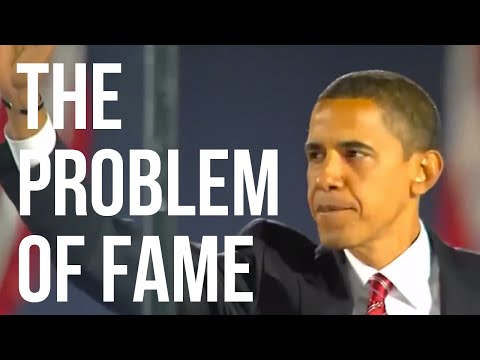
This six-minute School of Life film is narrated by an unidentified speaker and addressed, in the publisher's words, to "recovering fame addicts." It begins with what fame appears to offer: crowds that part, strangers who smile with admiration, no need to explain yourself, complaints taken seriously, and one's happiness becoming everyone's concern. It then asks why people want these things, tracing the hunger to early neglect, either from parents who were hard to impress or from a schoolyard that felt intolerable after a childhood of adulation.
The middle of the film turns to what fame actually does. Strangers can say through newspapers, screens, and social media what they would never say face to face, so the famous are more exposed to judgment, not less. The film describes the daily confirmation of one's worst fears and the way even a senseless criticism lodges in the mind beyond the reach of any lawyer. Social media has made fame easier to reach and, by the same logic, hatred easier to attract, so minor celebrities now meet the vitriol once reserved for film stars. Public sympathy is withheld too: a hurt celebrity strikes most people as a joke. The film also argues that those who become famous tend to have thin skin and a compulsion to listen, which makes them the people least equipped to cope. It presents breakdowns as the predictable result of the pathology of fame, a claim some viewers may contest.
The closing movement splits into two levels. For individuals, the mature course is to give up on fame and pursue appreciation and understanding through friendship, since intimacy cannot be scaled to millions. Wise people also separate the practical work of marketing from the wish to be liked by strangers. Politically, the film reads young people's desire for fame as a symptom of a collective failure of civility and calls for more politeness and respect in families, workplaces, politics, and media.
Fame promises to solve problems rooted in early neglect or rejection, but cannot deliver because it amplifies vulnerability to judgment while attracting hostility, making it a pathological solution that reflects deeper social failures in civility and mutual respect.
- The desire for fame originates in wounds of insignificance, but fame aggravates rather than heals these wounds by exposing people to unlimited criticism from strangers
- Fame cannot provide the actual goods it promises—appreciation, understanding, and kindness—because these are only available through intimate relationships, not mass recognition
- The epidemic of fame-seeking among young people signals a collective failure of society to provide the civility and respect that people need, not a personal failing to be fixed by individual choice
This asset isn't compiled yet
You're seeing its claims, ranked. Compile it to build the argument threads, weight them, and check each claim against your library — the full view.
The world is not kind to the famous because the success of any one person involves humiliation for others—the celebrity of a few people will always contrast painfully with the obscurity of the many, which upsets people.
“You want to be famous because you want people to like you, but the world isn't generally kind to the famous for very long, and the reason is basic: the success of any one person involves humiliation for lots of others. The celebrity of a few people will always contrast painfully with the obscurity of the many. Being famous upsets people.”
People desire fame because it promises solutions to fundamental social problems: crowds will make way for you, strangers will smile at you with admiration, you will be safe from rejection, you won't need to explain yourself, people will be convinced by you before meeting you, complaints will be taken seriously, and your happiness will become everyone's focus.
“Fame seems to be the solution to so many problems. When you're famous people will make way for you in crowds. You'll get warm smiles from admiring strangers. You'll be safe from rejection. You won't have to explain who you are at each new occasion. People will be convinced by you before you even meet them. If ever you're unhappy about something, your complaints will be taken very seriously. Your happiness become the focus of everyone's effort.”
Fame makes people more, not less vulnerable, because it throws them open to unlimited judgment from people who would never dare to say harsh things directly but can safely express themselves through newspapers, screens, and social media.
“Fame makes people more, not less vulnerable, because it throws them open to unlimited judgement. Everyone is rooted by a cruel assessment of their character or merit, but fame has had an added challenge in store-- the assessments will come in from legions of people who would never dare to say to their faces what they could not express for the safety of the newspaper office or the screen.”
A hurt celebrity is conceptually a joke, as moving to the average person as the sadness of a tyrant, because the public does not accord sympathy to those who are famous.
“Needless to say, as a hurt celebrity, one won't be eligible for sympathy. The very concept of a hurt celebrity is a joke-- about as moving for the average person as the sadness of a tyrant.”
Fame cannot accomplish what is asked of it—celebrity disintegrations, breakdowns, and psychological crises are not isolated incidents but manifestations of an inevitable pattern within the pathology of fame.
“In the end there's a problem: fame cannot really accomplish what is asked of it. Every new famous person who disintegrates, breaks down in public, or loses their mind, is judged in isolation, rather than being interpreted as a victim of an inevitable pattern within the pathology of fame.”
The intense desire for fame has its roots in early experiences of neglect or injury, where one was made to feel extremely insignificant—either by parents who were hard to impress, or by the wider world (schoolyard, social context) that became intolerable after early years of parental adulation.
“The intense desire for fame probably has its roots in the experience of neglect-- in injury. No one would want to be famous who hadn't also somewhere in the past been made to feel extremely insignificant: perhaps one's parents were hard to impress, that's why one dreams that one day the world would pay attention. Or, maybe our parents were great, but it was the wider world, starting with the schoolyard, that was intolerable after early years of adulation at home.”
For those already famous, the only way to stay sane is to stop listening to what the wider world is saying, whether positive or negative, because neither kind of judgment serves the intimate psychological needs one actually has.
“For those who are already famous, the only way to stay sane is to stop listening to what the wider world is saying. This applies to the good things as much as to the bad. It's best not to know.”
Every worst fear about oneself—being stupid, ugly, unworthy of existence—would be daily confirmed by strangers' comments, and one will learn that people who never met you actively loathe you.
“Every worst fear about oneself-- that one's stupid, ugly, not worthy of existence-- would daily be confirmed by strangers. One will be exposed to the fact that people one's never met about whom one will only have in good will, actively loath one; one will learn the devastation of one's personality is, in some quarters, a badge of honor.”
Social media has made it far easier to become famous and therefore, by necessity, far easier to be hated, with minor celebrities now regularly facing the same level of vitriol previously reserved for Hollywood stars.
“Social media hasn't helped; it's made it far easier than before to be famous, and therefore by necessity, far easier to be hated. The minor celebrity can now regularly face all of vitriol previously accorded only to Hollywood stars.”
Some criticisms of famous people will be horribly insightful while others will make no sense to anyone who really knows them, but all criticisms lodge in people's minds and cannot be deleted by any lawyer, court case, or magician.
“Sometimes the attacks will be horribly insightful; at other times, they'll make no sense to anyone who really knows one. But the criticisms will lodge in people's minds nevertheless, and no lawyer, court case, or magician will ever be able to delete them.”
The desire for fame is a sign that an ordinary life has ceased to be good enough, reflecting a collective failure of civility rather than an individual character flaw.
“The desire for fame is a sign that an ordinary life has ceased to be good enough.”
The solution to widespread fame-seeking is not to encourage more people to become famous, but to put massive efforts into increasing politeness and consideration for everyone in families, communities, workplaces, politics, and media at all income levels, especially modest ones.
“The solution is not to encourage ever more people to become famous, but to put massive efforts into encouraging greater level of politeness and consideration for everyone-- in families, in communities, in work places, in politics, in the media, and all income levels, especially modest ones.”
Young people want to be famous because they are not being respected—because citizens have forgotten how to accord one another the degree of civility, appreciation, and decency that everyone craves and deserves.
“they want to be famous because they're not being respected-- because citizens have forgotten how to accord one another the degree of civility, appreciation, and decency that everyone craves and deserves. The desire for fame is a sign that an ordinary life has ceased to be good enough.”
The famous are the very last people on earth to be well-equipped to deal with fame because they only became famous because they were wounded, had thin skin, or were in some respect ill, and fame now aggravates this condition exponentially rather than compensating for it.
“Psychologically, the famous are of course, the very last people on earth to be well-equipped to deal with what they're going through. After all, they only became famous because they were wounded, because they had thin skin, because they were, in some respect, a bit ill. And now, far from compensating them adequately for their disease, fame aggravates it exponentionally.”
There is no shortcut to friendship or to being appreciated and understood; the famous person is, in effect, seeking friendship from millions of strangers, which is impossible.
“There is no shortcut to friendship-- which is what the famous person is, in effect, seeking.”
Wise people distinguish between the practical needs of marketing and advocacy for their work and the intimate desire to be liked and treated with justice by people they don't know, and they do not confuse the two.
“The wise person knows that their products need attention, but they make a clear distinction between the purely practical needs of marketing and advocacy, and the intimate desire to be liked and treated with justice and kindness by people one doesn't know.”
Only when society provides adequate civility, appreciation, and decency to all people will people give up on the false belief that fame could guarantee the kindness of strangers.
“Only then will a society give up on the understandable, but erroneous belief that fame could guarantee the kindness of strangers.”
At a collective political level, the fact that many young people want to be famous and see it as a necessary condition for success is significant and worrying, not because the desire is shameful but because it reveals something important about society.
“At a collective political level, we should pay great attention to the fact that today, so many people, particularly young ones, want to be famous, and even see fame as a necessary condition for a successful life. Rather than dismiss this wish, we should grasp its underlying, worrying meaning:”
Fame is inextricably connected to being 'too visible' in the eyes of some people, which makes the famous a plausible target for blame as a symbol of how the world is treating them unfairly.
“When we imagine fame, we forget that it's inextricably connected to being "too visible" in the eyes of some people. To bugging them on duty, to coming to be seen as the plausible cause of their humiliation is symbol of how the world is treating them unfairly.”
Strangers voice negative opinions about the famous in detail, unable or unwilling to imagine that famous people are emotionally sensitive and bleed more quickly than others, possibly because they cannot conceive that someone would become famous without a compulsion to listen too much.
“Strangers voice their negative opinions in detail, unable or simply unwilling to imagine that famous people bleed far more quickly than anyone else. They might even think the famous aren't listening; that one wouldn't become famous if one didn't suffer from a compulsion to listen too much.”
At an individual level, the only mature strategy is to give up on fame, while still preserving the underlying aim—to be appreciated and understood—through intimate relationships rather than mass recognition.
“At an individual level, the only mature strategy is to give up on fame. The aim that lay behind the desire for remains important; one does still want to be appreciated and understood. But the wise person accepts that celebrity does not actually provide these things. Appreciation and understanding are only available through individuals one knows or cares about-- not via groups of a thousand or a million strangers.”
Fame means you get noticed a great deal, but not that you get understood, appreciated, or loved.
“To sum up, fame really just means you get noticed a great deal-- not that you get understood, appreciated, or loved.”
A nasty remark takes a day or two to process, and social media has made it far easier than before for people to direct such remarks at public figures.
“We know from our own lives that a nasty remark can take a day or two to process. Social media hasn't helped; it's made it far easier than before to be famous, and therefore by necessity, far easier to be hated.”