What this covers
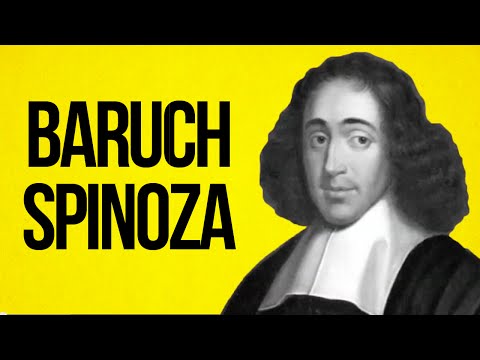
This School of Life film is a nine-minute portrait of Baruch Spinoza, the 17th-century Dutch philosopher who tried to rebuild religion as something impersonal and quasi-scientific, yet still consoling. A single unnamed narrator carries it. The film sketches his break with the religious establishment, including the curse in the cherem pronounced against him ("cursed be he by day and cursed be he by night"). It then sets out the system of the Ethics and ends by asking why the system never caught on.
The middle of the film is a close account of Spinoza's God. Though he never called himself an atheist and insisted he defended God, this God is not a craftsman, king, or judge. It is indistinguishable from nature, existence, and reason, so there is no one to hear prayers, perform miracles, or reward the virtuous with an afterlife. The Bible, on this view, was written by ordinary people, and personal images of God are projections of the imagination. The narrator calls Spinoza's line that whoever loves God cannot expect to be loved in return a rebuke to infantile narcissism. Understanding God means studying psychology, philosophy, and the natural sciences, not scripture.
The film also traces Spinoza's debt to the Stoics. It cites Seneca's image of humans as dogs strangled by pulling against the leash of necessity, and it links this to acceptance of necessity). It explains the contrast between sub specie durationis, the egoistic, time-bound view, and sub specie aeternitatis, the eternal view that reason alone makes available. The final turn is the contentious one: the narrator judges Spinoza's wisdom superior to the Bible's but argues that he ignored ritual, art, tradition, and the wish to belong, which is why religion survived him.
Spinoza's rationalist philosophy, though intellectually superior to traditional religion, failed to displace it because it neglected the emotional, ritual, and communal dimensions that actually sustain religious belief.
- Spinoza's Ethics contains more wisdom than the Bible but lacks the supporting structures (ritual, community, aesthetics) that make religion psychologically compelling
- People are motivated by emotion, tradition, and belonging—not reason alone—so a purely rational system cannot replace religion
- Spinoza's impersonal God and rejection of prayer, miracles, and divine reward undermined the psychological functions religion serves
This asset isn't compiled yet
You're seeing its claims, ranked. Compile it to build the argument threads, weight them, and check each claim against your library — the full view.
Despite rejecting traditional religion, Spinoza did not declare himself an atheist and insisted he remained a staunch defender of God, because God plays an absolutely central role in his ethics
“However, despite all this, remarkably, Spinoza did not declare himself an atheist He insisted that he remained a staunch defender of God. God plays an absolutely central role in Spinoza's ethics.”
In Spinoza's philosophy, God is not a person who stands outside of nature; there is no one to hear prayers, create miracles, or punish misdeeds, and there is no afterlife
“God is not a person who stands outside of nature there is no one to hear our prayers or to create miracles or to punish us for misdeeds. There is no afterlife”
According to Spinoza, man is not God's chosen creature and the Bible was written by ordinary people, not divinely inspired
“man is not God's chosen creature. The Bible was only written by ordinary people.”
In Spinoza's conception, God is not a craftsman, architect, king, or military strategist, does not see, expect, or judge anything, and does not reward the virtuous with afterlife
“God is not a craftsman or an architect, nor is he a King or military strategist who calls for believers to take up the Holy Sword. God doesn't see anything, nor does he expect anything. He doesn't judge. He doesn't even reward the virtuous with the life after death.”
Spinoza was deeply influenced by the philosophy of the Stoics of ancient Greece and Rome, who argued that wisdom lies not in protest against how things are but in continuous attempts to understand the ways of the world and then bow down peacefully to necessity
“Spinoza was deeply influenced by the philosophy of the Stoics of ancient Greece and Rome. They had argued the wisdom lies not in protest against how things are but in continuous attempts to understand the ways of the world and then bow down peacefully to necessity”
Spinoza makes a famous distinction between two ways of looking at life: seeing it egoistically from a limited point of view (sub specie durationis—under the aspect of time), or looking at things globally and eternally (sub specie aeternitatis—under the aspect of eternity)
“Spinoza made a famous distinction between two ways of looking at life. We can either see it egoistically from our limited point of view. As he put it: sub specie durationis (under the aspect of time) or we can look at things globally and eternally: sub specie aeternitatis (under the aspect of eternity).”
Spinoza's God is wholly impersonal and indistinguishable from what might be called 'nature', 'existence', a 'world soul', reason, truth, and the animating force in everything that is or can be
“Spinoza's God is wholly impersonal and indistinguishable from what we might variously called 'nature' or 'existence' or a 'world soul'. God is the universe and its laws God is reason and truth. God is the animating force in everything that is and can be.”
Baruch Spinoza was a 17th century Dutch philosopher who attempted to reinvent religion by moving it away from superstition and ideas of direct divine intervention toward a more impersonal, quasi-scientific discipline that was also serenely consoling
“Baruch Spinoza was a 17th century Dutch philosopher who tried to reinvent religion, moving it away from something based on superstition and ideas of direct divine intervention to being a discipline that was going to be far more impersonal, quasi scientific and yet also at times serenely consoling.”
The Stoic principle, as expressed through Seneca and adopted by Spinoza, holds that the wise must endeavor to understand ahead of time how things are—what love is like, how politics works—and then change their direction accordingly so as not to be strangled unnecessarily
“And therefore the wise must always endeavor, to try to understand ahead of time how things are. For example what love is like or how politics works. And then change their direction accordingly so as not to be strangled unnecessarily.”
Spinoza argued that every representation of God as a person is merely a projection of the imagination, and everything in the traditional liturgical calendar is pure superstition
“Every representation of God as a person is a projection of the imagination and everything in the traditional liturgical calendar is pure superstition and mumbo-jumbo.”
The rabbis' cherem against Spinoza contained the curse: 'We excommunicate, expel, curse and damn Baruch Spinoza...cursed he be by day and cursed be he by night. Cursed be he when he lies down and cursed be he when he rises up', indicating the severity of religious condemnation
“It went by the decree of the angels and by the commander of the holy man - we excommunicate, expel, curse and damn Brauch Spinoza with all the curses which are written in the book of law cursed he be by day and cursed be he by night. Cursed be he when he lies down and cursed be he when he rises up.”
Spinoza states: 'Whatever is, is in God and nothing can exist or be conceived without God', expressing the principle that all reality is contained within and dependent on God's nature
“Spinoza writes: "Whatever is, is in God and nothing can exist or be conceived without God."”
Seneca, Spinoza's favorite philosopher, compared human beings to dogs on a leash being led by the necessities of life in various directions, arguing that the more one pulls against necessity, the more one is strangled
“Seneca, Spinoza's favorite philosopher, had compared human beings to dogs on a leash being led by the necessities of life in a range of directions. The more one pulls against what's necessary, the more one is strangled.”
Traditional religion, which Spinoza thought was outmoded in the 1670s, continues to thrive and convince people because rationalist philosophy failed to account for the importance of ritual, tradition, art, and the desire to belong
“What the traditional religion, that Spinoza thought outmoded in the 1670s, continues to thrive and convince people. If we're ever to replace traditional beliefs, we must remember just how much religion has helped along by ritual, tradition, art and a desire to belong.”
Spinoza's great failure, despite containing profound wisdom, was that he ignored the ritual, aesthetic, communal, and belonging dimensions of human motivation in his bold attempt to replace the Bible with rational philosophy
“All things that Spinoza, despite its great wisdom, ignored it as peril in his bold attempt to replace the Bible.”
According to Spinoza, the free person is one who is conscious of the necessities that compel us all; the wise person who understands how and why things are possesses eternally true complacency of spirit
“The free person is one conscious of the necessities that compel us all. Spinoza writes, the wise man, the person who understands how and why things are, possesses eternally true complacency of spirit.”
For Spinoza, normatively speaking, what is 'bad' is whatever is bad for us, and what is 'good' is whatever increases our power and advantage; however, to be truly ethical means rising above such local concerns
“Normally we call bad, whatever is bad for us, and good whatever increases our power and advantage. But for Spinoza, to be truly ethical means rising above such local concerns.”
Spinoza was keen to undermine the idea of prayer because through prayer an individual appeals to God to change the way the universe works, which is entirely the wrong way to think about the relationship between humans and existence
“Throughout his text, Spinoza was keen to undermine the idea of prayer. In prayer, an individual appeals to God to change the way the universe works. But Spinoza argues that this is entirely the wrong way around.”
According to Spinoza, the task of human beings is to try to understand how and why the universe works the way it does and then accept it, rather than protest the workings of existence by sending petitions to God
“But Spinoza argues that this is entirely the wrong way around. The task of human beings is to try to understand how and why the universe works the way it does and then accept it, rather than protest at the workings of existence by sending little messages up into the sky.”
Spinoza writes that 'Whoever loves God cannot strive that God should love him in return', arguing that only a deeply distorted infantile narcissism would lead someone to believe in God and then imagine that God would bend the rules of existence to improve their life
“As Spinoza put it beautifully but rather caustically: "Whoever loves God cannot strive that God should love him in return". In other words only a deeply distorted and infantile narcissism would lead someone that wants to believe in God and then to imagine that this God would take an interest in bending the rules of existence to improve his or her life in some way.”
To understand God, Spinoza argues, is not primarily a matter of studying the Bible and holy texts, but rather understanding how life and the universe work through knowledge of psychology, philosophy, and the natural sciences
“To understand God, traditionally means studying the Bible and other holy texts. But Spinoza now introduces another idea. The best way to know God is to understand how life and the universe work. It's through a knowledge of psychology, philosophy and the natural sciences that one comes to understand God.”
In traditional religion, believers ask special favors of God, but Spinoza proposes instead that we should understand what God wants, which can be done above all by studying everything that is and reasoning toward a divine eternal perspective
“In traditional religion believers ask special favors of God. Spinoza proposes instead that we should understand what God wants and we can do so in one way above all - by studying everything that is. By reasoning we can exceed to a divine eternal perspective.”
According to Spinoza, human nature means we are always divided between the egoistic temporal view and the eternal perspective, as sensual life pulls us toward a time-bound partial view, while reason and intelligence give us unique access to an eternal perspective that allows us to participate in eternal totality
“Our nature means that we'll always be divided between the two. Sensual life pulls us towards a time-bound partial view. But our reason and intelligence can give us unique access to another perspective. It can quite literally allow us - and here Spinoza becomes beautifully lyrical - to participate in eternal totality.”
The universe/God has its own projects, and humanity's task is to understand rather than rail against these, which frees the individual from the emotional disturbances of resistance
“The Universe God has its own projects and it's our task to understand rather than rail against these.”
Spinoza's work was largely forgotten down the ages; Hegel and Wittgenstein eventually took an interest, as did several twentieth-century philosophers, but from many perspectives Spinoza's work constitutes a warning about failures of philosophy
“Spinoza's work was largely forgotten down the ages. Hegel took an interest, as did Wittgenstein and several other twentieth century philosophers. But from many perspectives Spinoza's work constitutes a warning about failures of philosophy.”
Spinoza envisaged his philosophy as a route to a life based on freedom from guilt, sorrow, pity, and shame, in which happiness involves aligning one's will with that of the universe
“Spinoza envisaged his philosophy as a route to a life based on freedom from guilt, from sorrow, from pity or from shame. Happiness involves aligning our will with that of the universe.”
People stick with their religious beliefs because they like the ritual, the communal meals, the yearly traditions, the beautiful architecture, the music, and the lovely language read out in a synagogue or church
“People stick with their beliefs because they like the ritual, the communal meals, the yearly traditions, the beautiful architecture, the music and the lovely language read out in a sinagoge or church.”
The reason Spinoza failed to displace religion is simple and banal: what leads people to religion isn't just reason, but far more importantly emotion, belief, fear, and tradition
“The reasons are in a way simple and banal. Spinoza failed to understand, like so many philosophers before and since, that what leads people to religion isn't just reason, but far more importantly: emotion, belief, fear and tradition.”
Despite containing more wisdom than the Bible, Spinoza's Ethics failed utterly to convince any but a few to abandon traditional religion and to move toward a rationalist, wise system of belief
“Spinoza's Ethics arguably contains a whole lot more wisdom than the Bible. But because it comes without any of the Bible's supporting structure it remains a marginal work, studied here and there at universities in the West.”
The Ethics is one of the world's most beautiful books that contains a calming Stoic perspective on life, replacing the God of superstition with a wise and consoling pantheism
“The ethics is one of the world's most beautiful books. It contains a calming perspective for storing take on life. It replaces the God of superstition with a wise and consoling pantheism.”
A stoic attitude of understanding necessity and bowing peacefully to it is what constantly pervades Spinoza's philosophy
“It is this kind of stoic attitude that constantly pervades Spinoza's philosophy.”
Spinoza's ancestors were Sephardic Jews who fled the Spanish Peninsula following the Catholic-sponsored expulsion of 1492
“His ancestors were sephardic Jews who'd fled the Spanish Peninsula following the Catholic conspired expulsion of 1492”
Spinoza received an intensely traditional Jewish education at the Yeshiva and followed all Jewish High Holidays and rituals as a child
“Baruch, a studious, highly intelligent child, received an intensely traditional Jewish education. He went to the local Jewish school, the Yeshiva and followed all the Jewish High Holidays and rituals”
Spinoza's Ethics was written entirely in Latin and published in 1677, containing fully fleshed-out views challenging the main tenets of Judaism and organized religion in general
“His fully fleshed-out views would to be expressed his great work 'The Ethics', written entirely in Latin and published in 1677. In The Ethics Spinoza directly challenged the main tenets of Judaism in particular and organized religion in general.”
Spinoza's ideas were deeply controversial and caused him great trouble, leading to his excommunication from the Jewish community of Amsterdam in 1656 through a formal censure known as 'cherem'
“Needless to say these ideas got Spinoza into a very deep trouble. He was excommunicated from the Jewish community of Amsterdam in 1656 The rabbis issued a censure known as 'cherem' against the philosopher.”
Spinoza gradually distanced himself from the faith of his ancestors, later writing that although he was educated in accepted beliefs concerning Scripture, he felt bound to embrace other views
“But gradually he began to distance himself from the faith of his ancestors. "Although I have been educated from boyhood in the accepted beliefs concerning Scripture", he later wrote with characteristic caution, "I have felt bound in the end to embrace other views".”
After his excommunication, Spinoza was forced to flee Amsterdam and eventually settled in The Hague, where he lived quietly and peacefully as a lens grinder and private tutor until his death in 1677
“Spinoza was forced to flee Amsterdam and eventually settled in The Hague, where he lived quietly and peacefully as a lens grinder, and private tutor till his death in 1677.”