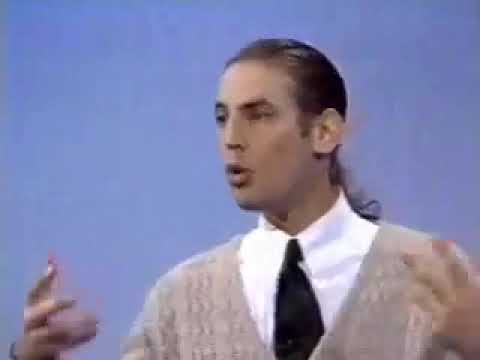
Dr. Darren Staloff, Weber's Historical Sociology
What this covers
This lecture, from The Teaching Company's "Great Minds" series and posted on Michael Sugrue's channel, is delivered by Darren Staloff. It works through Max Weber's sociology of authority. It begins with Weber's method. Staloff says Weber was shaped by the Darwinian revolution more than the Newtonian one, so he built taxonomies instead of deductive laws of development. That choice is what lets him compare how one authority form works across different epochs and places. The lecture also notes that Weber held strong political views but kept them apart from his academic analysis, so that sociology would not become a party's tool.
The core is legitimate domination, treated as a three-place relation among ruler, staff, and subjects. Only belief in legitimacy sustains it; custom, material interest, and solidarity help but do not suffice. Staloff takes each of the three types in turn. Legal-rational authority is described through five beliefs, including that obedience is owed to the law and not the person, and through the bureaucratic staff and the weight placed on written orders. Traditional authority runs on personal masters and retainers, from gerontocracy to patrimonial households. The lecture lists how retainers are supported, including the fief, and recruited. It also covers the danger of a traditionalist revolution when a master breaks custom, and the argument that traditional economic attitudes prevent capitalism from emerging.
Charisma gets the most vivid treatment. Staloff calls it Weber's most startling innovation. It rests on devotion to an exceptional individual, it rejects both law and tradition, and it demands total obedience, with the Kool-Aid example as the extreme case. Its community is non-hierarchical and quasi-communistic, and it is unstable, tending to become traditionalized or rationalized after the leader dies. The lecture closes on bureaucracy as the most efficient form, a domination through knowledge, and on its costs: social leveling, credentialism, and cold impersonality. Weber feared these would crowd out democratic republican alternatives.
Weber's theory of legitimate domination identifies three pure types—legal (rational-bureaucratic), traditional, and charismatic—that exhaust the possible grounds for stable authority across all human institutions, and understanding these types reveals how modern bureaucratic rationality increasingly dominates at the expense of democratic republican forms.
- Legitimate domination is grounded in belief and requires only one sufficient condition: the belief in legitimacy itself, which can rest on rational-legal, traditional, or charismatic grounds
- Each type of authority produces distinct administrative staffs, modes of obedience, and institutional forms that can be identified across family, state, church, military, and corporate organizations
- Bureaucratic domination, though technically most efficient, produces social leveling, credentialism (plutocracy), and cold formalistic impersonality, and Weber feared this form would eliminate the democratic republican alternative
This asset isn't compiled yet
You're seeing its claims, ranked. Compile it to build the argument threads, weight them, and check each claim against your library — the full view.
Weber was influenced by the Darwinian revolution rather than Newtonian science, which led him to develop taxonomic classification schemes rather than deductive laws of development, enabling cross-historical comparative analysis of how the same authority form operates across different epochs and geographies
“we remember marks and Engles were very affected by uh Newtonian science that was their model for social science so what they tried to offer were laws of development vver is far more influenced by the darwinian revolution so what he offers as opposed to the sort of deductive laws one would expect from uh physics is rather the taxonomic schemes schemes of categorization that one finds in biology and these taxonomic schemes allowed vber to do something we would call cross- historical analysis which is to say he would find a positive scheme and then look at it how that scheme worked out in different historical epochs within a single culture and then in different uh Geographic areas”
Domination requires a three-place relation between a ruler, a staff (agents of the ruler), and subjects, and the type of administrative staff, mode of obedience, and mode of exercising authority vary with the type of legitimate domination
“domination or the rule over a considerable number of persons requires something Vapor called a staff right a group of persons who are the Agents of the ruler and thus it is really fundamentally a three-place relation between a ruler a staff and subjects now the point is that as the type of legitimate domination varies so with it varies the kind of administrative staff we can expect to find under such domination the type of obedience that we can expect from the subjects and the staff and finally the very mode of exercising such Authority”
The three forms of domination range over all imaginable institutions in any given society—including family, private social clubs, political parties, state institutions, courts, and military organizations—each with distinct modes of legitimation
“here I think is the really fascinating part of and the real strength of AIS posit is that these three forms of domination range over all the imaginable institutions in any given society and when I say that I don't simply mean government institutions the family is an institution isn't it and it has in different epochs different grounds of legitimation private Social Clubs right the Elks Lodge or Freemasons are institutions which are subsumed under one of these three categories of uh domination political parties State institutions courts and even military organizations have their own distinct modes of legitimation”
While custom, material interest, and solidarity all partially support authority, none of these factors are sufficient by themselves to sustain legitimate domination—only the belief in the legitimacy of a given form of domination is sufficient to fully enable that form of power
“it might be partially supported by say for instance custom it is customary for example to follow orders and to do what authorities say it might be support by personal material interests if one works for an authority one has an interest in supporting that Authority it might even uh be supported by an ideal uh goal of solidarity right to follow Authority is fundamentally in some sense to bring Society together to become one with one's Community he says all of these things do in fact support Authority but none of them are sufficient to support Authority legitimate domination only the belief in the legitimacy of the given form of domination is sufficient to fully support and enable that form of power”
Weber did hold strong political opinions and expressed them readily, but he maintained a strict distinction between his political views expressed in political contexts and his sociological analysis expressed in academic contexts, preventing sociological theory from becoming a tool of any particular political party
“not to say vber did not have his own political opinions he did and they were very profound and and pronounced uh and he had no reluctance to express them but he always expressed them distinctly from his sociological discussions right they were two different things and they could well be related but if you wanted to make political inferences from your sociology it was best to do that in a political context and not in an academic context”
Bureaucratic domination is technically the most efficient form of legitimate authority—it consistently generates the most domination for the least expenditure of energy and most thoroughly dominates people—because it operates as a form of domination through knowledge utilizing specialized technical training
“vaver notes it's technically the most efficient and hence formally I.E instrumentally rationally the most uh efficient and rational means of exercising authority over people more so than any other means of legitimate domination bureaucratic domination will consistently get the most domination for the least expenditure of energy and will most thoroughly dominate people and in fact babber considered it so successful precisely because he thought it was a species of domination through knowledge that specialized training which distinguishes um legal Authority from the other modes means that those people will have probably had some training in behavioral psychology uh in various forms of let us say uh legal disputation such that they will have the the ability to apply Technical Training to dominating people”
Written orders are critically important in bureaucratic authority because spoken orders lack a record and depend on personal loyalty from subordinates, whereas written orders create fixed forms that cannot be deviated from and clearly establish where in the hierarchy responsibility lies
“finally the seventh requirement is written orders uh I can't stress this enough and neither could Vapor the reason is that if you have spoken orders then um you will not have a record of them such orders will be based then on whether the person who's received them has the loyalty to the official above them to follow them and they are likely to change from case to case once they are written down you have a fixed form from which you cannot deviate and you can clearly say where in the hierarchy of officialdom that decision came from and where responsibility if it is a mistake should lie”
Traditional authority fosters traditional attitudes toward the economy—the notion of a just price, just wage, and natural amount of income from property—and when these conflict with formal economic rationality, the result is noblesse oblige that undermines capitalism and prevents its emergence under traditional authority
“finally I want to mention the effect traditional Authority has on uh the economy traditional Authority tends to Foster Traditional attitudes towards the economy such attitudes is a notion of a just price a just wage a natural amount of income one can generate from a particular piece of property anything above that is considered untraditional so what we find in very brief is that something we might call nobless oblig undermines the formal rationality of economic decisions and thus inhibits capitalism one can never expect capitalism to emerge in under traditional Authority”
There is no hierarchy in the charismatic community; all members live in communistic relations with the leader, sharing resources equally according to ability and need without accounting
“there is no hierarchy in the charismatic Community everyone within the charismatic Community lives in communistic relations with the leader right this is found in uh the uh Acts of the Apostles right where everybody gives each according to his ability and takes each according to his uh ability gives and takes according to his needs and no one keeps an accounting”
In traditional authority, obedience is owed to a person who holds authority by tradition, not to abstract rules; the master's actions are bound by tradition, and when the master deviates from traditional rights there is danger of a traditionalist revolution
“what binds the staff to the ruler or to the master better yet is personal loyalty and obedience is not to some set of abstract rules but rather to a person a person who holds a position of authority by tradition some of the Master's actions in fact are bound by tradition and this suggests a real limitation to what the master can do and a significant limitation if he ever goes beyond his traditional rights there is a danger that he will Fen something that he called a traditionalist revolution right”
Charismatic authority opposes and rejects both rational legal authority and traditional authority, creating revolutionary change by rejecting the normative appeal of the past and establishing entirely new dispensations
“charismatic Authority opposes rational and traditional Authority it rejects the normative appeal of the past right Christ keeps saying forget what's written in the Mosaic code I bring you the new dispensation and in that sense it's truly revolutionary right it creates a whole new set of Demands and goals which had never been conceived of before and it in fact it is the Revolutionary force in traditional epochs when you have traditional Authority and you see a real substantive Revolution Will almost always be by a charismatic Leader by a Luther a Calvin uh a hus”
Law creation in traditional authority must be grounded in precedent and tradition; new laws cannot be created through legislation but only by finding ancient precedents that justify returning to how things were done centuries ago
“clearly in such a context the creation of law by legislation is just out of the question right the only thing that bears legitimacy are the good old ways if you want to create a new law in traditional Authority what you have to do is get some scribe to go over the old law books and find a president 3,000 years ago and say you know we haven't been following the good old ways for the last 200 years we have to go back to the right ways”
Subjects of charismatic authority have a duty to recognize its authenticity when confronted with miracles, creating an obligation to respond with complete personal devotion—a person must obey a charismatic figure without question, even to the point of following commands to jump off a mountain or drink poisoned Kool-Aid
“those subject to charismatic Authority are Duty bound to recognize its authenticity right when Christ calls you and shows you a miracle if you realize that it's a miracle you are Duty bound to say you are the Christ you have a certain power and you have to respond if you recognize that Authority with complete personal Devotion to its possessor if he tells you to go out and walk on water and jump off a mountain you do it if he asks you to drink Jim Jones Kool-Aid you do it”
Charismatic authority is inherently unstable and becomes either traditionalized, rationalized, or both, typically as a result of the followers' ideal or material interests in maintaining the movement after the leader's death
“the one drawback to charismatic Authority is that it's inherently unstable and becomes either traditionalized rationalized or both uh this is in part this rationalization or traditionalization uh a result of the followers either ideal or material interests in the movement after the death of the leader and here again he's looking specifically at the case of the apostolic Community Christ dies everyone might as well just go home now live their lives normally and read the text but rather they have either an ideal interest in believing that they're chosen or material interest in getting some power over a new church in keeping this movement alive somehow after after his death so they have to create a new leader have to find a new leader structure such routinization then devolves on how you choose the new leader”
Legal rational authority rests on five basic beliefs: (1) legal norms can be established by agreement or imposition based on expediency or morality; (2) law is a consistent system of abstract intentionally created rules; (3) officials and rulers are subject to universal legal norms; (4) obedience is owed to the law, not the person of the ruler; and (5) superiors are obeyed as placeholders in an impersonal order, not from personal loyalty
“this pure type of legitimate Authority rests on five basic beliefs the first is that any legal Norm can be established by agreement or imposition on the basis of expediency or quote morality and at least the members of the organization which is to say the staff must obey right as long as that is internalized by the staff that's one of the five basic presuppositions or beliefs that legitimate legal Authority the second is that every body of law is believed to be a consistent system of abstract rules which have been intentionally created right hence the need for legislative law as opposed to say common law which is purely based on tradition the Third belief is that even the officials of the bureaucratic staff and the ruler are subject to the universal legal norms and we have an excellent example in our own legal system in that our judges uh and our government officials are all impeachable if they violate the laws which they uh rule over fourthly a person who obeys Authority does so as a quote member of the organization and what is obeyed is not the ruler but but the law right the ruler is simply the carrier the bearer of the law it is the law itself which one obeys and of course uh if you think about American legal practice it's quite clear you don't obey the judge the judge tells you the law you obey the law fifthly and finally members of the organization obey superiors solely as placeholders in an impersonal order”
Legal rational authority is characterized by seven features: (1) continuous rule-bound conduct constantly imposed and enacted; (2) specified domain of authority written into rules; (3) hierarchic officialdom with no overlapping jurisdictions; (4) specialized training for officials rather than inheritance or spoils; (5) sharp disjuncture between staff members and owners; (6) salaried compensation based on proficiency rather than profit; and (7) written orders creating permanent records and clear responsibility
“it is characterized by seven features first there is a continuous rule-bound conduct right which means that um not only is the legal Authority constantly being imposed and enacted but it is constantly being imposed and enacted on the basis of written rules formulated rules moreover such legal Authority has a very specified sphere of conduct written into the rules right there's a domain in which legal Authority can intrude and a domain in which it cannot and that's very clearly specified uh it is also characterized by a hierarchic officialdom right there are no overlapping jurisdictions there are distinct Courts for civil cases distinct court courts for criminal cases fourthly there is a specialized training for officials right one does not inherit the position of an official as one what might in the House of Lords one does not gain it hopefully as a result of the spoil system in politics that's a previous mode of domination there is always specialized training one must go to law school for a certain number of years one must take training to pass a civil service exam a foreign service exam Etc there is a sharp disjuncture between staff members and owners this is very very important because consider a corporation right which is based on legal bureaucratic staff it's essentially the same mode of domination therein the people who staff the corporation are not the same as the owners and it would be a conflict of interest if they were the owners are the shareholders right the CEOs and the various corporate officials are the staff members right so that that's that very strong disjuncture so that you can follow rules as opposed to follow interest and of course that implies a salaried compensation for the staff right that the staff will not be paid on the basis of in a corporation for example profit but rather uh a fixed salary based on the proficiency of their work and this results in career orientation which is extremely important for civil service right this is a career you're into for your life and finally the seventh requirement is written orders”
In its purest form, legal rational authority operates through a bureaucratic administrative staff, and this bureaucratic domination is a transitional form that evolved from earlier collegial staffs like the British Parliament where the king ruled through Lords and Commons
“let us then turn to Legal Authority it's purest form is that with a bureaucratic administrative staff and that is uh as it were the archetype of legal Authority now the first form that it took actually was not quite pure it had a collegial staff and indeed one can think of say The British Parliament originally as just that the king is the ruler and Lords and Commons are the collegial staff”
Charismatic authority rests on devotion to the exceptional sanctity, heroism, or exemplary character of an individual said to possess charisma, and the normative order revealed and expressed by that figure, representing the most startling innovation of Weber's theory
“finally the third form or the third grounding for Authority is what he calls charismatic grounds and this was in many ways the most startling innovation of vapors the positing of charismatic Authority this rests on this form of authority rests on Devotion to the exception sanctity heroism or exemplary character of an individual who is said to have quote Charisma and the normative pattern or order that is revealed and expressed perhaps even ordained by that figure and that is of course charismatic Authority”
Gerontocracy and primary patriarchy are forms of traditional authority without a personal staff, where older family members exercise authority and members are comrades rather than full subjects
“gerontocracy and primary patriarchy are forms of traditional Authority without a personal staff and if you think of the traditional extended family and the traditional extended household which was the locus of production until the last say 180 years or so um that is precisely a case of gerontocracy the older you are the more Authority you have over the household and yet there's an important difference there the absence of a staff means that the members of the family are not fully subjects they are to some extent at least comrades”
Charismatic figures always demand or preach new obligations and moral patterns that have never been conceived before, explicitly rejecting past norms and practices, as exemplified by Christ saying 'I know it is written...but I say'
“charismatic figures what is unique to them always demand or preach new obligations recognition of which is a duty for those charismatically qualified so Christ will say I know it is written that but I say say I know we're not supposed to preach on the Sabbath but I say this is what you must do and it's something completely unheralded”
The Catholic doctrine that even a sinful priest can effectively apply the sacraments and provide salvation exemplifies office charisma—the priest's personal virtue is irrelevant because the charisma belongs to the office of priesthood, not the person
“hence the uh legitimation of the cathol do doctrine of the medieval period that even a sinful priest can uh effectively apply the means of Salvation in the sacraments because once he's been ordained and picks up the various uh sacraments he is suffused with the Charisma of the office and of course the best example of this is the pope right the papacy is the highest form of office Charisma and it is you'll note um done uh chosen by the designation of a charismatically qualified uh group of community the College of cardinals”
In traditional authority, the ruler is a personal master rather than a superior in an officialdom, the staff comprises personal retainers rather than technical experts, and the ruled are subjects rather than members of an organization
“let's turn to traditional Authority in such a case the ruler is not a quote Superior a higher position in a uh officialdom or hierarchy but rather a personal master so the staff is not comprised of uh technical experts but rather personal retainers and uh the ruled are either comrades or subjects in the sense of those who will follow my orders and never members a very different way of thinking of society right in bureaucratic legal Authority we think of various people in the society as members of that Society in traditional Authority you think of them as subjects subject to Authority they're not members”
Estate domination is a form of patrimonial traditional authority where the staff appropriates particular powers and assets, limiting the lord's discretion in choosing staff and their ability to govern, exemplified by feudal knights who supplied their own armor, weapons, and troops
“another form of uh traditional Authority which vber called estate domination which one would have found at certain moments in the medieval Epoch that's a form of patrimonial domination where the staff appropriates particular powers and assets all right in such a case the Lord's discretion would be limited in the choice of staff for example suppose you uh the staff is able to at some point insist well you can only choose people from the following families to get into the House of Lords that would be such an example staff members then appropriate their positions and their incomes and most importantly the material means of administration as well as governing power so they begin to Mark out for themselves their own Locust of power within the structure which sharply delimits the amount of power held by the uh Lord and excellent example of this is the feudal Knight right the feudal knight uh supplied his own armor his own weaponry and his own troops there was a sharp limitation to what his master could ask of him”
Revelation-based selection of charismatic leaders uses oracles, lots, or divination to choose successors—for example, names placed in a bowl with the understanding that the name drawn by God will confer charismatic authority
“secondly uh it can be done by Revelation which is Manifest in oracles Lots or or anything of that nature right you put all the names on a of of potential leaders uh in a bowl and pull one out and God chose it whatever name comes up that confers charismatic Authority”
Weber identifies three pure types of legitimate domination classified by their grounds of legitimacy: rational grounds (legal authority), traditional grounds (traditional authority), and charismatic grounds (charismatic authority)
“types of domination for VOR are classified according to their claim to legitimacy what are the gra grounds of the legitimation of this sort of authority and he basically says there are three such grounds right three ways of legitimating any particular Authority the first is rational grounds these rest on the belief that the uh act the enacted rules are legal in some sense and that those who are elevated to Authority have a right to be elevated to that Authority Under the rules of such legal stipulations”
Charismatically qualified staff with community recognition can select new leaders, as found in puritan churches where those who proved their own charisma would unanimously elect their minister by election and call
“there can be designation by a charismatically qualified staff and recognition by the community uh this in fact may require unanimity in the charismatic elements for example of protestant particularly puritan churches you would have to be elected by a community of saints those who had prove their own Charisma and it prove that they were legitimate charismatic community and then they would by un and it was very often required that it be unanimous would select um their Minister by election and call”
Legal rational authority rests on belief in the legality of enacted rules and the right of those elevated to authority under legal stipulations to issue commands, and such authority grants rulers the legal right to command
“the first is rational grounds these rest on the belief that the uh act the enacted rules are legal in some sense and that those who are elevated to Authority have a right to be elevated to that Authority Under the rules of such legal stipulations and in fact they have the legal right to issue commands and vaber calls this form of uh author of domination legal Authority”
Charismatic authority rests on belief in supernatural or exceptional powers and qualities of an individual, and pure charismatic authorities are accorded superhuman, supernatural, or exceptional powers in primitive conditions such as witch doctors or shamans
“finally we turn to the third form of legitimate domination charismatic Authority pure charismatic authorities are accorded superhuman Supernatural or at least exceptional powers and qualities in primitive conditions such Authority May rest on magical powers what we call witch doctors or shamans”
Personal favorites in traditional authority staff recruitment are often a cause of traditionalist revolutions when chosen by rulers, as exemplified by King Charles II's choice of the Duke of Buckingham as a retainer
“such personal favorites very often are the cause of traditional revolutions right choosing Buckingham for instance for I think was King Charles II of England um it could include vassals people who were below you in the social structure and owe you a tie of uh obedience and free men not to be confused with freed men people who've been freed but people who are free were born free and who voluntarily become officials”
The old charismatic leader can designate their successor, as Christ designated Peter as the rock upon which his church would be built, conferring charismatic authority through explicit naming
“you can use the old Leader's choice right that's in fact what happened with the apostolic Community Christ said Peter you will be the rock of my church and he names him Peter from Simon says you will be the rock of my church you will take over after I die”
Patrimonial retainers receive support from five distinct sources: (1) the lord's table (living in the castle and eating at the lord's table); (2) allowances from the lord's magazine; (3) service land; (4) appropriation of taxes, fees, or property income; and (5) fiefs (inheritable service land unique to Europe and Japan)
“patrimonial retainers receive some report from One support I should say from one of five distinct sources the first is the Lord's table right and this is simply that you live in the castle with the Lord if you're a knight for example and you eat at his table and that's all of what you get secondly you can get allowances from the Lord's magazine he may have a large Warehouse full of goods and then could Supply you with some small small portion thereof there is uh service land is a third possibility which is uh very common in say Russian feudalism if we could use such a term uh in which if you held a position for uh the Zar for example he would give you say 500 surfs and 10,000 acres but only as long as you held that position it was not inheritable fourth form is appropriation of taxes fees or property income right you say look you will be the local conable of this area and all of the miles from grinding corn in this area will acre to you and finally thiefs which are unique to Europe and vth thought Japan and that is a form of service land where in fact you own the land he gives you the land for your service and then you can give it to your children”
The papacy represents the highest form of office charisma, and popes are selected by the College of Cardinals, a charismatically qualified group of community, establishing the Pope's charisma through their designation
“and of course the best example of this is the pope right the papacy is the highest form of office Charisma and it is you'll note um done uh chosen by the designation of a charismatically qualified uh group of community the College of cardinals”
An organized group subject to charismatic authority is called a charismatic community rather than a staff, exemplified by a prophet's disciples or apostles, a warlord's bodyguards, or a leader's agents
“an organized group subject to charismatic Authority is called a charismatic Community rather than a staff and the examples are the prophet has his disciples or his Apostles the warlord his bodyguards right that's a sort of Charisma and the leader has his agents right musolini has his saalon Hitler has his Geral and etc etc”
There are six distinct ways of choosing a new charismatic leader when the original dies: (1) search based on criteria; (2) revelation through oracles or lots; (3) designation by the old leader; (4) designation by a charismatically qualified staff with community recognition; (5) hereditary charisma through primogeniture or noble family status; and (6) office charisma conferred through initiation or ordination
“there's really only six different ways that bab says uh we we find in all of human history of finding a new charismatic leader one you can search for a new leader on the basis of some criteria you'll have uh the example he draws is uh the choice of the new doly Lama right whenever the head of the lamaist Buddhist sect dies they go out to find a new Dolly Lama”
Traditional authority staff recruitment occurs either patrimonially (from those with traditional ties of loyalty such as kinsmen, slaves, household officials, retainers, physicians, eunuchs, clients, and freedmen) or extra-patrimonially (from personal favorites, vassals, or free men)
“now the staff of the ruler in traditional Authority is recruited either patrimonial or extra patrimonial patrimonial recruitment is done for persons who owe the chief traditional ties of loyalty uh such persons would include Kinsmen slaves household officials retainers uh Physicians Unix clients freedmen and if we think of examples uh the Sultan of Egypt right his closest uh at one point one of his closest officials or rather I should say retainers closest member of his staff was his personal physician I believe it was Moses myones for some time um you'll find in the many of the Roman emperors chose slaves to be their Chief counselors because these are people who owed personal ties of loyalty and could be trusted”
A benefice is a form of compensation where a staff member receives a fixed income from his position for life, as long as he fulfills his functions, exemplified by priests who receive income from churches and tenured university professors who receive assured compensation
“forms 2 through 4 right the allowances from the Lord's magazine service land and appropriation of taxes fees and property income are all what are called benefices and uh when a staff is in principle supported by benefices it is prebendal if you want contemporary examples of a benefice um a priest holds a benefice he gets an income from his church which he knows he's going to get for the rest of his life as long as he holds that position a 10 Professor has a benefice as long as he lives and fulfills His function he is assured of a certain amount of income based on holding that position”
Office charisma is charisma conferred by holding a particular office, as occurs through acts of initiation or ordination such as the laying on of hands, which confers charismatic authority on a figure who may not have possessed charisma originally
“finally office Charisma right that once you take a particular office and do a particular set of Acts then you in and of itself not your person but once you're in that office you then take on the Charisma of that office and it may be through acts of initiation for example um the laying on of hands which one finds in Acts of the Apostle and is still the act of ordination presumably confers office Charisma on a figure which may not have had Charisma first”
A traditionalist revolution aims not to create a new system but to restore good old ways and traditional rights that a master has violated or encroached upon, as exemplified by Robin Hood fighting against King John's deviations from traditional Anglo-Saxon rights
“consider for example the uh various movies you've seen about the story of Robin Hood Robin Hood is a traditionalist revolution right he's not arguing for a new system he's not arguing for we have to create a better Society he's saying you've deviated King John from the good old ways you've encroached on traditional rights of Anglo-Saxons so we're going to go back to the good old ways that's a traditionalist revolution most peasant revolutions are traditionalist revolutions they don't want to create a new Society they fear that the master is trying to create a new Society they want to go back to what they know and are comfortable with”
Weber departed from Marx and Engels's historical materialism by broadening its scope from economic determinism to a general theory of power in all its forms—economic, social, patriarchal, gender, and familial—making power the basic medium of all human interaction and exchange
“he is a historical materialist like Marx and Engles were but only in a very broad sense marks and Engles you'll remember were very much obsessed with the economy they thought the economy was the basis of society um babber took I would argue a much broader View of historical materialism he said the economy and economic action is only one species one particular form of a larger phenomena which is the basic medium of all human interaction and exchange and that Medium is of course is power”
These three pure types of authority are not mutually exclusive archetypes but rather empirical forms that appear mixed within any given institutional organization and society, with different institutions potentially legitimated by different types and combinations of authority
“first it ought be noted these three forms of authority are not always found in their pure form right in fact they're archetypes like yungi and archetypes they posits of a pure uh natural sort of model as opposed to an actual specific historical uh phenomena they're not mutually exclusive and in fact uh we should expect to find in any given institutional organization that there may well be more than one Moe of legitimating authority”
Charismatic authorities include prophets, shamans, berserkers (warrior heroes), and political demagogues, extending beyond the apostolic community that originally motivated Weber's concept
“charismatic authorities include for example prophets shamans Berserkers or Warrior Heroes and certain political quote demagogues right um and this is a very important point that Charisma extends beyond what was it was originally created to explain which was literally the apostolic Community uh it extends beyond that for VOR to such people as well someone would argue um Norman Schwartz but I think most would say perhaps a Sergeant York or any or Napoleon or Achilles”
Bureaucratic domination produces three distinct social consequences: (1) social leveling in favor of technical competence regardless of ethnic, racial, class, or religious distinctions; (2) plutocracy through the indefinite extension of training requirements as officials extend education as long as possible; and (3) a spirit of cold formalistic impersonality in social relations
“bureaucratic domination VOR argued tends to produce three distinct social consequences the first is what he called social leveling on behalf of or in favor of technical competence what he points out here is in many societies there are all sorts of ways of distinguishing better quote groups from worse groups ethnic grounds racial grounds class grounds bureaucratic domination tends to undermine all of those distinctions why because it it is technically most feasible for a bureaucratic Administration to try and get as many technically qualified people as it possibly can and so it tends not to notice whether you're a woman or a man right whether you're black or white whether you're a member of this religion or that religion as long as you have this sufficient training and you can fit your place in the position it will produce that social leveling favor uh result purely in favor of who has technical expertise”
Members of charismatic communities are not appointed, promoted, or fired, and have no career structure; instead they respond to a call from the leader based solely on their own charismatic qualifications and recognition of the leader's superior charisma
“such figures are not appointed which is to say the staff figures they're not promoted they're not fired and they have no real career in any tangible sense rather they respond to a call by the leader right Peter come with me I'll make you a fisher of men um and they do so so solely on the basis of their own charismatic qualifications and the recognition that this person has even more Charisma than uh the subaltern”
The Dalai Lama is selected through search criteria applied to many children until one is found with 'just the right look in his eye,' establishing him as a bodhisattva or avatar and conferring charismatic authority on him
“the example he draws is uh the choice of the new doly Lama right whenever the head of the lamaist Buddhist sect dies they go out to find a new Dolly Lama and I'm not exactly sure what the Criterion are but they apparently have them because they go and visit all these children and they find one riding a bicycle and he has just the right look in his eye and they say well that's him that's the charismatic leader and from there on in he is a an something equivalent to an avatar he's a a bodh SATA”
Domination is defined by Weber as the probability that specific commands will be obeyed by a given group, and is therefore purely behavioral and observable, distinct from power in general
“babber defines domination as and I quote the probability that certain specific commands possibly all commands will be obeyed by a given group of persons so it's a purely behavioral criteria purely observable”
Traditional authority rests on belief in the sanctity of immemorial traditions and the legitimacy of those who exercise authority according to the good old ways, as opposed to authority derived from enacted rules
“the second form of legitimate domination or second ground I should say for legitimate domination are what he calls traditional grounds and these rest on the belief that the uh or that there is a sanctity to immemorial Traditions what we might call the good old ways and that there is a legitimacy of those who exercise Authority Under them according to the good old ways and this VOR calls traditional Authority”
In charismatic communities, new judgments and moral normative patterns are made case-by-case and are considered divine judgments or revelations, with no rational rule-bound decision-making
“new judgments new moral normative patterns are made on a Case by case basis there's no rational rule bound decision-making here and are considered once made Divine judgments or Revelations”
Bureaucratic domination appears in a wide variety of institutions beyond government: large corporations, hospitals, schools, churches (since the Protestant Reformation when benefices could no longer be appropriated by nobles), political parties, and modern armies
“this pure type is as I've mentioned found in a wide variety of Institutions uh many places where you wouldn't even think to look all corporations that are large are legal bureaucratic uh domination it's particularly over their staffs and members hospitals right if you notice you go into a hospital sick they don't immediately say okay well what's wrong with you they immediately say please fill out this form um School schools right think of all the paperwork that has to be filled out in schools if you want to transfer a teacher from one public school to another in a say a large city you have to go to the head of the uh bureaucratic officialdom that controls that school system and file the correct papers um since at least the end of the uh beginning of the Protestant Reformation priests and churches right are in fact bureaucratic officials”
Hereditary charisma occurs when charisma is presumed to be inheritable through family lines or primogeniture, as in medieval noble families descended from warrior charisma, allowing people to believe that charisma can pass to the oldest male
“hereditary charisma can be imposed right an example would be primogeniture in medieval Europe in Japan we have a noble family that is made of warrior Charisma and usually Nobles come from uh Berserker Charisma uh Warrior families and we say well whichever is the oldest male that one will s somehow inherit the Charisma and as long as you can get people to believe that such Charisma is inheritable um you can legitimate it”
Fiefs—inheritable service land unique to Europe and Japan—represent the beginning of large-scale concentration of private property in individual hands, and capitalism could only emerge from this foundation of hereditary property rights
“the fifth form the thief is extremely rare it's the beginning of a large scale concentration of private property in the hands of individuals and it's only from out of that that capitalism can emerge and it's really unique he thought to feudal Europe and Japan”
Weber's commitment to value-neutral analysis—the doctrine that sociology should contain no passion and that sociologists should not advocate political creeds in academic work—was motivated by his fear that German professors were using lectures to preach political ideology and thus engaging in a form of brainwashing
“what Disturbed vber was uh in his own uh context which is to say in German Academia around the turn of the century he feared that all too many sociologists and professors in general were using their uh lectures to preach a particular political ideology to their students and he was very much afraid that this was the harbinger of a new sort of brainwashing”
Officials in bureaucratic systems have an interest in extending training periods as long as possible because they recognize that extending education is more pleasant than actually working for a living, and this extends beyond what is functionally necessary for positions
“a plutocracy in the interest of extending the period of Technical Training for bureaucratic officials uh vber noted that by his time in the early 20th century there were officials already who uh had not completed their training till they were 30 years old and it's already extended beyond that in our own today and he says the the officials themselves have an interest in extending this education as long as possible I think this is a very precient Insight he's a college instructor instructor he knows it's a lot more F fun to go to college and graduate school than it is to actually work for a living so if you can extend that training as long as possible and it's going to be state funded if you're going to go into that bureaucratic slot you'll do it to your 60 work for 5 years retire and get a pension”
Democratic republicanism or city government is an illegitimate form of domination in Weber's sense because it is not actually domination—each citizen bearing arms holds power and never confers it on anyone else, meaning there is no domination at all
“now I want to offer one more form of quote democracy that VOR contrasts with each of these modes something he calls illegitimate domination and he says it's found in the city for him what we would call Republican government Democratic republicanism is not a legitimate form of domination because it's not domination at all what you really have is what he called uh what originally occurred in the Greek city states in the in the cities of medieval Europe of the htic league and what we have there is each person in the society that bears arms holds a certain amount of power and never confers it on anyone else so we never legitimate domination because we don't have it each of us is the power holder”
In democratic republicanism, when governments do things citizens dislike, citizens simply remove them from office, maintaining power distribution and preventing the concentration of domination
“and in that sense whenever our governments do something we don't like we simply yank them out of office and that was the contrast that he set up towards these pure legitimate forms of domination”
Charismatic authority can be transformed in a democratic direction, where public recognition becomes the basis of legitimacy rather than its result, diffusing the charisma of the ruler to all members of society collectively
“charismatic Authority can be transformed in a quote Democratic Direction this means that public recognition is not the result of legitimacy right but rather its basis and the notion here is that the Charisma of the ruler and of the society becomes diffused to all of the members so in our own system therefore we say the charismatic Authority is the people the folk the Americans whatever and whatever they choose confers legitimacy when they get together and have an election if 50% plus you know one of them vote for a particular figure that immediately confers uh legitimacy on that person”
Free men who voluntarily enter traditional authority service as officials often originate the transformation of the staff into one based on technical training and expertise, becoming a potential origin of bureaucracy within traditional systems
“it's this last group Vapor argued that is often the origin of bureaucracy people who say I will of my own volition enter your service and very quickly begin to uh transform the staff into one of Technical Training and expertise in traditional rule jurisdictions unlike in bureaucratic rule constantly over overlap”
In traditional authority, jurisdictions constantly overlap and benefit from overlap, with the master or lord adjudicating conflicts by determining which subordinate's actions better served his interests and subjects, making overlapping jurisdiction a feature not a bug
“in traditional rule jurisdictions unlike in bureaucratic rule constantly over overlap in fact it's a benefit if they do overlap and whenever they do overlap and there's a conflict it's the master or Lord who adjudicates the issue and there is in fact a real sense to this if I were to delegate one task to two people and they each did their job one of them did it in such a way that my subjects were happy and the other in such a way that they weren't happy I would very quickly say Well Mr a who did it in such a way that everyone was pleased with it actually was following my authority the other guy's a usurper”
Weber feared that rational bureaucratic domination would come to dominate this century and eliminate the possibility of the city—democratic republican government—representing a pessimistic view of the future of democracy
“and while he tried not to be political I think it was very clear that he was afraid that rational do domination rational Authority would come to dominate this century and eliminate the possibility of the city”
Many contemporary athletes function as charismatic authorities—football players like Oral Hershiser are berserkers whose exceptional performance (pitching his arm out) produces the equivalent of miracles that generate bonds of loyalty
“clearly uh many football players are uh Berserkers in some sense oral Hershiser pitching his arm out is a Berserker and under such circumstances you produce something equivalent to a miracle and the people who can recognize that immediately uh Form B uh bonds of loyalty to such a figure”
Rational or technical training for officials is impossible in traditional authority, distinguishing it fundamentally from bureaucratic authority
“obviously rational or Technical Training for such a officials is just out of the question now”
Max Weber's historical sociology remains the principal source of sociological insight and speculation, establishing him as one of the founders of modern sociology by synthesizing traditions from Comte, Marx, Engels, and Durkheim into a historically precise framework
“Max vaper's historical sociology is in many ways today still the principal source of sociological uh Insight speculation and research very much one of the fathers of modern sociology”