What this covers
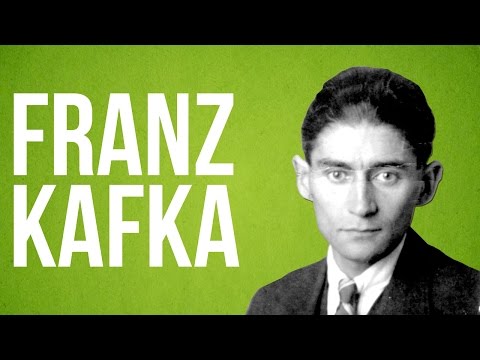
This School of Life video is a short biographical and literary reading of Franz Kafka, narrated by a speaker the material does not identify. It begins with the Kafkaesque, the recognizable state of powerlessness before authority, lost control of one's fate, and humiliation by society and family. It then moves through Kafka's life and fiction in roughly chronological order. The framing idea comes from Kafka himself: a book should be "the axe for the frozen sea within us," a way of reaching feelings too painful to face but in need of attention. That is the Literature as Emotional Breakthrough Tool concept the video returns to at the end.
The biographical material centres on Hermann Kafka. It covers the night he left his young son on a balcony in a nightshirt after the boy asked for water, the bathing-hut comparison of a slight boy beside a broad father, and the ban on a writing career that pushed Kafka into a lawyer's office and an insurance company. It also covers the 47-page letter of 1919, which his mother Julie held back and returned to him. The video notes that Kafka saw his father's cruelty as unconscious, and it links his failed relationships, sexual shame, and self-image as a disgusting bed bug to the same source.
The fiction is read as that dynamic growing steadily more abstract. In "The Judgment," a son accepts his father's death sentence. In The Trial, a vast legal apparatus replaces the father. In The Metamorphosis, a family finds it manages well without Gregor and feels only mild shame at his death. The video ends with "The Hunger Artist," written while Kafka's laryngeal tuberculosis made eating painful, in which a vigorous panther replaces the dead performer. It also mentions that Kafka ordered his unfinished novels destroyed and that the order was ignored.
Franz Kafka's literary genius emerged from and was shaped by psychological abuse from his father, and his fictional works—particularly the themes of arbitrary authority, powerlessness, and self-disgust—are direct expressions of the trauma and emotional dynamics he endured in his family relationships.
- Kafka's father Hermann systematically humiliated, intimidated, and rejected him, including a traumatic incident of cold exposure that left lasting psychological damage
- The psychological dynamics of paternal domination and arbitrary judgment recur across Kafka's major works (The Judgment, The Trial, The Metamorphosis) with increasing abstraction from the personal to the institutional
- Kafka's inability to marry, his sexual shame, and his self-hatred were direct consequences of his father's abuse, manifesting in his fiction as universal human powerlessness and unworthiness
This asset isn't compiled yet
You're seeing its claims, ranked. Compile it to build the argument threads, weight them, and check each claim against your library — the full view.
Kafka wrote that the task of literature is to reconnect us with feelings that might otherwise be unbearable to confront but which desperately need our attention; a book must be 'the axe for the frozen sea within us.'
“Kafka once wrote that the task of literature is to reconnect us with feelings that might otherwise be unbearable to study but which desperately need our attention. 'A book must', he wrote, 'be the axe for the frozen sea within us'.”
In his Letter to Father, Kafka asks 'why I maintain that I'm so afraid of you' and explains that he cannot answer because the fear itself prevents him from thinking, and providing details would require him to hold more information in mind than he can manage while speaking.
“You asked me recently why I maintain that I'm so afraid of you. As usual I was unable to think of any answer to your question partly for the very reason that I am afraid of you and partly because an explanation of the grounds for this fear would mean going into far more details than I could ever keep in mind while talking”
Kafka's world and the Kafkaesque state feel nightmare-like, unpleasant, and oppressive, yet they are places where many people find themselves, particularly during dark periods of their lives.
“Kafka's world isn't pleasant. It feels in many ways like a nightmare and yet it's a place where many of us will, even if only for a time, in the dark periods of our lives, end up.”
The balcony incident left lasting psychological harm on Kafka; years afterward he was tormented by the recurring fantasy that his father, 'the ultimate authority,' would come almost for no reason and carry him out onto the balcony at night, symbolizing to him that he was 'a mere nothing' to his father.
“I was quite obedient after that period but it did me so much incalculable inner harm. Even years afterwards I suffered from the tormenting fancy that the huge man, my father, the ultimate authority, would come almost for no reason at all and take me out of bed in the night and carry me out onto the balcony and that meant I was a mere nothing for him”
Any boy who has experienced inadequacy or lack of love from a powerful father will immediately relate to Kafka's experience, making his work universally resonant with male readers who have suffered paternal rejection.
“Any boy who has ever felt inadequate in front of, or unloved by a powerful father, will at once relate to what Kafka went through in his childhood.”
Kafka is simultaneously a monument in German literary history and 'a sad, ashamed, terrified part of us all,' suggesting that his greatness consists in his capacity to articulate universal human vulnerability and psychological trauma.
“He is a monument in German literary history and at the same time he is a sad, ashamed, terrified part of us all.”
The idea of horrific, arbitrary judgment became a constant theme in Kafka's fiction, reappearing in The Trial (written two years after The Judgment), in which the mechanism of judgment expanded from a father to a vast impersonal legal apparatus with judges, lawyers, guards, and bureaucratic procedures.
“The idea of horrific, arbitrary judgment was to be a constant in Kafka's fiction: it reappears in the unfinished novel The Trial, written two years later. But now Kafka had developed it away from a father to a vast legal apparatus with judges, lawyers, guards and extensive bureaucratic procedures.”
After the Hunger Artist dies, he is replaced in his cage by a panther, 'an animal full of vigor whom the crowd love and who has a voracious appetite,' suggesting that natural vitality and appetite are more valued and admired than the artist's ascetic self-denial.
“Shortly after he dies, he's replaced in his cage by a panther, an animal full of vigor whom the crowd love and who has a voracious appetite.”
Late in his life, Kafka suffered from laryngeal tuberculosis that prevented him from eating almost anything without severe pain, and he wrote a final short story called 'The Hunger Artist' about a public performer who makes his living undertaking fasts.
“Kafka suffered from ill health for a lot of his life. In 1924 when he was forty-one, he developed laryngeal tuberculosis, which prevented him from eating almost anything without huge pain. He wrote a short story, his last, called The Hunger Artist.”
Franz Kafka was a Czech writer who created the concept of 'the Kafkaesque'—a recognizable emotional and existential state characterized by powerlessness in front of authority, loss of control over destiny, and humiliation by society and family.
“Franz Kafka was a great czech writer who has come to own a part of the human emotional spectrum, which we can now call the Kafkaesque and which thanks to him we are able better to recognize and to gain a measure of perspective over and relief from.”
Kafka grew up timid, bookish, meek, and full of self-hatred, and desired to become a writer, but his father forbade it, forcing him to work instead in jobs 'utterly beneath him' at a lawyer's office and insurance company.
“Kafka grew up timid, bookish, meek and full of self-hatred. He wanted to become a writer but it was out of the question in his father's eyes, so one of the greatest German literary geniuses since Goethe was forced to spend his brief life on Earth working in a series of jobs utterly beneath him: in a lawyer office and then an insurance company.”
In November 1919, at age 36, five years before his death, Kafka wrote a 47-page letter to his father Hermann attempting to explain how his childhood had deformed him, seeking forgiveness in the manner typical of abuse victims who never stop hoping for acknowledgment from their abuser.
“In November 1919, at the age of 36, five years before his death, Kafka wrote a forty-seven page letter to Hermann in which he tried to explain how his childhood had deformed him. Like many victims of abuse, Kafka never stopped hoping for some kind of forgiveness from the person who had so wronged him.”
After writing the 47-page letter to his father, Kafka gave it to his mother Julie to deliver, but she held onto it for a few days, then returned it to Franz with the advice that it would be better for her 'busy, hard working husband never had to read such a thing,' revealing the mother's complicity in silencing Kafka's attempt at paternal reconciliation.
“Kafka finished the letter, gave it to his mother Julie to pass to Hermann but, typical of her weakness and cowardice, she didn't. She held onto it for a few days, then returned it to Franz and advised that it would be better if her busy, hard working husband never had to read such a thing. The poor son lacked the courage ever to try again.”
In The Metamorphosis, when Gregor crawls across the floor, he is in constant danger of being stamped on by his own father, and Gregor's family finds they function quite well without him, confining him to his room, throwing garbage at him, and eventually deciding that the insect cannot really be Gregor, referring to it as 'it' rather than 'him'.
“When Gregor crawls across the floor, he is in danger of being stamped on by his own father. Gregor's family find they manage quite well without him. They can fine him to his room and chuck rubbish at him. The family hold a council and decide that the insect in the bedroom can't really be Gregor. They start to refer to the insect as 'it' instead of 'him'.”
In 'The Judgment,' Georg obediently obeys his father's death sentence and rushes out to drown himself in the river, and the father afterward cries 'You were an innocent child, really, but at heart you were a diabolical human being'—revealing the father's logic that makes the son's obedience to a death sentence seem justified.
“Georg can make only feeble protests. Eventually the father condemns Georg to death by drowning and Georg obediently rushes out and plunges into the nearby river. After passing sentence, the father cries out: 'You were an innocent child, really, but at heart you were a diabolical human being'”
Kafka describes a specific traumatic incident in which, as a young boy, he called out for a glass of water and his irritable father pulled him out of bed, carried him onto the balcony, and left him there to freeze in nothing but his nightshirt.
“Kafka complained of one particularly traumatic incident when as a young boy he called out for a glass of water and his irritable father pulled the boy out of his bed, carried him out onto the balcony and left him there to freeze in nothing but his nightshirt.”
Kafka's three major posthumous novels—The Trial, The Castle, and America—were all unfinished because he was deeply dissatisfied with them, and he ordered them to be destroyed after his death, but this order was disobeyed.
“His gigantic posthumous reputation is based on three novels: The Trial, The Castle and America, which were all unfinished because Kafka was so dissatisfied with them. He gave orders that they be destroyed after his death. Fortunately for Humanity, these were disobeyed.”
Kafka describes in his Letter that what he needed from his father was 'a little encouragement, a little friendliness' but he was 'not fit for that,' indicating his internalization of his father's rejection as a reflection of his own inadequacy rather than his father's cruelty.
“What I would have needed was a little encouragement, a little friendliness but I wasn't fit for that.”
Kafka had numerous unsuccessful relationships with women, could not marry or raise a family, and was tormented by the strength of his sexual drive, which compelled him to frequent brothels and pornography.
“He had a number of unsuccessful relationships with women, he couldn't marry or raise a family and was tormented by the strength of his sex drive, which made him constantly turn to brothels and pornography.”
Kafka experienced shame about his body and sexual urges, feeling that he might deserve to be 'killed or squashed without mercy as if [he were] an inconvenient and rather disgusting bed bug.'
“We are in Kafka's orbit when we're ashamed of our bodies, of our sexual urges and feel that the best thing for us might be to be killed or squashed without mercy as if we were an inconvenient and rather disgusting bed bug.”
Kafka's sense of total inadequacy was rooted in physical comparison with his father: Kafka was 'skinny, weakly, slight' while his father was 'strong, tall, broad,' and witnessing this contrast in the bathing hut created desperation and shame that was 'hardly bearable, except it was'—meaning even worse experiences followed.
“I was weighed down by your mere physical presence, I remember for instance how often we undressed in the same bathing hut. There was I: skinny, weekly, slight. You: strong, tall, broad. I felt a miserable specimen. When we stepped out, you holding me by my hand, a little skeleton, unsteady, frightened of the water incapable of copying your swimming strokes; I was frantic with desperation. It could hardly have been worse, except it was.”
Kafka accuses his father of having 'total lack of feeling for the suffering and shame' he could inflict with his words and judgments, and of being unaware of his power to harm—indicating his father's cruelty was unconscious rather than intentional.
“What was always incomprehensible to me was your total lack of feeling for the suffering and shame you could inflict on me with your words and judgments. It was as though you had no notion of your power”
In 'The Hunger Artist,' a public performer makes his living by undertaking fasts, manages to fast for forty days, but gradually his audience loses interest no matter how long he fasts, and he becomes weakened in a dirty cage until he confesses before death that he should never have been admired because he fasted simply because he couldn't find any food he enjoyed.
“It tells the story of a public performer who makes his living undertaking fasts for the pleasure of the public. One time he manages to fast for forty days but gradually the hunger artist's audience gets bored of his work. However hard he fasts, they're no longer impressed. He gets put in a dirty old cage and weakens terribly. Before he dies he asks for forgiveness and confesses that he should never have been admired since the reason he fasted was simply that he couldn't find any food he enjoyed.”
Kafka's books are 'among the most touching, frightening and accurate axes ever written,' suggesting they succeed in their philosophical purpose of breaking through emotional numbness and forcing confrontation with universal human trauma.
“His books were among the most touching, frightening and accurate axes ever written.”
In The Metamorphosis, Gregor, listening to his family's decision to dispose of him, agrees and dies quietly; after his death, the family feels only slight shame about their behavior, not genuine remorse, reflecting the normalcy of familial abandonment and cruelty.
“They decide that somehow the insect has to go. Gregor, listening, agrees and dies quietly. After Gregor's death, the family are slightly ashamed of their behavior, but only slightly.”
In The Metamorphosis, a traveling salesman named Gregor Samsa wakes up one morning transformed into an insect resembling a beetle or bed bug, and the story explores self-disgust, family betrayal, and the terrifying arbitrary power of those in authority over him.
“Between The Judgment and The Trial, Kafka wrote The Metamorphosis, a short story in which a traveling salesman, Gregor Samsa, wakes up one morning transformed into an insect akin to a beetle or a bed bug. It's a story of self-disgust, about the treachery of family and, like The Trial, about terrifying arbitrary power.”
Understanding Kafka requires understanding his relationship with his father, even though Kafka never wrote directly about his father in any of his works; the psychology of his novels is directly rooted in the dynamics of his relationship with Hermann Kafka.
“It shouldn't sound prurient or reductive to suggest that one of the major keys to understanding Kafka is to fathom the nature of his relationship with his father. Kafka never wrote directly about this man in any of his works but the psychology of the novels is directly related to the dynamics he endured as the very unfortunate son of Hermann Kafka”
Franz Kafka was born in Prague in 1883 as the eldest child of a psychologically abusive father (Hermann Kafka) and a weak mother who was unable to protect him.
“Franz Kafka was born in Prague in 1883, the eldest child of a terrifyingly, psychologically abusive father and a mother who was too weak and in all of her husband to protect her boy as she should have done.”
In Kafka's short story 'The Judgment' (1912), a young businessman named Georg is engaged to be married and lives with his widowed father; he expects to escape, but the frail father mysteriously regains strength, towers over Georg, and denounces him for betraying his friends, the father, and his mother's memory before condemning him to death by drowning.
“In The Judgment, Kafka's great short story, written in 1912; a young businessman, Georg, is engaged to be married and lives in a flat with his widowed father. He's about to get away from home, the father is old and frail. Georg tucks him up in bed but then the father mysteriously regains his strength, springs upright, towers over Georg and denounces him for betraying everyone. His friends, his father and the memory of his mother.”
By the Second World War, Kafka was recognized as one of the greatest writers of the age, yet simultaneously all of his close family members were gassed by the Germans in the Holocaust.
“By the Second World War, he was recognized as one of the greatest writers of The Age. Notwithstanding, all his close family were gassed by the Germans in the Holocaust.”
A few days after finishing 'The Hunger Artist,' Kafka died and was buried in the Jewish cemetery in Prague, and within a few years of his death, his reputation began to grow.
“A few days after finishing The Hunger Artist, Kafka died and was buried in the Jewish cemetery in Prague. Within a few years of his death, his reputation began.”
Boys require their father's permission to become men, and Hermann Kafka systematically denied Franz this permission through authoritarian control, particularly by forbidding him from speaking ('not a word of contradiction') and raising his hand in threat, a gesture that remained psychologically with Kafka throughout his life.
“Boys need their father's permission to become men and Hermann Kafka didn't give Franz a chance. At a very early stage you forbade me to speak. Your threat: 'not a word of contradiction' and the raised hand that accompanied it have been with me ever since”
During his lifetime, Kafka published very little: only three collections of short stories, including his best-known work The Metamorphosis, and remained entirely obscured and unnoticed.
“Kafka published very little in his lifetime: just three collections of short stories including his best-known work, The Metamorphosis, and he was entirely obscured and unnoticed.”
In The Trial, Joseph K is arrested on his 30th birthday and is never told what he is charged with; he feels so guilty internally that he barely attempts to find out, and though he hires a lawyer and tries to declare his innocence, the court gradually grinds him down until he can no longer think or work properly, and is finally executed a year after his arrest.
“When Joseph K is arrested on the morning of his 30th birthday, he isn't told what he is charged with. He barely makes any attempt to find out. He feel so guilty inside, he just knows that he deserves punishment. He does try to declare in court that he's innocent, still without knowing what the charge is and hires a lawyer but the court gradually grinds him down. He becomes unable to think of anything. Words fail him, he can no longer do his job properly and is defeated in the game of office politics. Finally, a year after his arrest, two grotesque looking officials come to Joseph case flat, they lead him to a quarry outside the city and execute him by plunging a knife into his heart.”