What this covers
This 22-minute video is a single-narrator explainer from the Money & Macro channel, run by economist Joeri Schasfoort. It moves in three stages: a history of globalization and its waves, the channels through which fragmentation hits an economy, and a sorting of likely winners and losers. The history starts with the argument that Western politicians accepted the loss of factory jobs for the sake of integration, expecting trade to make autocracies more democratic and less willing to fight. It places the third wave at 1980, when China opened up and Ronald Reagan and Margaret Thatcher took office. It also notes early signs that Russia and China wanted less dependence on the West, not more. Examples include Russia's post-Crimea food bans and subsidies, and Made in China 2025.
The middle section follows the International Monetary Fund (IMF)) framework of five channels: trade, capital, payments, movement of people, and volatility. Cases include Russia's isolation after 2022, Brexit, and the US–China trade war. Specific points include the push for alternatives to the Swift payment network, rate hikes and capital controls to stop currency collapse, and import-dependent economies such as Egypt, Sri Lanka, and Pakistan suffering from volatility. One contested claim is that the 2018 trade war under Donald Trump cost the US and China only around half a percentage point of GDP, far less than Brexit, with almost no inflation effect.
The final stretch is the most opinionated. Large firms are said to gain from subsidies because they can afford staff to handle the paperwork, while small importers and exporters cannot pay lawyers to navigate trade barriers. Self-sufficient France is described as more resilient than countries tied to rival blocs. The narrator credits BYD (Build Your Dreams)) with rising on the back of Chinese state support, and describes how Dubai and Turkey benefited from displaced Russian wealth and tourists. He also points out that Europe, North America, and Asia still form three deeply integrated trading blocs.
Economic fragmentation is replacing globalization as countries form protectionist blocs through tariffs and industrial policy, creating risks of reduced growth and higher inflation, but also concentrated opportunities for companies, countries, and individuals positioned as connectors or beneficiaries of government spending shifts.
- Historical pattern shows globalization (1870-1914, 1945-1980, 1980-2020) repeatedly replaced by fragmentation (pre-WWI, 1920s-30s, Cold War, current era) driven by geopolitical rivalry
- Brexit, US-China trade war, and Russia-Ukraine rupture demonstrate fragmentation channels: reduced trade, higher capital costs, payment system alternatives, constrained migration, and increased volatility
- Winners include companies serving government adaptation, sectors with supply scarcity, connector economies rerouting trade; losers are isolated economies, small traders, and those with global asset exposure
This asset isn't compiled yet
You're seeing its claims, ranked. Compile it to build the argument threads, weight them, and check each claim against your library — the full view.
Most global transactions are handled through the Belgian Swift Payment network, and as this network has increasingly been used by the United States to sanction countries, many alternatives are now being developed, ranging from private alternatives in Russia to central bank digital currency initiatives in Asia.
“most global transactions are handled through the Belgian Swift Payment network. But as this network has increasingly been used by the United States to sanction countries, many alternatives are now being developed, ranging from private alternatives in Russia to central bank digital currency initiatives in Asia,”
Government subsidies are difficult to access and more likely to benefit big companies who can hire people to figure out how to fill out the paperwork involved, making subsidies a competitive advantage for large firms in fragmented economies.
“Similarly, because government subsidies are difficult to get, they are more likely to benefit big companies who can hire people to figure out how to fill out all of the paperwork that is inevitably involved.”
Hyper-globalization came at a price for Western workers who saw good-paying factory jobs move overseas, but Western politicians were willing to pay that price because they believed an increasingly interconnected and equal global economy would make previously autocratic countries become increasingly democratic and unwilling to go to war.
“And while such hyper globalization came at a price for Western workers who saw good paying factory jobs move overseas, Western politicians were willing to pay that price as they came to believe that an increasingly interconnected and equal global economy would mean that previously autocratic countries would become increasingly democratic and unwilling to go to war as they have too much to lose from something as senselessly destructive as a war.”
The third wave of globalization started in 1980 when China opened up its economy, coinciding with the elections of Ronald Reagan and Margaret Thatcher in the US and UK, who embraced free trade, free movement of money across borders, and free movement of people.
“the third wave of globalization, which started in 1980 as a world un-fragmented. When China started opening up its economy. At the same time, the elections of Ronald Reagan in the US and Margaret Thatcher in the UK ushered in an era in which politicians embraced free trade, free movement of money across borders and the free movement of people.”
China introduced its Made in China 2025 policy in 2015 combining subsidies with restrictions on foreign firms to stimulate sectors where China wanted to depend less on the West, including batteries, electric vehicles, and computer chips.
“The second sign came soon after from China when it introduced its Made in China 2025 policy in 2015 that again combined a lot of subsidies with already high restrictions of foreign firms to stimulate sectors where the Chinese wanted to depend less on the West, like batteries, electric guards and computer chips.”
When Russia annexed Crimea in 2014, it combined that with a ban on many Western food products and increased subsidies for Russian firms, rapidly transforming Russia into an agricultural powerhouse.
“The first sign was that when Russia annexed Crimea in 2014, it combined that with a ban on many Western food products, while its simultaneous only increased subsidies for Russian firms which rapidly transformed Russia into an agricultural powerhouse.”
Small export and import businesses have been hurt particularly badly by fragmentation because trade barriers make trade more difficult, and small companies lack the resources to hire good lawyers to find ways around these barriers.
“The second category of losers have been small export and import businesses. You see, trade barriers make trade more difficult. But if you are a big company, you are more likely to have the resources to hire some good lawyers that can help you find a way around these barriers.”
While Western integration strategy seemed to work for Eastern Europe, which became democratic as it got wealthier, there were already early signs that Russia and China wanted to make their economies less dependent on the West rather than more.
“However, while this strategy seemed to have worked for Eastern Europe, which indeed became democratic as it got wealthier, there were already some early signs that Russia and China wanted to make their economies less dependent on the West rather than more.”
Countries that had been more self-sufficient like France have been more resilient to fragmentation compared to countries deeply integrated with rival blocs.
“On the other hand, countries that had been more self-sufficient like France have so far been more resilient.”
Those who operate in sectors that saw increased volatility from big fragmentation events can benefit greatly, as alternative energy providers recorded record profits when energy prices shot up in Europe in 2022.
“A second category of winners so far has been those who operated in sectors which saw increased volatility from big fragmentation events. For example, as energy prices shot up in Europe in 2022 many alternative energy providers recorded record profits as they could now also sell at higher prices.”
The Bretton Woods era (1945-1980) saw trade increase within the capitalist bloc and between unaligned countries, though it never quite reached the levels of the first golden age of globalization, and is often referred to as the second wave of globalization.
“trade did increase quite a bit within the capitalist bloc and between unaligned countries, during the Bretton Woods era of 1945 to 1980. And while trade never quite reached the levels of the first golden age of globalization, the Bretton Woods era is still often referred to as the second wave of globalization”
These US industrial policy actions were met with responses from both rivals and allies in the form of increased tariffs from China in 2018 and subsidy programs from Europe in 2023, creating a reciprocal cycle of protectionism.
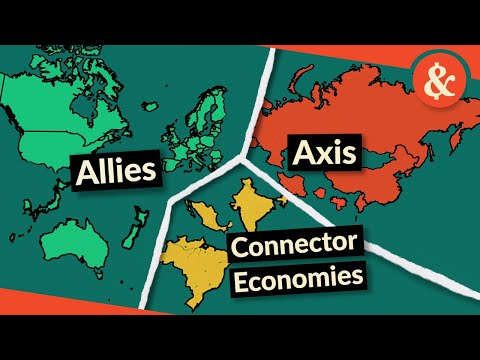
“Of course, these actions were met with responses from both rivals and allies in the form of increased tariffs from China, for example, in 2018 and subsidy programs from Europe in 2023, which means that today we are no longer living in the era of globalization, but rather in a new era of fragmentation in which two new emerging blocks of allied and axis countries have in place a lot of trade restrictions and tariffs against each other.”
The global economy is currently fragmenting into blocs of countries that are slapping each other with tariffs, restricting trade of crucial goods, and subsidizing their own industries to gain unfair advantage, representing a remarkable change from a couple of years ago when globalization seemed unstoppable.
“The global economy is fragmenting into blocs of countries that are slapping each other with tariffs, restricting trade of crucial goods and subsidizing their own industries to gain an unfair advantage against other nations. This is a remarkable change from just a couple of years ago when Russia and China joined the World Trade Organization, and globalization seemed unstoppable.”
The International Monetary Fund economists have identified at least five major channels through which the global economy will be impacted by fragmentation: trade, capital, payments, movement of people, and volatility.
“Well, according to economists at the IMF, there could be at least five major channels through which the global economy will be impacted. But of course, as the future is uncertain, we cannot know for sure how important each of these channels will be. However, given that we have already seen some fragmentation events like Brexit, the 2018 Trump trade war and the 2022 rupture between Europe and Russia, the experience from these events might give us some clues about what might happen if global fragmentation continues.”
Smaller economies that broke away from the global economy, particularly Russia and Britain, have had to raise interest rates significantly, or in Russia's case restrict money flows, to prevent currency collapse from the capital channel of fragmentation.
“So far, this has especially impacted smaller economies that have decided to break away from the global economy, where both Russia and Britain have really had to raise interest rates quite a bit, or in the case of Russia, even restrict money flows to prevent that their currencies would collapse.”
The 2022 rupture between Russia and Europe was so damaging for both parties that governments could not find good estimates for economic damage because governments interfered so heavily, but most economists agree it led to greatly reduced trade, increased inflation, and heavy economic damage on both sides.
“the 2020 rupture between Russia and Europe was so damaging for both parties that they could not find any good estimates for economic damage because governments on all sides interfered so heavily. Still, most economists that studied this event seem to agree that it led to greatly reduced trade, which increased inflation and inflicted heavy economic damage on both sides,”
To deal with Brexit chaos, the UK government infamously hired a whole bunch of Brexit consultants to help navigate the storm, exemplifying how fragmentation creates consulting and adaptation service demand.
“For example, to deal with the Brexit chaos, the UK government infamously hired a whole bunch of Brexit consultants to help it navigate the storm.”
China's BYD could not have become the world's biggest electric vehicle manufacturer had it not been supported by China's industrial policies that are now the standard in the era of fragmentation.
“Similarly, a company like China's BYD could not have become the world's biggest electric vehicle manufacturer had it not been supported by China's industrial policies that are now the standard in the era of fragmentation.”
Increased volatility from fragmentation has made living conditions in economies dependent on food and fuel imports like Egypt, Sri Lanka, and Pakistan almost unbearable.
“which made living conditions and economies that dependent on food and fuel imports like Egypt, Sri Lanka and Pakistan, almost unbearable.”
When Russia got isolated in 2022, it initially led to a big wave of migration from Russians to Europe and other countries, but after that initial wave, movement of people for both business and tourism purposes between the two blocs decreased a lot.
“Another example is that when Russia got isolated in 2022, it initially led to a big wave of migration from Russians to Europe and other countries. After that initial wave though, the movement of people from for both business and tourism purposes between the two blocks did decrease a lot.”
Despite all protectionist changes, the most important allied and axis economies are still deeply integrated, with three major trading blocs: one in Europe centered around Germany, one in North America centered around the US, and one in Asia centered around China.
“And yet, despite all of these changes, the most important allied and axis economies are still deeply integrated. For example, if we look at this graph from the World Trade Organization, we can see that there are basically three big trading blocs in the world right now. One is in Europe, centered around Germany. One is in North America, centered around the United States and one is in Asia, centered around China.”
After Brexit, there was a big decrease in emigration from the EU to Britain, but overall migration to Britain increased as migration from places like India made up for lost EU immigration.
“For example, while after Brexit we saw a big decrease in emigration from the EU to Britain. Overall migration has increased to Britain as migration from places like India made up for lost EU immigration.”
Dubai profited greatly from the exodus of wealthy Russians from London, and Turkey profited greatly from Russian tourists that were no longer welcome in southern Europe or the Austrian Alps.
“where, for example, Dubai properties greatly from the exodus of wealthy Russians from London and Turkey, profited greatly from Russian tourists that were no longer welcome in southern Europe or in the Austrian Alps.”
The 2018 Trump trade war was less damaging than Brexit, with best estimates indicating it could have cost both the US and China around half a percentage point of GDP, while the effect on inflation was almost nonexistent.
“Luckily, the 2018 Trump trade war seems to have been less damaging, with the best estimates that I could find indicating that it could have cost both the US and China around half a percentage point of GDP, while the effect on inflation was almost nonexistent on the other end,”
As imports of goods become less available due to fragmentation, their prices will increase, leading to increased inflation.
“What's more, as imports of goods are now less available, their price will increase, leading to increased inflation.”
Connector economies are basically middlemen between countries that used to trade or invest directly, and they have benefited greatly from fragmentation.
“The final category of winners that has emerged are the so-called connector economies, which are basically like middlemen between countries that used to trade or invest directly.”
Fragmentation is likely to continue as all major players are introducing more, not fewer, industrial policies that favor national companies rather than a free global market, regardless of whether crisis scenarios occur.
“But even if these scenarios don't come to pass, fragmentation is likely to continue as all major players are introducing more, not fewer, industrial policies that favor national companies rather than a free global market.”
Brexit has decreased economic growth in the UK by about 5.5% since the vote in 2016 and increased consumer prices by about 2.9% in three years, according to some economist estimates.
“Indeed, this is precisely what happened when the British tried their own little mini fragmentation experiment in the form of Brexit, which some economists have estimated has decreased economic growth in the UK by about 5.5% since the vote in 2016. While it increased consumer prices by about 2.9% in three years.”
Fragmentation would have been worse for Russia and Europe had governments not acted by taking on more debt to cushion the economic blow for their citizens.
“which would have been worse had governments not acted by taking on more debt.”
Fragmentation's impact on the movement of people has typically meant that it has become more difficult to enter countries, which has led to big changes in where people travel, though not necessarily fewer people moving overall.
“The fourth channel of fragmentation involves the movement of people, which so far has typically meant that it has become more difficult to enter countries, which has led to big changes in where people travel. However, this does not necessarily mean that there are now less people moving about.”
Fragmentation will likely lead to either a catastrophic outcome of long recession and inflation spike, or could present the biggest economic opportunity of a lifetime depending on positioning.
“But does that mean that we are heading for a catastrophe in the form of a long recession and another big inflation spike? Or could it be that this will be the biggest economic opportunity of a lifetime? In other words, what will fragmentation do to the global economy?”
If fragmentation worsened dramatically with China joining Russia in isolation, that would be an extremely large shock to the global economy.
“So if fragmentation was to get much worse with China joining Russia in its isolation, that would be an extremely, extremely big shock to the global economy.”
The first golden age of globalization occurred from 1870 to 1914, characterized by relentless increasing trade as a percentage of the global economy.
“the first golden age of globalization happened from 1870 to 1914. And as you can see here in this chart, it was characterized by relentless increasing trade as a percentage of the global economy.”
If Donald Trump is elected, the US would likely see more fragmentation as he has threatened to raise tariffs on Chinese products to 60%.
“Alternatively, if Donald Trump is elected this year, we would likely also see more fragmentation as he has threatened to raise tariffs on Chinese products to 60%.”
Increased competition in payment systems from alternatives to SWIFT could lead to either increased payment costs if money is transferred around the world, or make international payments cheaper—the outcome is uncertain.
“a development that could lead to increased payment costs if you transfer money around the world. Although increased competition could also make international payments cheaper, we'll just have to see.”
The scenario that experts have been worrying about most is that China decides to invade Taiwan, which it has repeatedly threatened to do, and that the allies will respond with sanctions similar to those used against Russia.
“Well, the scenario that experts have been worrying about the most is that China decides to invade Taiwan, which it has repeatedly threatened to do, and that the allies will respond with a similar sanctions that they used against Russia.”
The future consequences of fragmentation remain unclear since we are at the start of this trend, but the speaker will keep viewers up to date about latest developments.
“Of course, since we are at the start of this trend, a lot of the consequences of fragmentation are still unclear. But as always, I will keep you up to date about the latest developments here on the money & macro channel.”