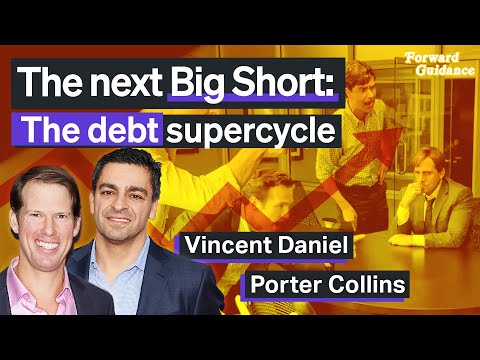
The Next Big Short: The Debt Supercycle | Vincent Daniel & Porter Collins
What this covers
This is a long conversation, recorded on the day of the January 2022 FOMC meeting, between Porter Collins and Vincent Daniel of Seawolf Capital, with host Jack Farley. The two were among the investors who bet against the Fed in 2008, and they start there. Their 2008 experience, they say, became a handicap in the 2010s, when quantitative easing (QE)) removed meaningful downside. They explain why they largely stayed out of short selling in 2021, and why rising inflation and political pressure on the Fed changed that. They also spend time on what losing trades teach compared with winning ones, a claim Daniel treats as a general rule for investors.
The middle of the conversation covers monetary and financial history. They revisit the 2008 banking system, with its 50-to-1 leverage, and the Fed's failure to see the subprime crisis in its own data. They also discuss the 2009 bank-stock bottom as an asymmetric long. Thomas Hoenig is cited as the lone dissenter on QE. They argue that 7% inflation prints finished Modern Monetary Theory, while Daniel adds a contested point that Fed bond buying enabled the deficits. Collins doubts the Fed can deliver the rate hikes the market has priced in. Daniel argues that 1999-2000, not 2008, is the better analogue, since the risk now sits in equity multiples rather than in bank balance sheets. He adds that risk has migrated onto sovereign balance sheets.
The back half moves through specific trades and asset classes. They cover SPACs and unprofitable growth stocks, then bullish cases for cannabis, nuclear power, energy and shipping. A section on a "debt supercycle" leads into crypto, where Daniel argues gold is a better store of value than Bitcoin. Housing follows, with a claim of structural supply deficit, and the episode ends on the return of market volatility. The publisher notes the audio quality is poor.
Porter Collins and Vincent Daniel argue that after being the last investors to successfully bet against the Fed in 2008, a decade of Fed-suppressed price discovery created massive asset bubbles (tech, crypto, SPACs) now unwinding, and that volatility and fundamental value investing will return as the Fed tightens to fight inflation, creating opportunities in underowned sectors like energy, shipping, and cannabis while exposing overleveraged, unprofitable growth companies.
- The Fed prevented downside price discovery for 13 years post-2008, inflating valuations across assets
- Fed tightening to fight inflation removes the Fed put that protected speculation, revealing excesses and enabling fundamental short-selling
- Capital has flowed exclusively to tech/growth while starving traditional sectors (energy, financials, shipping), creating asymmetric risk/reward opportunities
This asset isn't compiled yet
You're seeing its claims, ranked. Compile it to build the argument threads, weight them, and check each claim against your library — the full view.
The key ingredient that changed their view from very long to willing to short aggressively was Fed intent and inflation: when CPI prints exceeded 2% target, politicians exerted pressure on the Fed, forcing them to become hawkish and removing their ability to bail out markets—which means the Fed put is no longer operative and fundamental value investing can work again.
“for us for me and i think for porter the key ingredient that changed our mind was fed intent and inflation right”
We were the last investors to fight the Fed and win in 2008, and that advantage turned into a disadvantage during the 2010s because the Fed's subsequent quantitative easing program suppressed any material downside price discovery for over a decade.
“you were the last investors to fight the fed and win in 2008 and that that might not have been an advantage in the last decade of the 2010s”
Housing supply in the United States is in massive structural deficit, with many towns unable to provide enough housing despite recent price increases.
“i'm not bearish on them because the supply of housing is just so low i mean you go you go to some of these towns and you just can't buy houses you know we're in big structural deficits of housing”
The Federal Reserve was the last to catch the 2008 financial crisis and was behind the curve, missing the subprime crisis entirely in the data until it was too late.
“when 08 hit you know we were really on point we knew what was going on we saw it in the data we knew where all the bonds were hiding and and we were really ahead of things and we knew the fed was behind the curve and they really missed it”
Learning from losses and understanding why bets failed is more valuable for investors than remembering wins, because loss analysis teaches mental models while wins are often luck.
“we've gotten so many stocks wrong we've gotten squeezed in so many stocks the great thing about investing and if you speak to i think people like us we spend so much more time or you remember you're a loser so much more than your winners right”
The banking system in 2007-2009 was in complete turmoil and insolvent to the point where there was legitimate fear that markets would not open and the banking system would completely fail, which is why the Fed vowed 'this is never happening again' and kept the monetary spigots permanently open thereafter.
“the banking system in 0708 09 is in complete turmoil at what point did you stop becoming bearish on on the banks”
When looking at 1999-2000 bear cycle, high-flying tech stocks trading at 20-30-40x sales eventually fell to 1-4x sales, showing that valuation multiples can compress dramatically; therefore, someone saying '50x sales now 20x sales is a bargain' should study that history and understand that 20x can still compress significantly.
“experiencing 99 in 2000 you start to laugh you try to laugh internally because they didn't go through the cycle but you are laughing saying uh young person you better really do your history on this one with bear stearns them getting cut in half that's a function of leverage right”
In early 2009, at the market bottom on March 9, 2009, peak credit charge-offs were occurring, bank stocks were trading at massive discounts to tangible book value, and this created an asymmetric risk/reward opportunity where if they were wrong the entire world would be over, making long positions in high-quality banks the only rational investment.
“in early 2009 or credit quality in early 2009 you were at peak charge-offs for the financial services system uh and these stocks were trading at tremendous discounts to book value tangible book value so just on a simple risk reward basis”
The Fed was wrong on inflation forecasts, wrong on transitory inflation, and killed Modern Monetary Theory (MMT) as a serious policy framework with 7% inflation prints; the Achilles heel of MMT was always inflation, and inflation has proven that thesis dead.
“they were wrong on in terms of how high they thought this was going to go they've been wrong so far on the idea that all of this would be transitory”
Powell explicitly called the Fed's actions 'digitized money printing' on 60 Minutes, which is effectively the same as traditional printing, and too much of it has created inflationary pressures the country is suffering from now.
“it allows governments to spend money so too much of expansion balance sheet or some of us call it you know digitized money printing it's actually powell's words in 60 minutes not mine i could say you know we as a central bank we have the ability to create money uh digitally”
Thomas Hoenig (Kansas City Fed president) was the only major Fed official to vote against quantitative easing and was a Paul Volcker disciple; his view on asset inflation, consumer price inflation, and service inflation being 'like cousins' has been proven correct as the Fed finally faces inflation consequences.
“you sent me a piece by politico about a fed chair excuse me a member of the fed thomas honig one of the very few people at the fed to vote against quantitative easing and was it 2010 yep and he he was a big fan of paul volcker”
The junk bond bubble is a separate issue created by the Fed artificially suppressing interest rates and creating artificial demand for junk debt, further distorting capital allocation and creating leverage in unexpected places.
“what i am starting is that it was a much better idea than buying the convertible debt of because you had you know very low upside right and tons of downside what were people thinking i mean i don't know yeah and you know the the you know the whole junk uh junk bond bubble is a whole other issue right so um you know just the they've artificially suppressed interest rates for you know they're buying buying junk rated debt and artificially suppressing the cost of capital for these companies right”
Currently, the risk that was previously concentrated on bank balance sheets (uncontrolled leverage) has now migrated to sovereign balance sheets, specifically the US federal government, which despite expanded balance sheets and money printing, is still called a AAA-rated credit, which is baffling.
“what's as nuts right now is not necessarily something i see on company balance sheets it's really the leverage associated and the money printing associated with the central bank and what we view as you know expanding the fed balance sheet what happened in march 2020 which i understand what we needed to do but to effectively expand the balance sheet by three to four trillion dollars um to me and and still call the united states a triple a sovereign credit right um to me that's the baffling part now is that we've taken what i think for me the risk that we saw in on bank balance sheets now i feel it significantly more so in sovereign balance sheets”
The entire economy is highly financialized; retail margin debt is now way past where it was in the 2000 bubble peak, indicating excessive leverage has reached critical levels that cannot sustain both quantitative tightening and rate hikes simultaneously.
“the whole economy is such a so financialized right everything we you know we see it everything that you buy is on leverage you know cars houses you know stocks you know i mean look at the look at the you know i remember going back and looking at the 2000 bubble you know they had the the margin debt retail margin debt well we're way past where they were in 2000”
The Fed enabled (rather than caused) government spending by being willing to monetize debt: if the Fed hadn't bought Treasury bonds via QE, the government would have had to raise much higher rates to attract private buyers, so Fed accommodation was a necessary condition for the fiscal deficits to occur at the levels they did.
“what i'm suggesting is if it wasn't for the fed quantitative easing the fed wouldn't have spent the money that they that they did they wouldn't be able to the government the government wouldn't be able to spend the money that they did or if they did decide to spend the money that they did rates would be significantly higher because investors who require a rate of return would need a higher rate than what the federal reserve needed which is effectively zero”
The 1999-2000 analog is more appropriate than the 2008 analog for the current environment because: (1) the equity/high-multiple bubble (not bank leverage) is the primary risk, (2) derivatives exposure is contained relative to 2008, and (3) credit markets could remain functional even if equities crash significantly.
“oh yeah i personally think it is yeah yeah i do uh it feels that way yeah it definitely feels that way and so you know getting back to the question you asked i think earlier before when i was talking about my biggest like what seems so warped is like bank balance sheets which is sovereign debt living in 99 in 2000 it feels more like that that i think the equity and the derivatives of the tech bubble that that we have created is going to unwind which didn't bring down the entire system”
Every time investors felt bearish conditions should have presented shorting opportunities, the Federal Reserve would intervene to prevent market declines, making it impossible to execute bearish strategies regardless of fundamentals.
“every time when we felt like you know we were about to kick the football lucy would pull it away um and it wasn't that we wanted to be bearish it's just that there were circumstances that that presented themselves that we should have been bearish but you come to learn that the fed was not going to allow you to act and invest the way you wanted to”
Banks historically had 50-to-1 leverage (tangible common equity of $2-$2.50 per $100 in assets) collateralized by housing that was significantly overvalued, making them horrifically bad actors that justifiably deserved regulation, but this regulation (post-Dodd-Frank) also made traditional banking an unviable business model and has forced them into utility-like consolidation and low growth.
“one of the simple little ratios we looked at was a bank's capital relative to its asset size right tangible common equity as we like to call it forget about even the regulated aspects of tier one and all the other basel type of ratios this is just simple balance sheet the large banks had for every hundred dollars of assets they had they had in the range of between two dollars and two dollars and fifty cents of equity so fifty to one leverage”
The more important dynamic now is inflation dynamics including wages and labor pricing power; after a 40-year spell against labor, there's now a slightly higher probability that labor might have some hand in wage-price appreciation, which would be a regime change.
“we're spending a little bit more time thinking about what's going to happen to core inflation rates wages and i i actually think the key variable that i i will be tracking is have we broken the 40-year spell against labor in terms of pricing power”
High-revenue multiple unprofitable tech companies lost access to zero-cost capital when Fed policy shifted, forcing them to become profitable immediately, which many cannot do given their cash burn rates and business models.
“the non-profitable entities because right now or what we had up until two a few months ago was zero cost of equity capital for these companies they had the ability to lose money and they they had a mandate to lose money uh and investors gave them the benefit of hoping that their tams would be achieved by 2035”
Volatility is returning to markets as Fed tightening forces the market to price in actual risk rather than Fed-suppressed volatility, creating asymmetric opportunities for skilled investors.
“our view was what's gonna bring voldemort back and it was always to us when they can't do anything about inflation when they have to start fighting it they have to tighten money then we're going to start to reveal all the all the excesses that we've built up over the 10 13 years and like we're seeing right now the minute the fed is is trapped and handicapped”
Porter doesn't think the Fed can execute 4-5 rate hikes this year followed by 2-3 hikes next year as currently priced because the system is too leveraged, the Fed is trying to engineer a perfect landing (fight inflation, keep wealth effect, maintain debt buying), and 'there's too many things to balance' that will force them to reverse course.
“you do you think do you think the four to five rate hikes that's priced into the fed funds there's too many things there's too many things to balance they're trying to balance inflation they're trying to uh you know someone needs to buy our debt and they're trying to keep the wealth effect it's just there's they're trying to engineer this this you know perfect landing you know okay i just don't think they can do it”
Gold is a better long-term store of value than Bitcoin because gold has 5,000 years of history as currency and is a tangible asset that can be physically possessed, whereas Bitcoin's decentralization thesis depends on a seven-standard-deviation systemic failure of nation-states.
“and you know it wasn't that long ago our whole monetary system was based on gold and so it has a really strong uh historical basis for that and you know when when times go bad you know people happy to own gold and is it going to work ever again i i don't know but we own it yeah but but then you get into a deeper deeper discussions of decentralization versus centralization right and i would love conceptually to believe in decentralization but i just do not believe the sovereign governments are going to allow some form of alternative currency other than their own places like el salvador venezuela excluded um to run amok so to speak of having our ability to buy things in bitcoin here you just start to lose your power and so in order for i've always felt and i felt this from the beginning in order for bitcoin to really truly work we need to have a seven standard deviation event in the world where we just simply don't believe whatsoever in the nation state right everywhere is turkey everywhere is danville everywhere”
ESG (Environmental, Social, Governance) investing practices value environmental factors at roughly 1000x the weighting of governance factors, creating perverse incentives that push capital away from disciplined energy producers toward speculative green energy plays.
“the whole esg theme which is a whole other stupid thing why they value the e and esg like a thousand times more than governance the whole thing is bananas so you know if you were anything with an ev store you had some crazy multiple last year”
For Bitcoin to truly work as an alternative currency, governments would have to become so dysfunctional that a seven standard deviation loss-of-faith event occurs in nation-states themselves, which is theoretically possible but not highly probable.
“in order for bitcoin to really truly work we need to have a seven standard deviation event in the world where we just simply don't believe whatsoever in the nation state right everywhere is turkey everywhere is danville yeah and let's be honest our sovereign governments are doing their damn this time to make me feel like the seven day standard deviation event is possible right but i still don't necessarily know that it's probable”
Mortgage quality in 2022 is incomparable to (much better than) 2007 quality; credit standards are not relaxed, down payments are reasonable, and the quality of borrowers is strong, making housing less likely to be the trigger of systemic crises this cycle.
“and the quality of mortgages is uncomparable to 2007 right yes 100”
AMC has infinite leverage relative to EBITDA (negative margins/no profits expected), will never be profitable despite occasional quarters, and when streaming adoption is normalized the leverage will destroy equity holders, making it an excellent short regardless of near-term movie theater traffic.
“you know uh it's uh you know infinity times ebitda the leverage it's just it's crazy how much leverage they have and that they'll never make money i mean maybe they'll have a quarter here and there but then they'll never make money and so you know if it's going to get you know they're going to it's going to go you know when people stop going to the movie theater and they finally figure out what normalized eva does stocks can get creamed”
Current Treasury yield curves (10-year, 20-year, 30-year) are significantly below current inflation levels, which is striking and indicates either yield manipulation or profound market pessimism about future growth.
“but so the fact that bon yields particularly 10 year 20 or 30 years are so below the current level of inflation is quite striking porter what do you make of that”
The 2021 IPO market (including SPACs) exceeded the 2000 bubble peak, indicating excessive capital deployment into new public listings; when IPO market peaks, it's typically a market-top signal followed by secondary market carnage.
“you know it goes back to this is bringing up old anger i don't know why i do this myself but you know the the you know we we eclipsed the ipo market of 2000 last year right the the i think the regular ipo has eclipsed it and then you had tack on the specs it was right there”
An investment in a SPAC at $10 offers full valuation for the eventual post-merger company with limited upside but unlimited downside, making SPACs unsuitable for careful value investors.
“if you were buying a spack at 10 bucks you were paying overpaying on like a pe basis a take out you were paying full valuation for these companies and it just it made no sense”
Hoenig understood that QE benefits are distributed disproportionately to the extremely wealthy at the expense of main street and the middle class, and once you 'open the kimono' of quantitative easing, governments become permanently dependent on it and can never get off it.
“what honig was getting at right way back when and look if we that article really got to the essence of what he was trying to get at was that if you do this the benefits are going to be disproportionately disproportionate to extremely wealthy people at the expense of main street in the middle class uh and once you open up the kimono of purchasing paper via qe you're never going to get off it right is that right now”
Their energy thesis emerged from examining the capital cycle: when all capital flows to tech (30-40x revenue multiples), nothing flows to energy, which sets up the oil/gas boom when capital eventually returns; and with minimal capex investment in energy infrastructure over 20+ years, the supply inflexibility creates pricing power.
“we also spent a lot of money in the payment so just getting back to financial services yeah a lot into the payment side of the business so the ability for my wife or any or someone's husband to press click on amazon and get that thing the next day right very little money very little investment went into making sure that those ships were more efficient going from from say vietnam and china to california eventually to our homes so we've had 20 some odd years of minimal capex associated with that”
Energy sector companies have shown discipline in cutting debt and returning capital to shareholders after getting burned investors through the 2012-2015 shale bust, but it took time to rebuild trust; investor psychology is long-lasting, so tech companies that burned investors through 2021-2022 bubble will similarly take a long time for investors to trust again.
“look what's happened to the the energy sectors that you know post you know them melting all this money in the shale packs you know they've had to really show a lot of discipline and people didn't believe them that they're gonna cut their debt they didn't believe them they're actually gonna return capital to shareholders and once they finally did that you know you got the investors back but you know when you burn investors you know people just don't come back for a while um and so that's you know that's what i see right now and and if any of these tech companies do you know burn investors like peloton has it's going to take a while for them to come back in full force they just won't trust them they want trust management that they um that they're going to do the right thing”
While it's true that government balance sheets can expand more than household balance sheets and Keynesian counter-cyclical policy is theoretically valid, in practice the government expanded for 13 straight years (not just downturns), went too far over the past three years, and inflation is the consequence of having the Fed be the buyer of government debt.
“one you are right governments are there and they could expand their balance sheets significantly more than we can um interesting they should and they should at times and and the the problem with you know the they went you know we used to rail on on keynes but he he obviously said in good times you don't need this accommodation you know and and actually be counter-cyclical this time they just went they went crazy right and a good thing like that can go too far and i think we've gone too far”
Eventually governments will revert to some form of gold standard (either US alone or a consortium of Russia/China) because they won't allow alternative currencies and need to reassert control, making gold a long-duration inflation hedge.
“i think eventually we have to get man's ability to control money um to leave the system and i do believe they'll go revert back to some form of a gold standard whether it's the united states or whether it's a consortium of say russia and china who want more of the world stage with their currencies uh so we gravitate significantly more towards gold because we have history on our side”
The crypto market is currently a bubble with absurd valuations; Bitcoin had a simple value proposition (store of value, can't be debased) but 4,999 other coins have effectively debased Bitcoin, and companies paying 50x revenues for tech that can be disintermediated in 10 years is pure insanity.
“i think it's pretty clear to me that that it we're in a pretty big bubble i mean in terms of you know bitcoin was great right they had a nice little simple idea you know store value you can't uh can't debase it but then you know 4999 other coins came along and effectively debased bitcoin”
Peloton never made a dime of profit in its entire history despite its high valuations, making it fundamentally different from profitable legacy tech companies even at lower valuations.
“the crazy thing is a long time ago like these these one-hit wonders during the one-hit actually made a lot of money peloton never made a dime”
There are two ways to short a stock: (1) via valuation, which doesn't work when Fed has a put, and (2) via leverage, where a viable profitable company can go bankrupt in weeks when financing breaks down (as with Bear Stearns), making leverage the more reliable short thesis when sentiment turns.
“there's two ways to short a stock one is evaluation and when the fed's not on your side you can't short anything like that but when there's leverage involved we can go from being a very viable profitable company to bankrupt in a matter of weeks”
Private capital marks will have to reset downward as public market valuations have crashed 40-50-60%, because private companies cannot remain marked at valuations significantly higher than public comparables; this will force venture capital to mark losses and potentially trigger liquidity crises.
“the next shoe to drop is vc private capital right where those marks are still significantly elevated and i don't know how they can remain elevated when the one bastion of price discovery they have or they're out so to speak which is public markets has dropped 50 40 50 60”
Coal companies like Peabody Coal are locked out of the capital markets by ESG pressure from banks, forcing financial discipline (debt paydown) onto the sector; high coal prices are allowing companies to deleverage and strengthen balance sheets despite permanent exclusion from equity capital markets.
“so maybe they'll just stay this way for a long time but you know the thing is is with high coal prices like this um these companies have been able to prepare their balance sheets and again you know like peabody coal is basically locked out of the financing market right the esg people will never the banks will never give them capital and so when you're forced into a hole like that you know you you have to lose a lot of uh financial discipline on the companies and so that and paying down debt”
When examining major institutional investor holdings (Wellington, T. Rowe Price, Neuberger Berman), ExxonMobil didn't show up in top holdings until around #75, meaning virtually no institutional ownership of major energy names despite energy being a critical economic commodity.
“we did the exercise where we were going through the holders list of of all of the um of the major players you know you name the major uh investors that that are out there and say okay spot the first energy name and you had to go to like we did we did wellington's uh yes we did wellington we did t row we did new burger we did so we looked at where's what's their number their highest energy holding of their list exxon mobil exxonmobil and exxon mobil was like number 75 right meaning it was the 75th largest holding”
There is essentially no institutional capital left in financial sector long-only funds; virtually all incremental capital has gone to growth/tech mandates (Tiger Global, Founders Fund, etc.), which explains why old-economy stocks like energy and shipping are hated despite being fundamentally attractive.
“from financial guys we were originally financial guys and there's basically no capital left in people running financials like long only finish there's no one left right”
Nuclear energy is a critical component of any credible clean energy/ESG scenario; while Europe and the US have been skeptical of nuclear, China is building 30-50 new reactors over the next 10 years, forcing nuclear to become a major global energy source regardless of Western philosophical objections.
“what gave us the i would say the evidence and more of a fundamental basis as to why to do it is that regardless of whether what europe thinks about nuclear and that's changing regardless of what the united states thinks about nuclear and that's changing both to the positive europe will say china's adopting this and and and it was that catalyst and and the fact that they were building i think to the tune of 30 to 50 nuclear plants over the next 10 years”
Vincent had a famous meeting with Ben Bernanke (around 2018 when Bernanke was a consultant to a large hedge fund) where he asked whether the Fed enabled excessive government spending via debt monetization, Bernanke strongly disagreed and banged the table, and Vincent was grinding his teeth the entire time because he viewed Bernanke as a key adversary in suppressing price discovery.
“when bernanke uh you know that we were we were instructed not to ask any tough questions and vincent's super excited sits right next to to uh the bernanke and go forward and sorry this was uh after well after 2008 um so we at that time call it 2018 maybe worked at a very large large um hedge fund for a brief moment of time of which moment of weakness yes of which bernanke was a consultant for that very very large haitian”
Book Credit Analyst (BCA) research from 2001 predicted 'the ending of the debt super cycle'; the speakers feel they're closer now to the true end of that cycle given sovereign leverage levels, but it took two decades past the BCA prediction for inflation to force Fed tightening.
“you know i loved the uh the bca the bank credit analyst wrote this uh report in like 2001 which is the the uh the debt super the ending of the debt super cycle yes and so i loved it when i when i read it you know 20 plus years ago it feels like we're closer to the end of this debt super cycle”
Unlike running institutional capital with short-term pain tolerance, running a family office with infinite duration (no redemptions) is a huge alpha creator because they can hold positions for 2-3+ years waiting for catalysts (like SAFE bill) to materialize without pressure to perform quarterly.
“if we were running institutional capital um their tolerance for pain of an investment and it's not big for us yet but at some point it probably will be their tolerance of paying for something that might not work two two or three months is extremely low and so one of the things i think about is as you ask the question is i would never want to give up our duration um because we think that's the real alpha creation”
Shorting stocks is extremely difficult and painful because a stock that's down 80% can still fall 80% more, making emotional discipline critical; a stock at 50x price-to-sales that falls to 20x price-to-sales can still fall further, so P/S multiples alone aren't capitulation indicators.
“can you tell us a little bit about what it's like to short stocks when you yeah i know painful way yeah really really tough when you um how should i say this you know a stock some stocks they say it's a bottom oh the stock has gone down 80 percent it only can go down 20 percent more no it's stock down 80 can go down 80”
There might eventually be intrinsic value in broken-down tech names like Peloton, but investors must first understand the balance sheet, cash burn, asset values, and when that work is done there will be tremendous opportunities—just like there were with Amazon and other 1999-2000 bubble survivors.
“if if your balance sheet is correct and if there are underlying assets in the company that are worth something at a certain price it might take longer than people like and we could get into the concept that we believe wholeheartedly in duration but at a certain point there is gonna there might be intrinsic value in a name like peloton but then you have to start doing work is the balance sheet okay how's the cash burn what are the assets worth and then i think there will be tremendous opportunities on the long side when we get there and that's what we saw in 99 2000 was that a lot of these broken down or text names that didn't work amazon was probably exhibit a”
Value investors are arrogant: they have a belief system about what a company is worth, and if the market prices it below that value, they buy more because they're convinced they're right and the market is wrong, which is actually a form of arrogance.
“i've always said this to a friend like you know we fancy ourselves value investors i go i'll give you one of the most negative trades of value invested you'll ever hear they are the most arrogant people you'll ever meet in your life and and they won't you won't see it in a personality but you'll see it in the way they talk about stocks they have a certain view and a belief system that a company is worth x right and if it goes below x i'll just more they'll buy more yeah i'm right that'll buy market's wrong that's kind of a definition of arrogance right”
A four-month 15% drawdown in 2016 caused half the fund to redeem despite the positions being fundamentally correct, exemplifying how institutional incentives force bad capital allocation decisions and why family office is superior for value investing.
“2016 we had you know probably one of the only drawdowns of our career and it was a four-month drawdown of like 15 and basically half the fund redeemed and you know nothing that's like what the s p does it does drop”
Financial media ignores 'who's benefiting' questions and only discusses implications for mega-cap tech companies; Maersk, Triton, and other shipping beneficiaries of supply constraints are never mentioned on CNBC despite being massive beneficiaries of supply chain inflation.
“you sit and you watch financial media and perhaps not as much now but a few months ago all they talked about listen to any podcast they talked about supply bottlenecks and high costs associated with the supply bottlenecks caused by covid and like in the high shipping cost and you're watching it and they're saying what are the implications to amazon to nike to walmart to target and i would just sit there and laugh and say okay cnbc i apologize for um for pointing them out you're talking about these names have you ever asked the question who's benefiting from this and are there any stocks whatsoever that you would want to own never benefit and it never happened so you would never see or rarely see maersk come up on the board of saying hey maybe you want to own this”
The SAFE banking bill passage would be a massive catalyst for cannabis valuations because it would: (1) lower cost of capital, (2) reduce tax rates, (3) enable index inclusion, and (4) increase institutional participation, creating 3-5x return potential.
“our thought process is that if the safe uh banking bill passes it'll be a just massive catalyst to unlock a lot of the value and allow people to see what is a great little growth industry and you know the cost of capital is going to come down tax rates will come down the ability to you know be in indices will go up it's just it's sort of like three or four simple catalysts that that allow massive rerates”
Carl First Marblehead short was extremely early and suffered a severe squeeze before eventually working, teaching valuable lessons about the dangers of extreme early positioning.
“i could tell you where i was so we were short this piece of student lender carl first marblehead right which used to originate private student loans sell them to the capital markets and make these crazy uh gains like you know for every dollar of student loan they were selling they would make 10 to 12 and we knew it was unsustainable so we were short and not only that they had this ceo that i just did not get along with it just did not fit my personality description so we were shorted we showed a lot of stuff for sure a lot of it and of course it was as we usually are we tend to be a little bit zero right or way too early”
The 'Lord Voldemort' framework is that volatility has 'risen' and will persist as long as the Fed is tightening, which is why their base case is to be long value/short growth but willing to reduce exposure if volatility becomes unmanageable.
“the genesis of this was i have read myself and read with my two kids these books several times over and we watch harry potter and us right and so i always viewed that scene when voldemort returns it's like it's the seminal moment in the harry potter series evil has come back he was gone for 13 years and for 13 years they lived this great world risk-free and they never really worried about voldemort returning but only a few of the people knew he was coming back right like the the chief mentor dumbledore knew hoenig that's why i put hoenig he's coming back so our view was what's gonna bring we always felt voldemort's coming back volatility is coming back to markets what's gonna bring him back and it was always to us when they can't do anything about inflation when they have to start fighting it they have to tighten money”
Investment bankers 'game' IPOs by listing only 5% of a company and then letting them spike on day-one trading, creating artificial demand and valuation momentum; the bankers profit from the activity regardless of long-term outcomes, creating misaligned incentives identical to the CDO machine of 2006.
“you know when they do these ipos they don't just ipo the company they game it right they only list like five percent of the company and then they they shoot these things to first day bounce yeah and so the whole thing's a game and so you know i think it you know as you get older and see how you know understand how the game works you know we were able to last year really pick apart when the unlocks were starting to come”
They don't do much options trading because: (1) options truncate duration by expiration dates, and they need unlimited duration to let theses play out, and (2) options are controlled by house dealers who charge premiums, play monkey games at expirations, and make more money when speculators lose money.
“my issue with options is twofold right and if they're a fine instrument and if my brain doesn't work well with options whereas others for other brands it does one it truncates your duration and back to our discussion if you want unlimited duration i don't know when our theories are going to work that's the problem so as a result of it options sort of require me to be right at a certain amount of time the other thing which is a bit more cynical is is that options are controlled by the house which are broken dealers and i think they a charge a premium for the junkies that love to play in the option markets and b when it comes to option expirations they played up a lot of monkey games to make sure that the all these options fall out of the money”
Bear market rallies are vicious and violent; shorters must manage risk by pulling back when they've earned too much (technical indicators like RSI < 20), not by pressing into rallies even if fundamentals suggest shorts are wrong.
“bear market rallies are vicious right the volatility is severe so you can't get too over your skis even if you're short that it's going to continue so we look at indicators such as relative strength indices sentiment indicators and if we've if we earned quite frankly too much money on the short side you have to pull back”
The next five to seven years will see limited new ship supply while existing fleet operates at high rates, and very little incremental capex will go to shipping (vs. tech) because shipping has zero Wall Street love and cannot raise capital easily.
“we've had 20 some odd years of minimal capex associated with that with that that part of the plumbing to get from click to the packaged goods to our house so we've had 20 some odd years of minimal capex associated with that with that that part of the plumbing to get from click to the packaged goods to our house i think that's the reason why we're seeing the benefit in our investments all these ports are owned by government entities and we know how you know awful the government's run they're just they're not they're not forward thinking capex people and so the port of los angeles looks the same way it did in you know 2001 and and or you know 10 years ago”
They were previously more constructive on housing (based on 2021 letter) but now less so as prices have risen too high due to Fed easy policy and low rates; they're not bearish on housing given structural supply deficits, but worried that rates/tightening will limit price appreciation.
“one final one we haven't talked about is housing we've had a huge housing boom over the past two years uh that has accelerated the past two years and the price you know housing is a very key part of inflation very interesting that you are quite constructive on on the housing market in uh america at least i'd say what a difference 15 years make i mean i i think that's you know i think you're you're probably taking that from our 2021 letter you know a year ago 2020. in 2020 sorry yeah uh and you know we were constructive on housing um you know our our view we always sort of like uh go back and forth but we do own a lot of um multi-family uh properties and um you know i just think prices have gone too high the prices are too expensive”
Shipping stocks have front-run the recovery in shipping rates and factored in significant earnings cuts (50% this year, 50% next year) plus delivered forward price-earnings ratios below 1x, making them cheap on normal earnings; they're a long position despite high rates normalizing eventually.
“we've been long shipping stocks for a while and if you look at the the shipping estimates um you know they they've factored in you know 50 cut to eps this year and then another 50 percent next year so they i mean it's factored in right they they and forward price earnings of like three right it's like or lower yeah yeah”
Tech company CEOs and workforces have been paid so lavishly that they've extracted enormous amounts of wealth, making it unlikely those companies will recover in the eyes of burned investors; Elon Musk is an example of excessive CEO extraction that makes founder-led companies seem incompatible with stewardship.
“i mean plus the fact these uh tech stocks the management teams have paid themselves so lavishly i mean how much money did the ceo take out you know millions of dollars you know uh musk you know can't fail at this point he took so much money out of the out of the company yeah and not just lavish conversation for executives but for just everyone working there too yeah yeah yeah well”
Nuclear energy is a long-duration position they rarely sell into weakness, adding on dips because the structural thesis (EVs need grid power, nuclear is the only baseline clean baseload) is so compelling that short-term volatility is irrelevant to the 10-year view.
“and and that was and this is a true investment where quite frankly it's very volatile but we have not sold anything associated if anything we add on dips uh because it's hard to believe that this is not going to be and the risks are sadly obvious i'd rather not even get into it anyone could could um produce the risks that we have of this investment uh but we think the rewards if we're right are are massive”
While growth stocks have continued to decline, credit markets have not widened, suggesting the Fed put still protects credit; if credit spreads blow out, the Fed will be forced to act and change its hawkish narrative regardless of inflation, because credit market dysfunction is a hard limit on Fed tightening.
“and the real fed put exists and fix it in good markets those can't widen um now i personally would like to see a little price discovery and everything but my view is i think in reality if we're thinking about how we're going to apply our portfolio um i'm i'm of the belief that if they do widen the fed's gonna have to change it”
Robinhood (which they shorted in 2021) went from $70 to $13 in three months because of IPO lock-up expirations flooding the market; the company was overvalued at IPO and had been bailed out twice during COVID, making the retail collapse predictable once insiders could sell.
“one of our favorite was robin hood last year that was that was fun where we were like this thing is going to fall and you know if we we didn't sort of anticipate this big of a retail crash and um 70 to 13 in three months yeah”
Cannabis stocks are currently washed out after multi-year declines and offer good risk/reward even without the SAFE banking bill passage, because the growth industry dynamics support gradual legalization regardless and valuations are reasonable relative to growth prospects.
“you know cannabis is one of them and it's it's gonna happen so piecemeal that you're gonna have a nice growth roadmap and you know one of the reasons that uh you can't really invest in cannabis stocks is obviously illegal at this point and they're completely shut out of the banking system”
The tail risk is that inflation remains at 7% a year from now, which would cause massive equity market declines; the speakers aren't predicting this but acknowledge it as a tail scenario where they'd be wrong about value stock outperformance.
“i mean can you imagine if if inflation's seven percent a year from now i mean was the s p going to be down a lot a lot a lot yeah i mean i'm not calling for that but that that's the risk i i just think that you know um it you got to be careful here i really do”
They pitched (exited) their crypto positions last spring after doing more fundamental work and realizing the DeFi ecosystem is really just a shadow banking system based on 'smart contracts' (secured lending) with no real use cases, just leverage on leverage without real money moving through the system.
“so we pitched our crypto last spring so it was like you know we we got the spills and just dumped it uh but it was a great trade we we just started doing more work like and you know supporter like we have these ideas and themes we sometimes put them in the portfolio sometimes we don't but we try to back them up and support it but fundamental work behind so crypto is one of the things that we hold a little bit of ethereum a little bit of vidcon at one point but the more and more work we did the more and more concerned i started to get”
While Bitcoin conceptually could work as digitized gold and Ethereum could work as a general ledger for fractionalizing assets, the underlying participants and leverage they're deploying through DeFi instruments are what makes them actually scary to own.
“and i said i don't want to be there even though i think conceptually bitcoin is a form of digitized gold or conceptually ethereum is trying to provide a general ledger system for all things digital and fractionalizing different types of assets it's the underlying participants and the leverage that they're deploying and those and those uh types of instruments that really scare me”
They are short MicroStrategy because Saylor bet the farm (21x net debt to EBITDA) on Bitcoin with convertible bonds worth pennies; they're not fundamentally short Bitcoin but rather short the leverage and poor capital allocation decisions.
“given that it sounds like you're pretty bearish on crypto at least in the short term are you taking short positions on some of the publicly traded equities that are related to that yes we are short microstrategy and we look we've been short robin hood we're not anymore uh but with short micro strategy we have been for a while i mean it's just it was stupid you know he bet the farm”
They are bullish on migration trends toward lower-tax jurisdictions (particularly the South) and are long residential real estate in the Southeast through LP interests in multi-family REITs, which is more attractive than broad housing exposure.
“the genesis of the investment was entourage from queens goes to l.a yes and there was an initiative via the staples center to build up la the city of la and create a city within there so we made an investment in a commercial real estate developer releamatics sadly at the wrong time and sadly they did not do a very good job at all”
A 30-call option on MSO (marijuana ETF) trading at $20 in 2024-2025 will expire worthless even if the stock goes to $200 in that period, exemplifying the duration truncation problem with options.
“i think like if let's say msos taking that as a proxy for for marijuana if over the next two years that is at 20 now about if it stays at 20 your 30 call option for two years will expire worthless correct even if it goes up to 200 from 2024 to 2025. um well”
They became interested in coal stocks through their nuclear thesis by asking 'where is all this grid power coming from?', discovered coal stocks were crushed by ESG, and found them trading at extremely cheap valuations while benefiting from elevated coal prices that allow them to pay down leverage.
“on on the nuclear ideas that we went down and you know where's all this power coming from and then so that we got actually got into coal so the back doorway of you know trying to look at at you know how the grid's powered we look at all these coal stocks and they've been crushed by esg and we're like wow these stocks are really stinking cheap”
Ray Dalio's Economic Machine framework views the economy as a deterministic system of interacting cycles (credit cycles, productivity growth, deleveraging) that can be modeled and predicted, providing mechanistic explanations for economic phenomena.
draft — not yet grounded
Retail investors got buried in crypto and high-growth stocks that peaked and crashed, exemplifying a recurring dynamic where retail buys after institutions have started positioning, leading to retail owning the peak of bubbles.
“and the sad thing is is that retail got buried i mean you know everybody piled into crypto except for the you know novogratz and the winklevi and you know those guys got the low everyone else got it you know higher everybody same thing with you know retail got all these stocks higher um you know the ones that have crashed the arc and stuff like that you know if you did apple and google you're fine but yeah you know that's the sad part about this they they did it again”
Hoenig is no longer part of the Fed's inner circle because of his public dissent and critiques; he was marginalized for his unacceptable views, though Vincent now believes he was probably the 'one adult in the room' who understood the true implications of Fed policy.
“from my understanding honing is not part of the inner circle anymore because of what he said um however i actually think he was probably the one adult in the room that realized what were the implications of what we did”
They weren't very good at marketing their bearish fund because nobody likes bearishness; being bearish is terrible except at market bottoms, when people will finally watch the short thesis and it might become an HBO or Showtime documentary that marks the bottom.
“no one no one wants to be bearish nobody like in and you know it's just terrible except at the bottom then they want to be there yeah no except at the bottom nobody likes a bear nobody no except at the bottom they'll they'll actually start watching the short again and then you know you'll see it come out on hbo and or show time uh that probably will mark the bottom”
Energy sector stocks in 2016 went down more than tech in the drawdown, causing them to worry they'd get 'demolished' in value positions, but surprisingly they recovered more, providing the first time in a long time they've seen value outperform growth during a correction.
“in 16 you know we own value stocks too and when everything's sold off value stocks went down more than tech did and so and so we're sitting there going oh man we're going to get demolished in our in our value stocks this year and surprisingly they've actually gone up uh and well our shorts have gone down it's it's the first time we've seen this in a long time year-to-date energy i think is the only smg sector to be up”
They failed to anticipate a retail trading crash this big and how much market participants would move toward low-priced stocks, but timing short squeezes and lock-up expirations allows them to add to shorts into strength.
“we didn't sort of anticipate this big of a retail crash and um 70 to 13 in three months yeah well that was part of the unlock”
They are primarily investing their own family money going forward and may selectively take new investors only if they share the same philosophical mindset (accepting duration, volatility, and unconventional ideas) rather than institutional LPs.
“seawolf 2.0 your fund is now your money family office i understand that you are thinking about perhaps maybe taking on some some new money if you were to consider that and people wanted to reach out uh where could they find you”
Markets are down only 10% YTD (as of the conversation date) but are complaining about a policy error when the Fed hasn't even finished quantitative easing yet—this is evidence of how pampered equity investors have become after 13 years of accommodative policy.
“the funny thing today is that you know the markets caught 10 down 10 for the year i think it's the number maybe less and the whole market's crying right and like oh we're about to have a a uh policy error they haven't even finished qe yet”
2021 was probably the best investment year they've ever had (outperforming recent periods), making the transition to family office and shift in positioning well-timed.
“well a big show over here has been good too yeah but it wasn't better return return rate wise yes it was better yeah”
Danny Moses had exceptional pain tolerance on the short side and never capitulated during severe squeeze events, making him invaluable in bear market environments.
“the great thing about danny was no one can take pain on the short side better than daddy nobody and there's nobody you want more in a bear market than danny moses oh he doesn't get pulled out no he would not be yeah he's very good”
Arrow Electronics (a distributor) was shorted on the basis that it would blow up during the financial crisis due to leverage and inventory financing, similar to other distributors.
draft — not yet grounded
Bernie Madoff's Ponzi scheme collapse in December 2008 revealed the extent of leverage and fraud that existed even among supposedly sophisticated institutions, shocking the market.
draft — not yet grounded