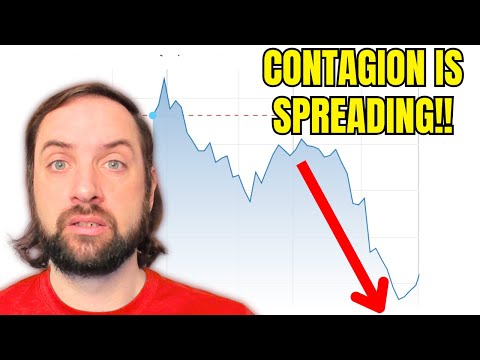
This is the WORST Case Scenario for the Global Economy (dollar up, rates down)
What this covers
Jeff Snider of Eurodollar University works through a single market pattern, a rising dollar alongside falling Treasury yields, by walking back through earlier episodes and then applying the pattern to June 2024. His argument is that this pairing runs against the standard view that the dollar follows interest rates or policy differentials. He reads it instead as a signal of flight to safety and risk aversion in the eurodollar system, driven by deteriorating fundamentals rather than by the Federal Reserve.
The historical tour is the core of the talk. He covers the 2008 run from Bear Stearns into the panic, and the 2011–12 European sovereign crisis, when yields plunged in late July and early August just before the dollar jumped. Then comes 2014–15, when yields fell despite talk of the "best jobs market in decades" and the dollar surged in mid-2014. The last is 2018, where he separates two phases. In mid-2018 a flattening curve fit a rising dollar, and Urjit Patel of the Reserve Bank of India complained that dollar funding had evaporated. In November 2018 yields began falling too, which he calls "the landmine." Each episode is tied to later recession or slowdown, especially in Europe and China, with the US skirting recession in 2014–15.
The present-day section is the most contentious. He points to the Fed raising its dots while the 2-year yield fell, a 20-point drop in University of Michigan consumer confidence, companies reporting weak consumers and trimmed hours, and a Europe whose recovery is being undercut by election-driven political turmoil. He treats Europe, China, the US and Japan as weak at once. The sharpest claims are that Fed policy and Fed confidence have little influence on these moves and that the pattern is among the worst signs a market can give.
The simultaneous rise of the dollar and fall of treasury yields signals severe global economic deterioration and flight-to-safety dynamics, not normal policy-driven movements, with implications for imminent recession across major economies.
- Historical pattern shows dollar-up/yields-down alignment precedes major financial crises (2008, 2011, 2014-15, 2018-19)
- Current alignment across Europe, China, and US indicates synchronized economic weakness despite Fed confidence narratives
- Risk-aversion dynamics in eurodollar system drive exchange rates more than interest rate differentials or central bank policy
This asset isn't compiled yet
You're seeing its claims, ranked. Compile it to build the argument threads, weight them, and check each claim against your library — the full view.
In 2018, the dollar made its first aggressive move higher starting in April, and the Reserve Bank of India's Governor Urjit Patel complained about how dollar funding had evaporated, signaling severe stress in the eurodollar system.
“the dollar made its first initial aggressive move starting in April of 2018 and not long after that we had the Reserve Bank of India's Governor urgent Patel at least the governor at that time complaining about how dollar funding had evaporated”
In 2008, the dollar began turning around right after Bear Stearns, and from summer 2008 into the panic, the dollar went higher at the same time bond yields went lower—the same pattern held during the financial crisis.
“2008 the not financial crisis itself the dollar began to finally turn around right after Bear Sterns at least according to dxy so right after be Stern and then treasure yields joined them in June and July there was a there was a backup in interest rates after bear Stern up until the middle of June but then from the summer 2008 right on into the Panic dollars going higher at the same time that bond yields are going lower”
Standard theory that the dollar is a reflection of interest rates, interest rate differentials, or policy differentials is incorrect; 2018 is a perfect example where rates went down while the dollar continued going up despite no change in policy differentials.
“of course that's backwards from how everybody tells everybody says the dollar be P right the dollar is a reflection of interest rates or interest rate differentials or policy differentials or some combination thereof when instead 2018 is one perfect example where rates are going down as the dollar continues to go up and it's not like policy differentials were an explanation either”
The major economies around the world (Europe, China, US, and Japan) are all struggling simultaneously and are brimming with financial risks, making flight-to-safety a rational market response to deteriorating global conditions.
“the major economies around the world are struggling and they're brimming with financial risks on top of everything flight to safety makes sense”
In November 2018, a critical shift occurred ('the landmine'): the dollar continued rising but treasury yields suddenly began falling, marking the onset of deflationary flight-to-safety dynamics.
“but then suddenly November what we call the landmine here at euro dollar University everything changed the dollar didn't change the dollar continued to rise but suddenly yields start to go down”
The 2014-2015 period (eurodollar number three) saw bond yields falling from end of 2013 onward despite supposed economic strength, with the dollar exploding higher in mid-2014, leading to emerging market turmoil and economic consequences especially for China.
“we had bond yields that were going down from the end of 2013 when they should have been they should have been rising because of the purported economic strength that everybody was talking about in 2014 they called it the best jobs Market in decades which sounds very familiar you had the end of QE you had looming rate hikes from the FED which took longer than expected but essentially bond yields instead were falling through 2014 right on it to 2015 and there was there was a land mine in in euro dollar number three to at the end of 2014 and the dollar got involved in the middle of 2014 suddenly the dollar explodes higher”
The 2011-2012 period (eurodollar number two) saw the dollar rise starting in May 2011 and aggressively from August 2011 during the European sovereign debt crisis and global banking turmoil, while bond yields fell aggressively from late July/early August, leading to European recession and global slowdown.
“euro dollar number two we see the dollar begin to go higher in May of 2011 it goes sideways to a little bit higher then makes a more aggressive move higher in August of 2011 when all of that turmoil for euro dollar number two global banking crisis the European sovereign debt crisis which was really a collateral shortage all of that begins to break out and the dollar begins to move higher”
In mid-2018, nominal treasury yields were rising because the Federal Reserve was hiking rates and putting pressure on longer-term yields, but the yield curve was flattening, which was entirely consistent with the dollar going up.
“as the dollar starts to go up nominal treasury yields are going up at the same time in the middle of 2018 largely because at that point the Federal Reserve was hiking rates and that was putting pressure on longer term yields medium and longer term yields because of that relationship but as the Fed was becoming more hawkish and raising rates n yields were longer term in particular were resisting that upward pressure in the short term end of the curve and the yield curve was flattening out which was entirely consistent with the dollar going up”
The dollar is going up and treasury yields are going down simultaneously, and this two-way move is inconsistent with Fed policy intentions or the Fed's perceived control over markets, suggesting markets are pricing in risk aversion independently of Fed signals.
“in very Broad and generic terms we're talking about initial signs of serious flight to safety”
When the dollar is going up as interest rates are going down, nothing good is happening around the world — this alignment is one of the worst signs that can emerge.
“one of the worst signs that we can get is when the dollar is going up as interest rates are going down nothing good is happening around the world when those two critical signals begin to align”
The dollar-up/yields-down pattern reflects flight-to-safety dynamics driven by risk aversion and money tightening in response to bad economic fundamentals, not by interest rate differentials or central bank policy differentials.
“what's really behind the dollar exchange value going up it's risk aversion it's money tightening it's a response to bad economic fundamentals and it as well as contributing more to those bad economic fundamentals”
The Federal Reserve does not directly control or meaningfully influence the dollar-up/yields-down pattern or the resulting flight-to-safety dynamics; Fed policy rate changes and Fed confidence have 'much to do' with market moves.
“flight to safety the dollar goes up treasury rates go down neither those fit to Fed nor do they have much to do with Jay Powell and his plans or his confidence about prices”
Over the next year and a half after the August 2011 dollar rise and yield decline, Europe fell into recession, the US came close to one, other parts of the world including China began to slow down and never recovered from that slowdown.
“over the next year and a half Europe would fall into recession the again the US would come close to one other parts around the world China would begin to slow down and never recover from that slowdown”
The 2008 financial crisis showed dollar backing up in interest rates from late June through mid-June after Bear Stearns, but from summer 2008 into the panic, the dollar and yields moved in the same direction: both going higher and lower together, establishing the crisis pattern.
“there was a there was a backup in interest rates after bear Stern up until the middle of June but then from the summer 2008 right on into the Panic dollars going higher at the same time that bond yields are going lower so again the the same pattern holds here”
Europe was supposed to be on its way to recovery in 2024, but the Euro has had a rough time as political turmoil breaks out everywhere, reversing earlier signs of stabilization.
“Europe for example was supposed to be on its way to recovery at long last suddenly the Euro was having a rough time as political turmoil is breaking out everywhere”
During 2018-2019 transition into 2019, lots of bad stuff happened all around the world with financial volatility and stocks down as the global economy transitioned from relatively stable toward recession.
“lots of bad stuff all around the world Financial volatility remember even stocks were down at that point because the global economy was transitioning from relatively stable toward more of a recession a pre-pandemic recession at that point”
The US avoided a near-recession in 2014-15 just barely, while many other places around the world did not and experienced substantial downturns.
“the US avoided a recession just barely but a lot of L of places around the world did not it got to be pretty substantial downturn”
Bond yields in 2011 began moving lower starting around February and March 2011, then made an aggressive crisis-level plunge lower in late July and early August 2011, just before the dollar started moving aggressively higher in August 2011.
“bond yields those started to move lower beginning around February and March of 2011 but they made an aggressive crisis level plunge lower in Late July and early August of 2011 so just before the dollar starts to move aggressively higher”
Rising treasury yields in mid-2018 resisted the Federal Reserve's rate hikes in the short-term end of the curve, causing the yield curve to flatten, which was consistent with the dollar going up.
“as the Fed was becoming more hawkish and raising rates n yields were longer term in particular were resisting that upward pressure in the short term end of the curve and the yield curve was flattening out which was entirely consistent with the dollar going up”
Europe is trying to get itself out of recession but political uncertainty (election last weekend) has been added as one more pressure that Europe can't afford while signs of economic rollover are already present.
“Europe is trying to get itself out of its recession and earlier this year it looked like maybe the European economy was starting to turn a corner corner but then all of this begins to happen and it's one more pressure that Europe really can't afford there's already signs that the economy is rolling over and to pile this political uncertainty on top of that it's just it's a bad situation”
Companies are reporting that consumers are really struggling, revenues are falling, and businesses are cutting hours and shedding payrolls in response to weakened consumer demand despite official employment data not fully reflecting this yet.
“got companies reporting about how consumers are really struggling their revenues are falling and when revenues are falling and customers are struggling businesses tend to give up on ho hoarding and holding on to their workers and they begin to get rid of them they cut back hours and they shed payrolls even though that might not be reflected in the actual payroll number more and more that is reflected in a whole variety of other data starting with other employment numbers from the household survey”
In 2014, the narrative was that this was the 'best jobs market in decades,' yet bond yields fell through 2014-15 despite supposed economic strength, which is backwards from what conventional theory predicts.
“they called it the best jobs Market in decades which sounds very familiar you had the end of QE you had looming rate hikes from the FED which took longer than expected but essentially bond yields instead were falling through 2014 right on it to 2015”
The Federal Reserve just moved its dots higher this past week, yet the 2-year treasury rate is moving lower, which is inconsistent with standard theory about what Fed policy should do and further evidence that flight-to-safety dynamics, not Fed policy, drive yields.
“the FED just moved its dots higher this past week and yet even the 2-year treasury rate is moving lower so in very Broad and generic terms we're talking about initial signs of serious flight to safety”
Consumer prices in China fell 0.1% in May (unexpected), CPI year-over-year is up only 0.3% (a low number associated with 2020 or 2008-09), and producer prices turned positive but not due to resurgent demand but due to supply squeezes in commodities like copper and aluminum that will reverse this month.
“the latest economic data out of China on consumer and producer prices consumer prices let me use the air quotes unexpectedly fell in the month of May the CPI was down a tenth of a percent but it was supposed to be at least flat if not modestly higher and it was everything not just pork prices there was also uh consumer goods prices were down as were Services prices down a tenth of a percent in the month of May year-over-year the CPI is up just 3/10 of a percent which is another low number which which we associate with either 2020 or 2008 2009 in China producer prices in China actually turned positive for the first time in many months but that wasn't because of resurgent demand that was because of the supply squeeze in Commodities like copper and aluminum which will be turning around and going the opposite direction this month given what's happening in both of those Metals demand is quite predictably disappointing”
The dollar is moving higher not just against the Euro but also against the Chinese Yuan, Japanese Yen, and Korean Won; Chinese authorities are putting great effort into trying to keep CNY stable but it continues to hit multi-month lows.
“the dollar is moving higher and it's not just against the Euro we've got China's Yuan Japan's Yen Korea's Juan and you got to remember too the Chinese authorities are putting great effort into trying to keep CNY stable yet it continues to go lower hitting a multi-month low at the same time us interest rates are going down”
Everything that was supposed to be good about 2024 (European recovery, Chinese housing stabilization, US consumer resilience) is turning in the opposite direction, all in broad terms reflecting flight-to-safety dynamics.
“everything that was supposed to be good about 2024 is turning back in very broad terms flight to safety”
Consumer confidence fell dramatically this week with University of Michigan showing a 20-point plunge that has only been seen twice before in the 21st century, signaling severe deterioration in consumer sentiment and economic expectations.
“just yesterday we got consumer confidence estimates from the University of Michigan which featured an unbelievable Plunge in Americans uh Americans assessment of the current situation there was a 20o plunge that we've only seen twice before in the 21st century”
The Chinese government released a housing rescue plan last month (May 2024) that has proved ineffective at stabilizing the property sector, with even previously euphoric equities turning negative right when the rescue was announced.
“the release of this historic rescue for the property sector that was in every way a predictable dud it wasn't really a rescue of the property sector...even the once optimistic even euphoric stock market in China have turned around and in remarkably they turned around right when the housing rescue was announced”
Chinese equity markets (Hang Seng and Shanghai indices) fell significantly following the announcement of the historic housing rescue, with Hang Seng down ~9%, Shanghai down ~5%, and real estate sector index (CNREIT) down 13.3%, indicating the rescue was received very poorly by markets.
“even the once optimistic even euphoric stock market in China have turned around and in remarkably they turned around right when the housing rescue was announced which tells you that the housing rescue was received very poorly even by equities the hangsang Hong Kong big cap stock index that's down about 9% since the rescue was announced the Shanghai ssse that's down about 5% and that's after some big rallies in both of those but not a positive reflection on the latest fundamentals including the government's plans specifically with regard to Chinese real estate snp's China a real estate sector index of US dollar stocks that's down 133% since the uh since the announcement of the rescue”
Chinese authorities are managing the decline in their economy, essentially admitting through their actions and policy choices that they are content with just seeing where the situation goes and hoping to limit the downside, rather than achieving actual recovery.
“essentially they're what they're trying to do is as I keep saying manage the decline but managing the decline from any other perspective than that of xiin ping is a very different set of circumstances than what most people have in mind especially for the context of 2024 where we're supposed to be getting reflation instead the Chinese are basically admitting we're content with just seeing where this thing goes and hoping to limit the downside”
What needs to be seen next is whether or not the dollar will keep moving higher and make a more aggressive move, whether treasury yields will break through their 2024 range and go lower, and whether bull steepening in the treasury market will occur—if both dollar acceleration and bull steepening happen, this will indicate serious deflation rather than inflation.
“what we need to see next is whether or not these Trends can continue will the dollar keep moving higher will it make a more aggressive move higher will treasury yields finally go lower breaking through their range of this year because we've seen head fakes in the treasury market before four will we end up getting some bull steepening if we do get both of those the dollar moving more aggressively higher and bull steepening in the treasury market lower nominal rates then then we'll have something and it won't be inflation”
CNY down equals bad—a simple equation used at Eurodollar University for well over a decade—because Chinese Yuan weakness is a proxy for how the eurodollar system interprets both global conditions and China's specific situation.
“the Chinese Yuan exchange value against the dollar that's simply a proxy for how the euro dollar system is interpreting conditions as they relate to China the broad conditions about around the rest of the global economy but also those as they relate to China's situation in it so CNY down equals bad simple equation that we've been using at Euro doll University for well over a decade”
Eurodollar cycles are often defined by the dollar going up and treasury yields going down, which occur during flight-to-safety episodes marked by deflationary circumstances, lower growth, and lower inflation expectations.
“euro dollar Cycles are often times defined by the dollar going up and treasury yields going down or Treasury and government bond yields around the world going down flight to safety deflationary circumstances lower growth and inflation expectations they're all consistent”
The purportedly strong and resilient US economy that Fed Chair Powell described is actually showing clear signs of outright recession, not just a slowdown or soft landing.
“the purportedly strong pillar of the resilient US economy that's instead showing more clear signs of outright recession American consumers are struggling mightily and now they're worried about their jobs and their incomes”
Jay Powell's recent press conference emphasized a strong and resilient US economy, but this narrative contradicts the emerging evidence of consumer struggle and economic weakening.
“J Powell just had his press conference this past week talking about how strong and resilient the US economy is it is looking less strong and less resilient by the week by the day even”
China's historic housing rescue announced last month was a predictable dud that does not fix the property sector but instead is the latest in a long line of ill-suited plans that will not have a real chance at fixing China's big problems.
“the release of this historic rescue for the property sector that was in every way a predictable dud it wasn't really a rescue of the property sector it was just the latest in this long line of bad ideas and Ill suited plans that were never going to have a real chance at fixing China's big problems”
The Chinese government's successive policy interventions (stock market rescue early in the year, National People's Congress plan, Politburo statement, and finally the property rescue) all represent ill-suited attempts to manage problems that require structural reform, not policy tweaks.
“there was the stock market rescue early ear on in the year as share prices had been plunging throughout the last part of last year they said we're going to start rescuing stocks because that's a bad signal um then they came out with the national people's Congress which said we're going to put together a plan to do something about our housing problem acknowledging for the first time that there was a massive real estate problem as if we didn't know there was that was followed later by the pilot Bureau statement that said we're coming close to putting together our plan and then last month the release of this historic rescue”
The DXY (dollar index) is used as a proxy for the dollar's exchange value largely reflecting the Euro, and this is somewhat appropriate because recent turmoil has been driven by European political and economic developments.
“I've used dxy here as a proxy for the dollars exchange value which is largely a reflection of the Euro but we can use other exchange values and we're going to get into another one in just a moment but in this case it's somewhat appropriate because in the most recent really this week this past week it's been Europe that has been hitting the front page of all the news and social media”