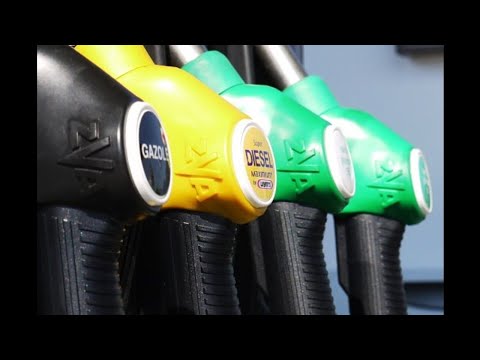
Greg Mankiw on Gasoline Taxes, Keynes and Macroeconomics 1/22/2007
What this covers
Greg Mankiw and Russ Roberts conduct a wide-ranging conversation on macroeconomic theory and tax policy. Mankiw, a Harvard economist, defends the view that Keynesian effects on aggregate demand are genuine but fleeting and modest in magnitude, while the long-run behavior of the economy obeys classical principles of supply, incentives, and capital accumulation. This framework leads him to argue that tax and spending policy should be evaluated primarily on their incentive effects—how they alter behavior—rather than on their short-run stimulus properties. The centerpiece of the discussion is a proposal for higher gasoline taxes as a way to address negative externalities while avoiding more cumbersome regulation.
The conversation spans several connected territories. On theory, Mankiw explains why Keynesian multipliers matter in the short run but fade, why tax rates function as prices that shape decisions rather than mere income transfers, and how the Coase theorem complicates the case for Pigouvian taxes—though Mankiw argues transaction costs remain large enough to justify them. On gasoline specifically, he distinguishes between pollution and congestion as externality targets, noting that a fuel tax addresses both imperfectly. On broader tax reform, he advocates "broadening the base and lowering the rates" and critiques politically entrenched deductions that narrow the base while obscuring costs. The discussion also touches friction between economic advice and political reality: whether economists should advocate theoretically optimal policies knowing politics will distort them, and what it means to take political constraints seriously without retreating into defending the status quo.
Mankiw argues that Keynesian demand-side effects are real but only short-run and modest, while over the long run the economy is governed by classical forces; therefore tax and spending policy should be judged primarily by incentive effects, and corrective Pigouvian taxes are the most efficient way to raise needed revenue.
- Keynesian multipliers are real but short-run and empirically small, so deficits don't durably stimulate growth
- Tax rates function as prices/incentives, not merely as income flows, so structure matters more than level
- Pigouvian taxes on negative externalities (gasoline, carbon, congestion) are more efficient than the taxes they could replace
This asset isn't compiled yet
You're seeing its claims, ranked. Compile it to build the argument threads, weight them, and check each claim against your library — the full view.
Tax debate confuses incentive effects with distributional effects; tax rates should be understood as prices that change behavior rather than as generators of income flows, so sending a smaller check to the government is fundamentally different from having your income taxed at a lower rate, and the incentive effects are what economists care about.
“it would really be nice if if advocates of tax cuts or critics would keep in mind the the role of tax rates as prices rather than as generators of flows of income”
Coase's contribution challenges the Pigouvian tax: in a world with zero transaction costs markets handle externalities by themselves and no Pigouvian taxes are needed, but Coase himself rejected that as unrealistic; the substantive part of the Coase theorem is that because transaction costs are not zero, one must be careful where to place liability, responsibility, and property rights, taking costs into account.
“the second part that Co said which i think is what I consider the Coase theorem to what extent is the theorem is that because transaction costs are not zero be careful where you put liability be careful where you put responsibility be careful where you put property rights”
Congestion is a problematic externality target for a gasoline tax because, unlike a pure externality, the cost is partly borne by the person causing it (each driver is slowed by other drivers too), and because gasoline taxes are a blunt instrument: an extra mile of driving causes congestion only at congested times and places, whereas it always emits pollutants.
“an extra mile driving doesn't lead to more congestion if you manage to do it 3:00 in the morning here in Washington DC or in Boston”
Economic theory says government faces a single present-value budget constraint tying the present value of spending to the present value of tax revenue, but actual decisions are made year-by-year on the cash-flow deficit; the focus on the current cash deficit, while theoretically unjustified, may not be a bad thing given a political process that cannot deal with present values.
“economic theory tells us it was actually one budget constraint to govern faces which is a present value... the present value of spending is tied down to the present value of tax revenue that's not how decisions decisions are made decisions are made on a year-by-year basis”
Social Security exists not because most people couldn't provide for their own retirement—most would be fine in a private market—but because a small minority would be unlucky, too impatient, or too short-sighted, and society's compassion (refusing to let the formerly short-sighted starve in old age) leads it to provide rich retirement benefits to everyone rather than just the few who need it.
“some people wouldn't and some people would would what would either be unlucky or too impatient or too short-sighted... we're going to provide a rich retirement benefits for freezing all eight year olds very enough property don't need to do it for all”
The right reform goal is not lower taxes per se but a better tax structure—raising the same revenue more efficiently and less destructively—captured by the mantra 'broaden the base, lower the rates,' which was done successfully in 1986 but has since unraveled.
“the basic mantra for your tax reform is broaden the base lower the rates and that was done very successfully in 1986 and therefore has slightly unraveled over time”
Politically popular deductions like the state-and-local tax deduction, the mortgage interest deduction, and the exclusion for employer-provided health insurance are difficult to scale back because beneficiaries see the benefits clearly while the costs are diffuse and hard to see, so the political incentives for fixing them are very small.
“the average homeowner and the average user of employer subsidized health care sees the benefits don't tarp much much much harder to see the costs of that policy so the political incentives for fixing that are very small”
The two main negative externalities from gasoline are pollution (including carbon dioxide linked to global warming) and road congestion; a gasoline tax is only a second-best way of dealing with congestion, since direct road pricing—charging explicitly for driving on congested roads—would be the first-best solution.
“the other sort of external associated with driving is congestion... every time anyone decides to drive somewhere... they're conveying a negative externality everyone else because they're adding to road congestion slowing everyone else down”
Starting from a state of nature without political constraints, one could institute a single broad-based negative income tax (as Milton Friedman proposed) to provide a floor income, which would be a sufficient social safety net for people of any age, eliminating the need for separate age-based programs—though we are very far from that world.
“you might just Institute some very general broad-based negative income tax one one signal Friedman proposed many many years ago and then once you had a florid income through the negative income tax say that's enough it's all we need for social safety net for people of any age”
Taking all political constraints into account would force an economist to recommend only the status quo, since the status quo is the outcome of the existing political process given everyone's concerns—so an advisor who fully respects political realism ends up recommending nothing.
“if you really say I'm gonna take into account all political constraints end up recommending status quo the status quo is the outcome of the process given all the political concerns that everybody faces”
There is always a normal or natural level of unemployment even in a fully employed economy, because firms are constantly expanding and shrinking, people get laid off and optimally take time to search for the best job rather than the first one—what Milton Friedman called the natural rate of unemployment—so 'full employment' should not be confused with zero unemployment.
“there is that sort of normal level of slack in the economy what milton friedman termed the natural rate of unemployment”
Tax-subsidized employer-provided health insurance leads to too much insurance that is too comprehensive, with little paid out of pocket, because the tax system subsidizes employer-provided coverage.
“we have too much employer-provided health insurance that it's a recovery insurance is too comprehensive it's not nothing paid out of pocket because we're subsidizing employer provide health insurance through the tax system”
Keynes's insight was that in the short run aggregate demand for goods and services can affect the level of utilization and unemployment, and monetary and fiscal policy can affect that demand and therefore have short-run effects on unemployment and real GDP; but no one today thinks these are long-lived phenomena, so over the longer run the world looks much more classical than Keynesian.
“in the short run the amount of demand for goods and services could affect the level of utilization level unemployment and that tools of monetary fiscal policy can affect the a great demand for goods and services and therefore have short-run effects on unemployment”
The current US deficit is not worrisome—it is modest by historical standards and sustainable given economic growth—but the long-term fiscal projection is alarming because Social Security, Medicare, and Medicaid spending will skyrocket as the baby boom retires and health costs rise, while tax revenue stays roughly stable as a percentage of GDP, producing unsustainably large deficits unless benefits are reined in or taxes rise toward Western European levels.
“these long term projection has spending especially on Social Security Medicare and Medicaid skyrocketing as the baby boom generation retires”
A virtue of higher gasoline taxes is that they could substitute for more intrusive and counterproductive regulation, such as the corporate average fuel economy (CAFE) standards, which are heavily regulatory and replete with unintended consequences—offering regulatory relief while addressing the externality less intrusively.
“we have these corporate average fuel economy standards which are incredibly regulatory credibly have replete with unintended consequences one of my goals of using things like gasoline taxes is to offer some regulatory relief”
A higher US gasoline tax would have its incidence shared between consumers and oil suppliers: as US oil consumption falls, the world price of oil would fall, so part of the tax would in effect be paid by oil-exporting countries like Saudi Arabia and Venezuela—analogous to an optimal tariff exploiting market power, with the risk of setting the rate incorrectly.
“the price of oil world markets will fall and if we're part of the tax will in effect be paid my study Arabia Venezuela and other the other countries that sell oil on world markets”
In a standard calibrated growth model, the dynamic revenue feedback from tax cuts is partial, not self-financing: a labor/payroll tax cut recoups about 17% of the static revenue loss through higher GDP, a capital tax cut (dividend or corporate) recoups about 50%, and an income tax cut combining the two recoups about 25%.
“for cut in in labor taxes a payroll tax cut that about seventeen percent of the static revenue loss was paid for through a larger GDP... you cut taxes on capital they take a dividend tax cut our corporate tax cut then if a half of the revenue loss was recouped”
The tax base is being narrowed rather than broadened because it is politically attractive to relieve groups from paying taxes, so the income tax is increasingly paid by a smaller share of the public; this creates a dangerous political economy where a large segment of the population whose share of an additional government dollar is tiny will demand more government.
“it creates a demand for government by a large segment of population whose whose share of an additional dollar is incredibly small so strangely enough they want additional dollars”
Economists should advocate first-best Pigouvian taxes even knowing the political process may distort them, because refraining from giving best advice does not remove politics from the tax process—tax policy is already politicized—so the economist's job is to give clear best advice and persuade as many people as possible.
“having economists come out against optimal pigouvian taxes is not going to take politics out of the tax process politics is there inside the tax writing process”
The question of the optimal progressivity of the tax system depends as much on political philosophy—whether one follows John Rawls (bothered that the poor pay any income tax) or Robert Nozick (libertarian, denying the federal government a role in correcting income distribution)—as on economics, and these fundamental questions lie beyond the scope of economics itself.
“it's a question that involves as much issues of political philosophy as it does economics”
Even within a Rawlsian philosophy favoring help for the least well-off, economics matters because if the means of redistribution is so destructive that it produces only short-term benefit and long-term harm, it fails the poor; societies that embraced the Rawlsian view on paper have not actually served their lowest members well, in part because designers engage in wishful thinking that programs won't have adverse incentive effects.
“if the means of redistribution is so destructive that it only produces a short-term benefit and a lot of long-term harm... that's where economics does have a role to play”
The choice of whether to take political constraints into account when giving economic advice divides economists: George Stigler's view held that the world is as it is because of existing incentives, so advocating different outcomes is quixotic and economists should merely observe—like a physicist advocating a change in gravity—whereas Milton Friedman took an idealistic view, tilting at windmills, some of which fell down, and empirically Friedman was closer to correct because economists do affect policy.
“stigler's view was the world is as it is because of the incentives that are in place already arguing for a different set of outcomes is quixotic... but of course in the real world economists do affect policy outcomes”
The optimal response to global warming may not be to reduce the activity causing it but to choose among alternative coping strategies based on cost—for example, if warming merely makes us less comfortable, investing in air conditioning could be a cheaper response than taxing gasoline—and one economist suggested the optimal response could be a gradual multi-generational migration to Siberia.
“one is to put the tax on gasoline and discourage people from driving if indeed that does lead to global warming the second is to invest in air conditioning which is another way to solve that that hardship”
The Federal Reserve still relies on traditional Keynesian-style macroeconometric models of the kind Larry Klein and Franco Modigliani built, modernized and re-estimated, because the Friedman-Lucas theoretical critique never produced a substitute tool that tells a central banker whether to raise or lower rates; though smart central bankers treat these models with a grain of salt as only one input among many.
“distill Medicare policy still very much based on traditional Keynesian models of the sort that economist Larry Klein and Franco Modigliani we're building four years ago”
The Keynesian model and the IS-LM framework are alive and well today, having recovered after Friedman and Lucas's critiques nearly killed it in the late 1970s, and the basic IS-LM framework remains in the background of modern research pioneered by people like Michael Woodford.
“I think the Keynesian model is actually quite alive and well though we certainly have a degree of skepticism greater than was the case back in the 60s and 70s in part because of the work of Milton Friedman and Robert Lucas”
The Keynesian multiplier is a great idea subject to two crucial caveats: it is only a short-run phenomenon, and when you take it to the data the estimated multipliers turn out not to be all that big, so even if Keynes was right in theory the practical multiplier effects may be small.
“we actually take go to the data and actually estimate decides these multipliers they turn out not to be all that big it looks like so even if Keynes was right as a matter of theory is a better practice these multiplier effects may not be all that large”
Government spending does not create resources from whole cloth; because the economy has finite capital and labor, a dollar of government spending crowds out roughly a dollar of private consumption or investment, and if financed by higher tax rates that discourage work and capital accumulation, the crowding out can exceed one-for-one and actually shrink the total economic pie.
“the economy has finite resources finance amount of capital and labor and as a result does Dahl that dollar resources to come from somewhere else”
Entitlement reform cannot realistically change benefits for current recipients, but politicians can put in place a future path of policy changes—telling someone now 30 or 40 years old to work a few years longer or save more—because if you wait until they turn 60 it becomes politically impossible to ask them to work longer.
“if you don't tell him that now when he turns 60 it's going to be hard to tell him at that point oh by the way we'd like it worked here longer”
If you take the view that all tax increases are bad and stop there, you put yourself in a box where as an economist you cannot judge one tax versus another and effectively cede the question of how government should raise revenue to non-economists; a more subtle analysis recognizes that some taxes are better than others.
“if you go to view that all tax increases are bad and you just leave that you leave your conclusion at that then you're basically in a position as an economist you say I can't judge one tax versus another tax”
Mankiw's preferred high-impact reforms, ignoring political realism, are: higher Pigouvian taxes; fundamental tax reform along the lines of the president's panel (ideally a broad-based progressive consumption tax); and a very significant but very gradual increase in the retirement age for Social Security and Medicare, on the logic that people are living longer and healthier and shouldn't go on the government dole at the same age as their grandparents.
“one is would obviously be higher for Jovian taxes... another would be basic tax reform... actually the more radical there too which is very close to a sort of a broad-based progressive consumption tax and then I'd worry about entitlements”
Taxing individual products as a revenue source is politically destructive because once economists concede that gasoline should be taxed higher on efficiency grounds, each product would in principle warrant its own efficient Pigouvian rate, but in practice you don't get the efficient rate—you get the politically designed rate, as the tobacco settlement illustrates.
“when we start taxing individual products as a source of revenue I think the politics of that is very destructive... what about other products um shouldn't each product according to poo vary its own efficient tax rate and then what ultimately happens is that you don't get the efficient tax rate you get the politically designed tax rate”
A negative externality is an action that imposes harmful effects on others that the actor doesn't bear, so activities producing negative externalities get overdone while those producing positive externalities are underdone; the Pigouvian prescription is to tax negative externalities and subsidize positive ones.
“things that produce negative externalities get overdone because you don't bear the full cost things that produce positive externalities are underdone”
One could make a perverse externality case for subsidizing tobacco on budgetary grounds, because tobacco kills people early and quickly relative to other causes, saving subsidized healthcare costs and Social Security payments—though Mankiw considers using budgetary externalities as a justification for taxation theoretically incorrect.
“tobacco kills people early and quickly relative to some other things that saves people healthcare costs that are that are subsidized it saves Security payments”
Raising the gasoline tax in the hope of reducing other taxes is unlikely to work in practice, because what governments actually do is spend more; reductions in tax rates have steadily failed to produce long-term tax reductions absent a way to rein in spending, so a higher gasoline tax would simply add to the pile of resources government gets to spend.
“what we will end up doing is spending more which is exactly what we have been doing steadily for a long time... a rise in the gasoline tax would add to the pile of stuff that government gets to play with I would like to take away that piece of the sandbox”
The more a society tries to redistribute income, the higher tax rates must be, the weaker work and capital-accumulation incentives become, and the smaller the resulting economic pie—reflecting that there are no free lunches.
“the more the more want to redistribute income for example the higher tax rates are going to be do less incentives they're going to be and the smaller the size of economic pie”
There is a strong economic case for eliminating the state-and-local tax deduction because there is no particular reason that residents of high-tax states should be subsidized by the federal government relative to residents of low-tax states.
“There's no particular reason that you can high tax states should get subsidized relative to people no tax states by the federal government”
The riskiness of life today is much lower than it was in 1870, 1920, or 1950, yet political demand for a safety net for everyone remains strong.
“the riskiness of life despite some claims to the contrary the riskiness of life is much much lower than it was in 1870 or 1920 or 1950 and yet the political demand for that that safety net for all of us remains”
Borrowing flexibility is healthy for governments in times of crisis, just as it is for individuals, but making borrowing the standard day-to-day modus operandi of government is not a healthy political economy.
“for borrowing to be the modus operandi the sort of standard way of doing things in day to day life for government strikes me is not a very healthy political economy”
Bill Clinton, a liberal Democratic president, endorsed a conservative-looking welfare reform bill in 1996 because he was cognizant of the adverse incentive effects of welfare programs.
“even had a Democrat liberal democratic president like Bill Clinton endorsed of looks like a very conservatives welfare reform bill in 1996 so I said because he was cognizant of the adverse incentive effects”
President Bush cut taxes substantially in 2001 and 2003, showing that the claim that taxes can never be cut is wrong.
“President Bush did cut taxes quite substantially in 2001 and 2003 so I don't think it's impossible”
Spending cuts that are politically unpalatable today will become more palatable if the economy continues to grow and we have more resources, and tax increases will likewise become more palatable.
“the spending cuts which are politically unpalatable today will be more palatable if the economy continues to grow when we have more resources the tax increases will be more palatable as well”