What this covers
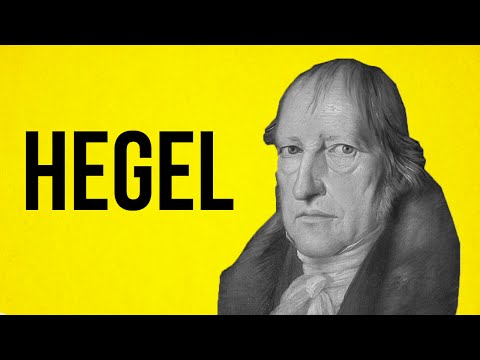
This seven-minute School of Life film introduces Hegel through a handful of practical ideas rather than through his system. The narrator is unidentified. The film begins with Hegel's view that history does not move in a straight line, so every era becomes a repository of wisdom that the present can recover. Ancient Greece is the example given, as a store of lost knowledge about community. It then follows how truth gets scattered across ideas we first find foreign or contemptible, and how the historian's job is to rescue what current blind spots hide.
The middle of the film covers dialectical oscillation: progress lurches between extremes as the world overcorrects for earlier mistakes, usually needing three moves before a balance appears. The modern state is offered as an example of this twisting path. The film argues that the pain and slowness are inevitable, and that expecting them keeps us from treating our troubles as abnormal. Nationalism, despite its terrible record, is said to hold a sound core: the need to feel pride in where one comes from and to anchor identity beyond the ego.
The last stretch turns to implementation. Hegel's high regard for institutions is explained by the point that correct ideas need staff, buildings, budgets and legal advice to act at scale. The film wants new institutions for relationships, consumer education, career choice, mood and child-rearing. It rejects art for art's sake and treats art as the sensuous presentation of ideas. Examples are the Syrian conflict, which people grasp intellectually but do not feel, and forgiveness in a marriage, which is easily forgotten under provocation. The film also names Hegel's major books, including the Phenomenology of Spirit, and sharply criticises his deliberately dense prose.
Hegel's philosophy offers practical wisdom for modern life by teaching that progress emerges from historical patterns, intellectual opposition, institutional structures, and art's capacity to make ideas emotionally resonant rather than merely intellectually understood.
- Every historical era contains recoverable wisdom that compensates for contemporary blind spots
- Truth is scattered across ideologies we initially reject, requiring us to extract value from intellectual enemies
- Progress requires painful oscillation between extremes before balance emerges, a process that is inevitable rather than wasteful
This asset isn't compiled yet
You're seeing its claims, ranked. Compile it to build the argument threads, weight them, and check each claim against your library — the full view.
For ideas to be active and effective in the world, much more is needed than the ideas being merely correct; ideas require employees, buildings, budgets, and legal advice to become powerful and effective at scale in society
“For ideas to be active and effective in the world, a lot more is needed then the ideas are simply correct; to make major truths powerful in society they need employees and building and budgets and legal advices”
Institutions allow for the scale of time and power that big projects need to become effective in the world
“institutions allow for the scale of time and power the big projects need to become effective in the world.”
Progress occurs by lurching from one extreme to another as the world seeks to overcompensate for a previous mistake, and this process generally requires three moves before the right balance on any issue can be found
“Hegel believed the world makes progress, but only by lurching from one extreme to another. As it seeks to overcompensate for a previous mistake. He proposed that it generally take three moves. Before the right balance on any issue can be found.”
Hegel vigorously rejected the idea of art for art's sake; rather, painting, music, architecture, literature, and design all have a major job to do
“Hegel vigorously rejected the idea of art for art sake. Painting, Music, Architecture, Literature and Design: all have a major job to do.”
Hegel took a very positive view of institutions and their power to effect change, emphasizing this point repeatedly and in different ways
“Hegel took a very positive view of institutions and of the power then can wield. This is a point Hegel made again and again in different ways.”
Progress is never linear; there is wisdom at every stage of history, and the task of the historian is to rescue from the past those ideas most needed to compensate for the blind spots of the present
“'Progress is never linear', Hegel tells us; 'there is wisdom at every stage', 'which', says Hegel 'points us to the task of the historian.' 'To be a historian is to be someone who should rescue, from the past, those ideas that're most needed' 'to compensate for the blind spots of the present.'”
Every historical era can be understood as a repository of a particular kind of wisdom that is valuable and recoverable for the present
“Hegel argued that every era can be looked at as a repository of a particular kind of wisdom.”
Hegel believed that important truths are scattered across unappealing, peculiar, or foreign phenomena, and we should extract value by asking what sliver of sense and reason might be contained in otherwise frightening or foreign ideas
“he held, 'the bits of the truth are always getting scattered even in unappealing, or peculiar places,' 'and we should dig them out by asking always, 'what sliver of sense and reason might be contained in otherwise frightening or foreign phenomena?'”
The conflict in Syria is intellectually understood as important, but people switch off and fail to engage emotionally or behaviorally unless art makes the suffering visceral and imaginative
“for example in theory we believe the conflict in Syria is an important one. In practice however we just switch off.”
People often know abstractly that they should be more forgiving to their partners, but this conviction gets forgotten at the least provocation unless reinforced by art or imaginative experience
“In principle we know we should be more forgiving to our partners, but this abstract conviction gets forgotten at the least provocation.”
Hegel wrote very long and very famous books including 'The Phenomenology of Spirit', 'The Science of Logic', and 'Elements of the Philosophy of Right', but wrote in an unnecessarily confusing and complicated manner when he should have been clear and direct
“He wrote some very long and very famous books, among them, 'The Phenomenology of Spirit', 'The Science of Logic', and 'Elements of the Philosophy of Right'; but, we'll be frank: he wrote horribly; his work is confusing and complicated when it should be clear and direct.”
The dialectical process (thesis-antithesis-synthesis) is exemplified in the complex twists and turns that brought about the modern state
“A process that he named the DIALEKTIK. He was often thinking of the complex twist and turns that brought about the modern state.”
Sometimes in the process of moving from era to era, a new solution emerges that synthesizes the good qualities of previous solutions, creating something genuinely new, different, and better
“And sometimes in this process of moving from era to era we`ll find a new solution, that manages to synthesize the good qualities of the previous solutions, to make something really new, and different and better.”
Growth requires the clash of divergent ideas and therefore will be painful and slow, but once we understand this necessity, we don't compound our troubles by thinking them abnormal
“His insight is the growth requires that clash of divergent ideas and therefore that will be painful and slow. But at least once we know this we don`t have to compound our troubles by thinking them abnormal.”
We need art so that important insights can become powerful and helpful in our lives; art is 'the sensuous presentation of ideas,' making ideas stick imaginatively in our minds rather than remaining abstract intellectual convictions
“We need them so that important insights can become powerful and helpful in our lives. Art is in Hegel`s formulation: 'the sensuous presentation of ideas'. Just knowing ideas often leaves us cold... The point of art Hegel realized, is not so much to come up with startling new strange ideas [5:08] but to take the good, helpful, important thoughts we already think we know, and make them stick more imaginatively in our minds.”
As new needs of a society are recognized, they should ideally lead not just to the writing of new books but to the formation of new institutions
“So, as new needs of a society get recognized, they should ideally lead not just to new books but to the formation of new institutions.”
We need major new institutions to focus on relationships, consumer education, career choice, mood management, and how to bring up less damaged children
“Nowadays we might say we need major new institutions to focus on relationships, consumer education, career choice, mood management and how to bring up less damaged children.”
Hegel is a hero of the thought that really important ideas may be in the hands of people you regard, at first glance, as beneath contempt
“Hegel is a hero of the thought that really important ideas may be in the hands of people you regard, at first glance, as beneath contempt.”
The painful stepping from era to era, as each oscillates between extremes, is inevitable and something we must expect and reconcile ourselves to when planning our lives or contemplating history
“All this can seem the most appalling waste of time, but Hegel insists that the painful stepping from era to era is inevitable. Something we must expect and reconcile ourselves to when planning our lives or contemplating history books.”
Hegel helps us to see valuable insights even when we might initially resist them, whether they appear in art, institutions, or the ideas of our intellectual enemies
“Hegel help us to see valuable insights what we might initially resist them, in art in institutions in the ideas of our enemies and in the strange mistakes of the past.”
Hegel gives us a more accurate and hence more manageable view of ourselves, our difficulties, and where we are in history
“Hegel gives us a more accurate and hence more manageable view of ourselves, our difficulties and where we are in history.”
The Middle Ages can teach us about the role of honor in ways no other era can, despite the period's appalling attitudes toward children and women's rights
“the Middle Ages can teach us, as no other era can, about the role of honor, even if this period featured appalling attitudes to children or the rights of women.”
Nationalism, despite its terrible historical manifestations, contains an underlying good idea: the need for people to feel proud of where they come from, to identify with something beyond their own achievements, and to anchor identities beyond the ego
“Nationalism, for instance, has had many terrible manifestations even in Hegel's day, but Hegel's move was to ask what underlying good idea or important need might be hiding within the bloody history of nationalism. He proposed that it's the need for people to feel proud of where they come from, to identify with something beyond merely their own achievements, and to anchor their identities beyond the ego.”
Hegel exploited a weakness of human nature—our tendency to trust grave-sounding, incomprehensible prose—which has weakened philosophy's influence in the world and made it harder for people to access valuable insights
“He tapped into a weakness of human nature: to be trustful of grave-sounding, incomprehensible prose. This has made philosophy much weaker in the world than it should be, and it's made it much harder for us to hear the valuable things that Hegel has to say to us”
Ancient Greece is a repository of wisdom about community that has been lost in the modern age and needs to be recovered through historical study
“we might need to mine history of ancient Greece to fully grasp the idea of what community can be, something which has been lost in the modern age.”
The path toward sensible attitudes to sex in modern times exemplifies the dialectical process: the Victorians imposed too much repression, the 1960s may have turned out to be too liberal, and only by the 2020s might we find the right balance between extremes
“We can also think the slow path towards sensible attitudes to sex in our own time. The Victorians impose too much repression, yet the 1960s may have turn out to be too liberal. It might only be by 2020s that we`ll find the right balance between extremes.”
Georg Friedrich Hegel was born in Stuttgart in 1770 and died the year after becoming head of the University of Berlin at age sixty
“Georg Friedrich Hegel was born in Stuttgart in 1770... he ascended the academic tree and reached the top most branch, head of the University of Berlin, when he was sixty years old; he died the following year.”