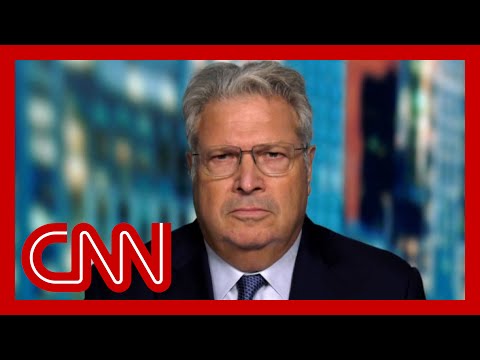
Washington Post editor-at-large resigns over Bezos' decision. He explains why
What this covers
This is a short CNN interview in which Erin Burnett questions Robert Kagan, who resigned as editor-at-large of the Washington Post after the paper decided not to endorse a presidential candidate. It is the first time in 36 years of presidential elections that the Post has made that choice, and Burnett notes that the editorial page had already drafted an endorsement of Kamala Harris. The decision came from owner Jeff Bezos, and publisher Will Lewis announced it as a return to the paper's roots. Lewis pointed out that the Post was founded in 1877, did not endorse until 1976, and skipped an endorsement again in 1988. Burnett also reports that eight columnists, including David Ignatius and Ruth Marcus, called it a terrible mistake.
Kagan rejects the neutrality rationale. He points out that the Post has endorsed Democratic candidates in other races this cycle, and that its editorial page spent nearly eight years arguing that Trump threatens American democracy. He argues Bezos is protecting his much larger stake in Amazon against Trump's threats. He also holds that editorial endorsements do not compromise the separate news operation. He says his account rests on public information, not on insider knowledge of the editorial discussions or of Bezos.
The more contested part looks ahead. Kagan sees bending the knee by corporate leaders, citing Jamie Dimon, as a pattern. He expects Trump to control the media through owners' fear for their wider businesses, not through direct censorship, and he points to Trump's threat against CBS's license. Burnett floats a counterpoint: papers that decline to endorse might reach broader audiences and seem less partisan. The conversation closes on protest. Kagan calls canceling Post subscriptions reasonable, but suggests Amazon and Prime subscriptions are the more direct lever.
Jeff Bezos's decision to block the Washington Post's Harris endorsement represents anticipatory capitulation to Trump's threatened retaliation against his business interests, foreshadowing how Trump will control corporate media through fear rather than direct censorship.
- Bezos prioritizes Amazon's massive federal regulatory exposure over the Post's editorial independence, as Trump has explicitly threatened Amazon with higher taxes and regulatory action
- The Post's stated rationale—returning to institutional neutrality—contradicts its recent endorsements of other candidates this cycle, revealing the justification as pretextual
- This pre-presidency capitulation demonstrates the mechanism through which Trump will suppress critical media: corporate owners choosing self-preservation over press freedom
This asset isn't compiled yet
You're seeing its claims, ranked. Compile it to build the argument threads, weight them, and check each claim against your library — the full view.
The mechanism of Trump's control over the media will operate through corporate owners' fear of retaliation, not through direct censorship, particularly affecting media owned by corporate titans with substantial federal regulatory exposure.
“so if we want to know how Trump is going to stifle, the free press in the United States, this is this is the answer. This is how it's going to happen. especially when the media is owned by, corporate titans who have a lot to lose if Trump is angry at them.”
Editorial pages are functionally separate from news coverage, and editorial endorsements do not prevent newspapers from delivering fair news reporting across political perspectives.
“because, you know, everybody knows or should know that the editorial page of every newspaper is separate from the news coverage? I don't think the Washington Post thinks it's an act like a liberal newspaper. I know people who are critical of post may think that, but it isn't that it's trying to deliver the news. The editorial page has a different function. The editorial page, presents opinions on a lot of issues. They tell Americans what they think about all kinds of things, that Americans should be doing. And no one has ever thought that somehow that gets in the way of the Washington Post doing its job as a news organization.”
Bezos is prioritizing his stake in Amazon—where he has vastly more financial exposure—ahead of his interest in the Washington Post as a major newspaper, because the Post's financial value is tiny compared to Amazon's.
“as much as Bezos would like to see the post, keep up a subscription, the amount of money that Bezos has at stake at the post is a tiny fraction of the money that he has at stake with Amazon. Right. and that's why he's decided to weigh his stake in Amazon ahead of his interest as the owner of a of a major newspaper.”
The Washington Post's stated rationale for not endorsing—returning to institutional neutrality and the paper's historical roots—is pretextual because the Post has endorsed other candidates in this 2024 election cycle, including Democratic nominees in Maryland and elsewhere.
“they've endorsed all kinds of candidates in this election season. They endorsed the Democratic nominee, in Maryland, they've endorsed other Democratic nominee. So is it just only in the race that Donald Trump happens to be running in that they've decided not to endorse? It's it's absurd.”
This non-endorsement decision by the Washington Post is an anticipatory capitulation to Trump's power before he even becomes president, foreshadowing what media control will look like once Trump wields presidential power.
“here is a sort of anticipatory capitulation, on the part of a major media organization. And that is before he's even President. So imagine what it's going to be like when he is president and does wield enormous power over how corporate, you know, how particular corporations do in this country.”
Bezos's decision to block the Post's endorsement represents an effort to curry favor with Donald Trump in anticipation of his possible victory and to protect Amazon from Trump's threatened retaliation.
“This is obviously an effort by, by Jeff Bezos to curry favor with Donald Trump and the anticipation of his possible victory. Trump has threatened to, go after Bezos business. And Bezos runs one of the largest companies in America. They have tremendously intricate relations with the federal government that depend on the federal government. And Trump has made it clear that he will Oppo will attack media organizations that are critical of him.”
The editorial page of the Washington Post has been arguing for nearly eight years that Donald Trump is not only the wrong candidate but an actual threat to American democracy.
“the editorial page, not just the Washington Post as a news organization, but the editorial page has been laying out for almost eight years arguments as to why Donald Trump is not only the wrong candidate, but an actual threat to American democracy.”
Trump has threatened to go after Bezos's business and attacked media organizations that are critical of him, including threatening to take away CBS's license.
“Trump has threatened to, go after Bezos business. And Bezos runs one of the largest companies in America. They have tremendously intricate relations with the federal government that depend on the federal government. And Trump has made it clear that he will Oppo will attack media organizations that are critical of him. He's threatened to take away CBS is license.”
The Washington Post will not endorse a candidate for president for the first time in 36 years of presidential elections.
“The Washington Post is in turmoil tonight after the publisher announced that the newspaper will not endorse a candidate for president. That's the first time they have not done so in a 36 years of presidential elections.”
The stated rationale that the Post is returning to institutional neutrality has no credible explanation other than fear of Trump and desire to curry favor with him.
“look, there's there's no explanation other than the most obvious one. This is a simple question with a simple answer.”
Kagan's explanation for the non-endorsement is based on publicly available information about Trump's past threats to Bezos and Amazon, not on insider information from editorial meetings or Bezos himself.
“No, I mean, it's the latter. I've read what you've read. I that's all I know. I don't have any inside information, but look it. Trump did threaten, Bezos in the past. He talked about, you know, taxing Amazon more heavily, and other things.”
This non-endorsement decision represents the beginning of how Trump will control the media through corporate owners' self-interest in protecting their broader business interests from Trump's retaliation.
“I think we should just see clearly that this is the beginning, of how Trump is going to control the media, especially that media that is controlled by corporate interests, because all of corporate America has been now bending the knee to Trump.”
The editorial page had drafted an endorsement of Kamala Harris before the decision was made.
“the editorial page had drafted an endorsement of Kamala Harris before the decision was made, according to a source”
Washington Post editor at large Robert Kagan resigned from the newspaper in response to the non-endorsement decision.
“Washington Post editor at large Robert Kagan resigning from the newspaper tonight. Others, possibly to follow.”
Eight Washington Post columnists including David Ignatius, Ruth Marcus, and Eugene Robinson called the decision a terrible mistake and an abandonment of the fundamental editorial convictions of the newspaper.
“Eight Washington Post columnist including David Ignatius, Ruth Marcus, Eugene Robinson A nationally known names, of course, speaking out and calling the decision, quote, a terrible mistake and a, quote, abandonment of the fundamental editorial convictions of the newspaper that we love.”
The decision to not endorse came from the paper's owner, Amazon founder Jeff Bezos.
“The post itself reporting that the decision came from the paper's owner, Amazon founder Jeff Bezos.”
Will Lewis, the Post's publisher, justified the non-endorsement by claiming it returns the paper to its historical roots, stating the Post was founded in 1877 and did not endorse a presidential candidate until 1976, and again chose not to endorse in 1988.
“So he's saying this is a return to the paper's roots. That's how he's clarifying it. And and the way that they're putting this out there is Washington Post is founded in 1877. It did not endorse a presidential candidate until 1976 and then chose not to endorse in 1988.”
If well-established institutions like the Washington Post and Los Angeles Times decline to endorse in the 2024 election, they could potentially reach broader audiences across the political spectrum and be seen as less partisan in a polarized media environment.
“is there anything to be said for if well known, established, venerated institutions like the Washington Post or the Los Angeles Times, the New York Times is not yet endorsed. I don't know what will happen there. but then if they if they don't endorse that, maybe in the future, in a world where half of this country is going to vote for Donald Trump and half of this country is going to vote for Kamala Harris, that there might be a future for that, for for an institution like the Washington Post to reach both sides, as opposed to be seen being seen as only a liberal, more democratic newspaper”
Jamie Dimon and other corporate leaders have begun bending the knee to Trump by making statements in his favor, out of fear that Trump will damage their businesses if they oppose him.
“We saw Jamie Dimon do this, back in January at Davos, where he decided to say out of the blue that Trump is right about some things. Corporate, leaders want to make sure that they're not at odds with a president who does threaten them. if they behave badly.”
Canceling subscriptions to the Washington Post may not be the most effective form of protest, and people should consider also targeting Amazon subscriptions and Amazon Prime, since Amazon is Bezos's primary asset.
“But do you think that's the right lever, given what you're saying and how you see this happening? Or do you think people should be actually looking at their Amazon subscriptions? Right. I mean, that that of course, is that is the company for Jeff Bezos.”
People are canceling their subscriptions to the Washington Post in response to the non-endorsement decision.
“There are people canceling their subscriptions. I've heard, you know, some of them, that they're using that as a way to express their feelings. Others are threatening to do so just moments ago.”
Canceling subscriptions to the Washington Post is a reasonable lever people can pull to express their opposition to the non-endorsement decision.
“I you know, if people feel strongly, you can understand why they do that. That's the lever they have to pull.”
Will Lewis, the Washington Post's publisher, published the paper's statement about the non-endorsement.
“Will Lewis, your publishers, your former publishers. explanation. So he's saying this is a return to the paper's roots.”
The Washington Post is reporting that the non-endorsement decision came from Jeff Bezos.
“The post itself reporting that the decision came from the paper's owner, Amazon founder Jeff Bezos.”
Kagan made an emotionally difficult decision to resign but found it easier than it would be for other staff members with different financial situations.
“It was a pretty easy decision. This is obviously an effort by, by Jeff Bezos to curry favor with Donald Trump...I have no idea. And that's. And, you know, everybody has to make their own decisions about this thing. It's it's a little easier for me to resign than for others. So I don't I don't presume to judge what others do.”
No one knows whether other Washington Post staff members beyond Kagan will resign in response to the non-endorsement decision.
“Do you expect more resignations? I mean, I know your friends, your colleagues. Ruth Marcus. David Ignatius have put out a statement saying that they don't support this, but, do you think more people are going to resign? I have no idea.”