What this covers
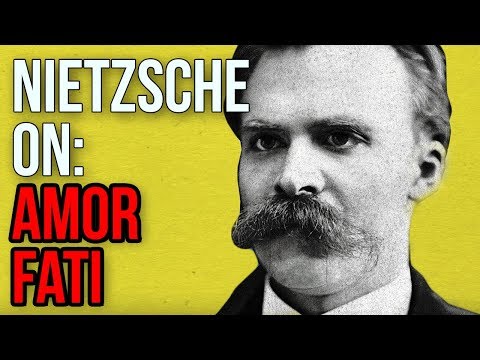
This School of Life film is a seven-minute, single-narrator account of amor fati, the idea Friedrich Nietzsche returns to repeatedly in his work. It draws on two of his texts: the formula for greatness in Ecce Homo, where one wants nothing to be different "not forward, not backwards, not in all eternity," and a passage in The Gay Science about learning to see necessity as beautiful and making "looking away" one's only negation. A 1882 letter describing a mood of "fatalistic surrender" is quoted as well. The film then sets this against the ordinary habit of cataloguing errors and wishing things had gone otherwise.
The second half turns to Nietzsche's biography as the reason the idea mattered to him. His escape from his family, his break with academia, his unsold books, his begging from friends and family, and his failed attempts at romance supply the material for the regrets the narrator imagines him chewing over: "if only" thoughts on walks across the Upper Engadin and in his wooden chalet at Sils Maria. At its height, amor fati is described as seeing that nothing could have been otherwise, because a person's life is a web of consequences running back to birth.
The most contested point is how acceptance relates to action. The film grants that the cultural drive to change things and fight injustice is partly virtuous. It argues that the same drive becomes soul-sapping when turned inward on one's own past. Nietzsche's Wille zur Macht, his emphasis on vitality and self-assertion, is therefore not discarded. The film presents both attitudes as items in a mental toolkit, to be chosen by occasion rather than held consistently. Amor fati serves as a counterweight to defiance and as an emergency remedy for something like 4 a.m. rumination.
Nietzsche's concept of amor fati—loving one's fate—offers a philosophical tool for accepting the past without regret, not as a replacement for active will but as a complementary mental framework to deploy when self-recrimination becomes destructive.
- Amor fati is presented as a practical psychological necessity to counter destructive rumination, not a surrender of agency
- Nietzsche held both active will (Wille zur Macht) and fatalistic acceptance simultaneously, treating them as context-dependent intellectual tools
- Nietzsche's own life demonstrated the need for this concept—he experienced profound failures and regrets that made acceptance necessary for sanity
This asset isn't compiled yet
You're seeing its claims, ranked. Compile it to build the argument threads, weight them, and check each claim against your library — the full view.
Nietzsche's concept of amor fati, translated as 'love of one's fate,' refers to a resolute enthusiastic acceptance of everything that has happened in one's life—the good and bad, mistaken and wise—with strength and all-embracing gratitude that borders on affection.
“one of the strangest yet most intriguing aspects of friedrich nietzsche's ideas is his repeated enthusiasm for a concept that he called amor farty translated from the latin as a love of one's fate or as we might put it a resolute enthusiastic acceptance of everything that has happened in one's life the person of amor fati doesn't seek to erase anything of their past but rather accepts what has occurred the good and the bad the mistaken and the wise with strength and an all-embracing gratitude that borders on a kind of enthusiastic affection”
Nietzsche couldn't get his parents, especially his mother and sister, out of his head; his books sold dismally; he was forced to beg from friends and family to survive; his awkward attempts to seduce women were met with ridicule and rejection.
“he couldn't get his parents especially his mother and sister out of his head Nietzsche's books sold dismally and he was forced more or less to beg from friends and family in order to keep going meanwhile his halting gauche attempts to seduce women were met by ridicule and rejection”
Nietzsche writes in The Gay Science: 'I want to learn more and more to see as beautiful what is necessary in things then I shall be one of those who makes things beautiful. Amor fati let that be my love henceforth. I don't want to wage war against what is ugly. I don't want to accuse. I don't even want to accuse those who accuse. Looking away shall be my only negation.'
“I want to learn more and more to see as beautiful what is necessary in things then I shall be one of those who makes things beautiful amor fati let that be my love henceforth I don't want to wage war against what is ugly I don't want to accuse I don't even want to accuse those who accuse looking away shall be my only negation”
Nietzsche's concept of Wille zur Macht (will to power) embodies the attitude of vitality, conquest, and self-assertion, standing in tension with but complementary to the acceptance of amor fati.
“his concept of the village saw marked or will to power embodies just this attitude of vitality and conquest of obstacles”
The refusal to regret and retouch the past is heralded as a virtue in multiple points in Nietzsche's work, contrasting with typical cultural values that emphasize action, alteration, and moral condemnation of mistakes.
“this refusal to regret and retouch the past is heralded as a virtue at many points in Nietzsche's work”
In Ecce Homo, Nietzsche writes: 'My formula for greatness in a human being is amor fati: that one wants nothing to be different, not forward, not backwards, not in all eternity. Not merely bear what is necessary, still less conceal it, but love it.'
“my formula for greatness in a human being is amor fati that one wants nothing to be different not forward not backwards not in all eternity not merely bare what is necessary still less conceal it but love it”
In most areas of life, most of the time, people do the opposite of amor fati: they spend enormous amounts of time taking stock of errors, regretting misfortunes, and wishing things could have gone differently, because there is cultural and political value placed on actively changing circumstances rather than accepting them.
“in most areas of life most of the time we do the very opposite we spend a huge amount of time taking stock of our errors regretting and lamenting the unfortunate twists of fate and wishing that things could have gone differently we are typically mighty opponents of anything that smacks of resignation or fatalism we want to alter any move things ourselves politics the economy the course of history”
In Nietzsche's own life, many projects of self-creation and self-overcoming went terribly wrong: he fled his restrictive family in Germany and escaped to the Swiss Alps; attempted to escape academia and become a freelance writer; tried to find a wife who could be both lover and intellectual soulmate—all largely failed.
“in Nietzsche's own life there was much that he had tried to change and overcome he had fled his restrictive family in Germany and escaped to the Swiss Alps he had tried to get away from the narrowness of academia and become a freelance writer he had tried to find a wife who could be both a lover and an intellectual soulmate but a lot in this project of self creation and self overcoming had gone terribly wrong”
In a letter to a friend in the summer of 1882, Nietzsche described his new spirit of acceptance using the words 'I am in a mood of fatalistic surrender to God I call it a more fatty so much so that I would be willing to rush into a lion's jaws.'
“in a letter to a friend written in the summer of 1882 Nietzsche try to sum up the new spirit of acceptance that he had learnt to lean on to protect him from the agony of regret I am in a mood of fatalistic surrender to God I call it a more fatty so much so that I would be willing to rush into a lion's jaws”
Part of the cultural and political drive to alter circumstances, resist resignation, and wage moral wars against ugliness and injustice is virtuous (defiance of evil, self-improvement), but when turned inward on past regrets and personal failures, this same drive becomes soul-sapping and destructive.
“part of this means refusing to be passive about the errors in justices and ugliness of our own and the collective past Nietzsche himself in some moods knows this defiance full well”
Nietzsche did not ask people to choose between 'glorious fatalism' and 'vigorous willing'—rather, he believed we should have multiple intellectual frameworks available and deploy whichever one is most suited to the occasion, treating them like different tools in a mental toolkit.
“Nietzsche isn't therefore asking us to choose between glorious fatalism on the one hand or a vigorous willing on the other he is allowing us to have recourse to either intellectual move depending on the occasion he wishes are mental toolkit to have more than one set of ideas to have as it were both hammer and a saw”
Certain occasions particularly need the wisdom of a will-driven philosophy; others demand that we know how to accept, embrace, and stop fighting the inevitable—the key is recognizing which situation calls for which framework.
“certain occasions particularly need the wisdom of a will driven philosophy others demand that we know how to accept embrace and stop fighting the inevitable”
Nietzsche believed we need to have 'ideas to hand' that can solve our wounds—we do not need to be consistent, but rather we need a variety of frameworks available to deploy as circumstances require.
“he's aware that in order to lead a good life we need to keep in mind plenty of opposing ideas and marshal them as and when they become relevant we don't in Nietzsche's eyes need to be consistent we need to have the ideas to hand that can solve our wounds”
At the height of the mood of amor fati, one recognizes that things really could not have been otherwise because everything one is and has done is bound closely together in a web of consequences beginning at birth that one is powerless to alter at will, and thus what went right and what went horribly wrong are equally part of an inevitable whole.
“at the height of the mood of amor fati we recognized that things really could not have been otherwise because everything we are and have done is bound closely together in a web of consequences that began with our birth in which we are powerless to alter at will we see that what went right and what horribly wrong are as one”
Destructive rumination and regret ('if only' thoughts) can be so soul-sapping and destructive that the idea of amor fati becomes psychologically necessary as a tool to regain sanity and quiet a troubled mind.
“it was because such thoughts and every one of us has our own distinct variety of them can ultimately be so destructive and so soul sapping that the idea of amor fati grew compelling to Nietzsche amor fati was the idea that he needed in order to regain sanity after hours of self-recrimination and criticism it's the idea we ourselves may need at 4:00 a.m. finally to quieten a mind that has started Naurang into itself”
The person practicing amor fati ultimately commits to saying a 'large yes to the whole of life in its absolute horror and occasional moments of awesome beauty,' tears mingling grief with a kind of ecstasy.
“we commit ourselves to accepting both to no longer destructively hoping that things could have been otherwise we were headed to a degree of catastrophe from the start we end up saying with tears in which their mingled grief and a sort of ecstasy a large yes to the whole of life in its absolute horror and occasional moments of Awesome beauty”
Nietzsche experienced persistent ruminating regrets like 'If only I'd stuck with an academic career,' 'If only I'd been more confident around women,' 'If only I'd written in a more populist style,' 'If only I'd been born in France,' while walking across the Upper Engadin and during nights in his modest wooden chalet in Sils Maria.
“there must have been so many lamentations and regrets running through his mind his walks across the upper anger Dean and his knights in his modest wooden chalet in SILS Maria if only I'd stuck with an academic career if only I'd been more confident around certain women if only I'd written in a more populist style if only I'd been born in France”
Amor fati is both a necessary counterbalance to human instincts toward defiance, action, and moral criticism, and an idea that individuals may need to deploy during moments of acute psychological distress (like 4 a.m. rumination) to restore sanity.
“it's the idea we ourselves may need at 4:00 a.m. finally to quieten a mind that has started Naurang into itself shortly after midnight it's an idea with which a troubled spirit can greet the first signs of dawn”