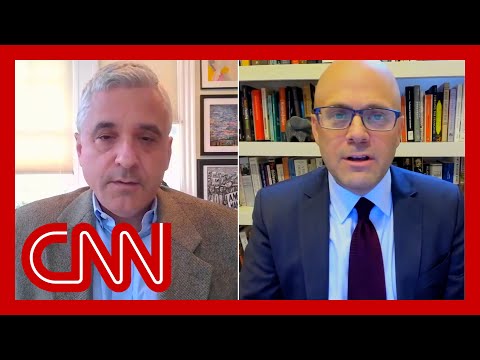
Scholar explains why he thinks the GOP has turned away from Democracy
What this covers
This ten-minute CNN interview has Jim Acosta questioning Steven Levitsky and Daniel Ziblatt about their book Tyranny of the Minority. It runs along two tracks. One is a claim about the Republican Party's commitment to democracy, which Ziblatt measures against three criteria: a party must accept election results whatever they are, never use violence to gain or hold power, and distance itself from actors who do either. He argues the party increasingly fails all three. The other track is institutional. The Host presses the point that the Constitution may contribute to the problem rather than only guard against it.
On the first track, Levitsky argues that no single leader, even a popular demagogue like Donald Trump, can destroy a democracy alone. It takes the support or toleration of a major party. Ziblatt places mainstream Republicans who stay silent about violence or election denial in the category of enablers, the figures who, in cases of democratic breakdown, look like democrats while clearing the way for authoritarians.
The institutional track is where the factual claims cluster. Levitsky catalogues features he says are unusual or unique among democracies: a president who can lose the popular vote and still win through the Electoral College, a Senate controlled by the popular-vote loser because of Senate apportionment, and Supreme Court lifetime tenure. He ties these to 2016 and to the claim that Republicans can afford to keep backing Trump because they don't need national majorities. That causal argument is the most contested part. Both guests also recall that Nixon, the AFL-CIO, the Chamber of Commerce and the American Bar Association backed abolishing the Electoral College in the late 1960s, when an amendment passed the House and had Senate majority support but fell short of two-thirds. Ziblatt closes by calling for renewed constitutional amendment and argues that opposing minority rule is not partisan.
Levitsky and Ziblatt argue that structural constitutional features—the Electoral College, Senate apportionment, and lifetime judicial tenure—systematically enable political minorities to thwart or rule over majorities, creating democratic peril that requires constitutional reform to restore majority rule.
- The U.S. is the only presidential democracy where the popular vote loser can become president, and one of few where the legislative majority can be held by the popular vote minority
- The Republican Party can win national power without national majorities because constitutional features protect it, removing incentive to appeal to broader electorates
- Historical precedent shows Americans have successfully amended the Constitution to expand democracy; the absence of such reform over 50 years represents a failure to continue that work
This asset isn't compiled yet
You're seeing its claims, ranked. Compile it to build the argument threads, weight them, and check each claim against your library — the full view.
The Constitution is a remarkable document with many great virtues, but since its founding, the U.S. has improved it through amendments that have made it more democratic.
“Of course our constitution is a remarkable document, and there's many great virtues to it. One of the things we have to remember is that since its founding, we have improved the constitution. We have done the hard work of making our constitution more democratic.”
For a political party to be committed to democracy, it must: (1) accept elections regardless of outcome, (2) never use violence to gain or hold power, and (3) distance itself from political actors engaging in the first two behaviors.
“You have to think that to be a political party that's committed to democracy, you have to do three basic things, first of all, you have to accept elections, win or lose. Second of all, you have to never use violence to gain power or hold on to power, and critically, you have to also distance yourself from political actors who engage in the first two behaviors.”
A single leader, even a very popular demagogue like Donald Trump, cannot destroy a democracy by himself; it requires the enabling, toleration, support, and protection of a major political party.
“It's only partially about Donald Trump. As Daniel just said, what's really critical, a single leader, even a very popular demagogue like Donald Trump cannot destroy a democracy by himself. It takes the enabling of a political party, a major political party, the toleration, the support, the protection, of a major political party to enable him to do a lot of damage”
The United States is the only established democracy in the world where Supreme Court justices have lifetime tenure with no term limits or retirement age.
“We are the only established democracy in the world where justices have lifetime tenure, there's no term limits, there's no retirement age.”
The U.S. Senate is one of the few democracies in the world where the party that loses the popular vote can control the chamber routinely.
“We are one of the few democracies in the world where the -- a major legislative body, the senate, the party that loses the popular vote can control and routinely does control the senate.”
In 2016, Trump lost the popular vote but won the presidency, and Republicans won control of the Senate despite Democrats winning the popular vote, then appointed three Supreme Court justices that transformed the court.
“Quickly, think back to 2016. Donald Trump lost the popular vote and won the presidency. In the U.S. Senate, the Democrats won the popular vote and the Republicans that came by the way with control of the senate. That president and that senate went on to nominate and confirm three justices which totally transformed the nature of the supreme court.”
The Republican Party does not need to win control of the Senate through the popular vote because Senate apportionment allows them to maintain Senate control despite losing the popular vote.
“Same thing in the senate, they don't need to win the popular vote to win control of the senate.”
The United States is the only presidential democracy in the world where the president can lose the popular vote and still become president.
“We are the only presidential democracy in the world where the president can lose the election, lose the popular vote and become president.”
Republican Party leadership privately speaks badly of Trump but continues to support him publicly because they don't need to win national majorities due to constitutional protection through the Electoral College and Senate apportionment.
“the problem is that the Republican party leadership, even though in private they will speak very badly of Donald Trump, continue to support him in public, and one reason that they do that, and this gets back to the minority rules side of our book, is that the Republican party, as a whole, nationally, doesn't have to win national majorities. It can win the presidency through the electoral college. It's lost the popular vote in seven out of the last eight elections, and yet it's won three out of the last eight elections. Same thing in the senate, they don't need to win the popular vote to win control of the senate. A party that doesn't need to win majorities, that's protected in a sense by the constitution, can get away with playing around with Donald Trump, rather than looking for a candidate or a platform that can win national majorities.”
American democracy has strengthened itself over time through constitutional amendments that have improved the system, but this work has been abandoned over the last 50 years while other democracies have continued making their constitutions more democratic.
“our democracy has strengthened itself over time through amendments, through improving it. What's tragic in the last 50 years, we have stopped doing that work. Other democracies have continued to make their constitutions more democratic, we abandoned that.”
Mainstream Republican politicians who knowingly accept that their allies engage in violence or election denialism without condemning it are enabling authoritarianism in the Republican Party.
“When you think about mainstream politicians, people who are business attire, suits, that look like normal democratic politicians, they look like they're committed to democracy. They sound like they're committed to democracy. If they know their allies are engaging in violence or election denialism, to accept that, not condemn it, not say we have nothing to do that, that's unacceptable is to enable an authoritarian strand in the final party.”
A political party that doesn't need to win majorities, protected by the Constitution, can afford to 'play around with Donald Trump' rather than developing candidates or platforms that can win national majorities.
“A party that doesn't need to win majorities, that's protected in a sense by the constitution, can get away with playing around with Donald Trump, rather than looking for a candidate or a platform that can win national majorities.”
It is not partisan to argue that the candidate who wins the most votes should win office.
“I would ask, is it partisan to think that the person who wins the most votes should win office?”
In democracies that have experienced democratic breakdowns, enablers—politicians who look like democratic actors but enable authoritarians—are the ones who get democracy into trouble.
“A final note, we have studied democracies and democratic breakdowns, we have discovered the enablers, those who look like democratic politician, but who are not are the ones who get democracy into trouble.”
The Constitution contributes to democracy problems in the United States, not just protects democracy.
“you write that the constitution is part of the problem here”
Electoral College abolition failed to achieve the 2/3 Senate supermajority needed for constitutional amendment in the late 1960s, despite majority support in the Senate.
“But it didn't get the 2/3 that it needed in the senate, and so it died.”
In the late 1960s, the leaderships of both major political parties supported abolition of the Electoral College.
“The leaderships of both political parties supported abolition of the electoral college.”
Richard Nixon, the AFL-CIO, the Chamber of Commerce, and the American Bar Association all supported abolition of the Electoral College in the late 1960s.
“Richard Nixon, the AFL cio, chamber of commerce, American bar association”
The Republican Party is increasingly violating all three criteria for democratic commitment: accepting elections, refusing political violence, and distancing from anti-democratic actors.
“What's so shocking and troubling about the current dynamic in the United States is that we have a political party that's violating increasingly all three of those, especially the third category.”
The Republican Party has won three out of the last eight U.S. presidential elections while losing the popular vote in seven out of eight elections.
“It's lost the popular vote in seven out of the last eight elections, and yet it's won three out of the last eight elections.”
The Electoral College and filibuster have sometimes benefitted Democrats and sometimes Republicans, but the point is they are unfair mechanisms that should be reformed.
“Sometimes the electoral college has benefitted Democrats. Sometimes it's benefitted Republicans. Sometimes the filibuster benefits Democrats, sometimes it benefits, Republicans. The point is that it's unfair, and that's why we have a set of proposals that we think ultimately will help American democracy as a whole.”
In no other domain of life do we accept that majorities should not govern, yet political systems are a single carve-out where minority rule is accepted.
“And no other domain of our life do we think majorities shouldn't govern, but we have this one single carve out in our political system.”
The House voted overwhelmingly to abolish the Electoral College in the late 1960s.
“the house voted overwhelmingly to abolish the electoral college”
There was a Senate majority supporting abolition of the Electoral College in the late 1960s.
“There was a majority in the senate”
Most Americans alive today have no memory of a period when constitutional reform was seriously considered, despite the U.S. tradition of updating the Constitution.
“Most of us can't remember a period anymore where we actually thought seriously about reforming the constitution but we used to do it.”
Approximately 70-75% of Americans in polls supported abolition of the Electoral College in the late 1960s.
“something like 70, 75% of Americans in polls supported it”
Senators shifted from being appointed to being directly elected at the beginning of the 20th century, representing democratizing constitutional reform.
“We began to elect senators rather than appoint senators at the beginning of the 20th century”
Women gained the right to vote in the early 20th century through constitutional amendment, representing an improvement that made democracy more democratic.
“women got the right to vote at the beginning of the 20th century by amending the constitution”
Levitsky and Ziblatt have developed 15 proposals for institutional reforms that they believe are necessary and potentially achievable for restoring faith in American democracy.
“We laid out 15 proposals for institutional reforms that we think are not only essentially but at some level are possible and would help us restore the faith we feel like we need to have in our democracy.”