What this covers
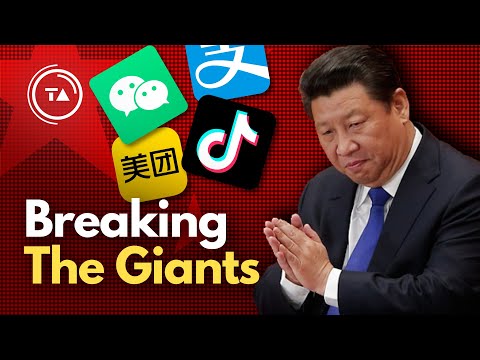
This TechAltar episode (ep. 91 of "The Story Behind") is a single-narrator explainer on why Beijing turned on its own internet industry. It starts with the 2010 Supreme Court ruling in the Qihoo vs. Tencent case, China's first internet antitrust dispute. The court dismissed findings of monopolistic behavior, which in effect licensed a decade of bundling and competitor-blocking, including WeChat cutting off links to rival apps. It then follows the reversal that began after Jack Ma's 2020 Shanghai speech attacking financial regulators. Ma vanished from public view and gave up most of his roles, but the video stresses that the crackdown reached every major Chinese internet company.
The middle of the video walks through the crackdown area by area. Antitrust came first, aimed at practices like choose one from two at Alibaba. Next were deceptive practices such as fake reviews and fake discounts. Privacy followed, where the PIPPL) restricts private companies' use of data but leaves government access untouched. Labor enforcement targeted 996 culture, and algorithm rules required disclosure and opt-outs. The financial deregulation that Ant Group represented was also curtailed, at a moment when the real estate credit market was under severe strain.
The explanation of motive is the most contested part. The narrator offers a first reason, reasserting control, which the material marks as debatable. The second is dependence on foreign technology, exposed by US sanctions on Huawei and ZTE. That dependence made spending on food delivery and shopping look like disorderly expansion of capital compared with semiconductors, materials science, and self-driving cars. Underneath both reasons is slowing growth. Citizens, including youth practicing lying flat, questioned the sacrifices demanded of them, and the government's language of common prosperity and "high quality" growth is presented as its answer.
China's 2020-2022 tech crackdown was a deliberate government reversal that compressed two decades of regulation into two years to reassert control over companies, redirect resources toward critical technologies, and signal a shift from high-speed growth to common prosperity as growth slowed.
- The Supreme Court's 2010 leniency toward Tencent-360 set a precedent tolerating monopolistic behavior for a decade, which the government abruptly reversed in 2020
- The crackdown wiped out $1.5 trillion in value and targeted seven areas simultaneously (antitrust, deceptive practices, privacy, labor, algorithms, financing, and specific industries)
- Internal drivers included slowing growth and youth disengagement ('lying flat'), while external drivers included US sanctions on Huawei revealing tech dependence and wasteful capital expenditure on low-value services
This asset isn't compiled yet
You're seeing its claims, ranked. Compile it to build the argument threads, weight them, and check each claim against your library — the full view.
China's Supreme Court, in its first antitrust case involving internet companies (Qihoo vs. Tencent), dismissed findings of monopolistic behavior and dominant market position, ruling that bundling software and blocking competitor apps were not violations of antitrust law.
“The Supreme Court of China didn't actually find either of these companies guilty of monopolistic behavior. Chihu versus Tencent was the first antitrust case in China's internet economy heard by the Supreme Court. And they decided that not only was the bundling of software and outright blocking of competitors apps not against antitrust rules, but they even dismissed the idea that these companies had a dominant market position relevant to the proceedings at all.”
China's Supreme Court's lenient 2010 ruling set a clear precedent that made anticompetitive and monopolistic behavior the rule rather than the exception in China's internet economy for the following decade.
“In other words, the Supreme Court took an extremely lenient approach, and that decision set a very clear precedent, making anti-competitive monopolistic behavior the rule rather than the exception in China's internet.”
The crackdowns partially served to make it clear to the industry that semiconductors, material sciences, and self-driving cars were the areas where the government wanted resources to be spent going forward.
“These were not only not sanctioned but actually continued to receive massive support. And the crackdowns partially served to make it very clear to everyone that these were the areas that the government wanted resources to be spent on much more.”
With slowing growth, the sense of incredible economic progress that previously characterized Chinese society has disappeared, and citizens no longer see great leaps in prosperity.
“And with it, the sense of incredible economic progress has disappeared across China's population as well.”
In this environment of slowing growth, COVID pressures, and other problems, Chinese citizens began questioning why the long working hours, lack of privacy, brutal educational pressure, and ruthless profiteering of companies were necessary when they themselves no longer saw great leaps in prosperity.
“In this environment, together with all the COVID related pressures and other problems, citizens started to question what the long working hours, the lack of privacy, the brutal educational pressure, and the ruthless profitering of companies were for when they themselves no longer saw great leaps in prosperity.”
The second reason for the crackdowns was that US sanctions on companies like Huawei and ZTE made it clear that China's economy and technology sector was dangerously reliant on core technologies from abroad, a vulnerability the government aimed to address.
“Externally, the US bans around Huawei, ZTE, and others made it painfully clear that China's economy and technology sector was dangerously reliant on core technologies from abroad. This was a major vulnerability, but according to the CCP, internet companies hoovered up most of the resources and spent them on pointless feuds that the government calls a quote disorderly expansion of capital around a million new ways to deliver food or shop online or whatever instead of sinking their billions into critical capabilities around semiconductors, material sciences, self-driving cars, etc.”
When incredible growth stops, citizens begin demanding more focus on consumer protections and working conditions, and the crackdown measures aimed to signal to the population that the government was focused on these issues.
“When the incredible growth stops, citizens understandably start demanding more of a focus on getting better consumer protections and working conditions, etc. And many of these changes and laws aim to signal to the population loud and clear that that's what the government is focused on. now shorter working hours, less educational pressure, fewer scams online, etc.”
PIPPL theoretically restricts private company access to user data but does not restrict government access to user data, making China's privacy law framework stricter on private companies than the US in practical terms for corporate data collection.
“Of course, in practice, Pipple doesn't restrict government access to user data, but on the private company front, at least it does theoretically make it so that China now has clearer and stricter nationwide privacy laws than the US, for example.”
The massive crackdown on Alibaba following Jack Ma's speech occurred while a severe credit crisis was developing in the Chinese real estate market, making financial deregulation demands seem particularly dangerous to the government.
“And seeing the massive credit crisis in the Chinese real estate market that developed soon after it's clear to see in retrospect that Jack's speech about loosening financial regulations must have sounded particularly dangerous to the government at the time.”
Internal to China, the economy's growth rate had slowed dramatically in recent years, with a clear downward trend visible even in official government figures.
“After decades of incredibly fast expansion, the country's growth started to slow dramatically in the last few years. Ignoring the crazy swings around the pandemic, a strong downward trend has become clear for everyone to see, even in the official figures.”
The Chinese government viewed internet companies' capital expenditure on 'disorderly expansion' (such as food delivery and shopping services) as wasteful instead of focusing investment on strategic foundational technologies like semiconductors, material sciences, and self-driving cars needed for technological independence.
“internet companies hoovered up most of the resources and spent them on pointless feuds that the government calls a quote disorderly expansion of capital around a million new ways to deliver food or shop online or whatever instead of sinking their billions into critical capabilities around semiconductors, material sciences, self-driving cars, etc. These foundational technologies that China needed to gain independence or maybe even exert control over others in the future.”
The first reason for the crackdowns was that the government wanted to reassert control, using the violent and sudden regulatory actions to send a clear message to both the industry and citizens that the government was in charge.
“In other words, the government suddenly and deliberately wrecked the very tech giants that they in the past have basically protected at all costs. Which really begs the question of why? What happened that made the government change so suddenly? To start with, Jackmar speech might have been the straw to break the camel's back. But the government has long felt that private internet companies were starting to amass too much power anyway. And much of the crackdown was simply a swift and brutal reminder to everyone in the industry of just who was in charge.”
While Jack Ma's speech started the avalanche, the crackdowns did not stop with him and every single major internet company in China was targeted.
“That said, while he might have started the avalanche, the crackdowns didn't stop with him at all. Every single major internet company in China was targeted and the government pushed through major changes in seven areas.”
The sixth area of crackdown was financing and governance, where China mandated that companies list domestically rather than offshore, and demanded 'golden shares' giving the government a board seat with veto power over future decisions at major internet companies.
“Sixth, financing and governance. In the past, most big Chinese internet companies listed their shares, or at least the shares of their shell companies in the US when they went public, which allowed them to raise money from mature international capital markets. China decided that it no longer liked this as it wanted to build up its own capital markets at home. So, many national champions like DD, the kind of Uber of China, saw massive investigations and crackdowns after going public in the US, which forced them and many others to withdraw. And not only has China made it clear that it wants companies to list at home going forward, but it also started demanding so-called golden shares in most internet companies like Tik Tok maker Bite Dance or blogging platform Waybo, which would give the government a seat on these companies boards with the power to veto future decisions.”
Among China's youth, the phenomenon of 'lying flat' has become increasingly popular, where people lose faith in hard work paying off and simply switch to doing the bare minimum just to get by.
“Among China's youth, the phenomenon of lying flat has become increasingly popular, where people basically lose faith in hard work paying off at all and simply switch to doing the bare minimum just to get by.”
Alibaba retailers frequently told brands they had to choose between listing on Alibaba or on competing platforms, a practice called 'choose one from two' that was common in China's internet economy.
“Retailers like Alibaba frequently told brands that they would have to choose between listing either on their platform or those of their competitors. A practice commonly called in China choose one from two and so on.”
The first area of crackdown was antitrust, where China reversed course by cracking down on 'choose one from two' practices and similar anticompetitive behaviors it had tolerated for decades, getting much stricter on blocking mergers and passing stricter anti-monopoly laws.
“First, antitrust. China suddenly decided to crack down on those choose one from two and other similar practices it tolerated for decades. It got much stricter on blocking mergers that they deemed anti-competitive. They handed out hundreds of fines and they passed much stricter anti- monopoly laws as well.”
Following the Supreme Court's 2010 ruling, Tencent WeChat routinely outright blocked links to competing social media apps, killing many competitors in their tracks.
“In the following years, Tencent WeChat routinely outright blocked links to competing social media apps, killing many competitors in their tracks.”
For the last decade prior to 2020, China's internet became characterized as 'the wild east of monopolistic behavior' with the Chinese government doing very little to stop anticompetitive practices.
“For the last decade or so, China's internet became the wild west or shall we say wild east of monopolistic behavior with the Chinese government doing very little to stop it at all.”
In 2020, the Chinese government suddenly executed a massive U-turn, launching violent crackdowns on every major internet company, handing out hundreds of fines, reforming legal systems, forcing out managers, and forcefully delisting companies from stock markets.
“So it came as a huge surprise when in 2020 the government took a massive U-turn. A sudden and violent series of crackdowns started in which every major internet company in China became targeted. Hundreds of fines were handed out. Legal systems were completely reformed. Managitors were fired or stepped down. Companies were forcefully delisted from stock markets and so on.”
Jack Ma delivered a 2020 Shanghai speech condemning China's financial regulators for requiring tech companies like Ant Group to follow similar risk management strategies as traditional banks, implying that fintech companies should not have to be as careful with money as banks.
“In it, he condemned China's financial regulators for holding innovation back by requiring tech companies like his own and group to follow similar risk management strategies as traditional banks when holding money. He implied that it was an outdated idea that fintech companies like his should have to be as careful with money as banks and that annoying government officials just needed to move out of the way.”
Jack Ma mysteriously disappeared from public almost overnight after his 2020 speech and quickly stepped down from almost all of his roles at his companies and the elite business university he helped found.
“Jackm mysteriously disappeared from public almost overnight after his speech. And when he appeared, he quickly stepped down from almost all of his roles at his companies and the elite business university that he helped found a few years prior as well.”
The second area of crackdown was deceptive practices, where the government launched investigations and handed out fines relating to fake reviews, fake discounts, fake prices, and other deceptive practices that were prevalent in Chinese internet companies.
“Second, deceptive practices. Chinese internet companies were just as full of fake reviews, fake discounts, fake prices, fake well, just about everything as they were of anti-competitive behavior in the past. And the government launched lots of investigations and handed out fines relating to those.”
The fourth area of crackdown was labor laws, where the Chinese government began enforcing existing (previously unenforced) rules against the 996 culture requiring workers to work 9 AM to 9 PM, 6 days a week, which tech leaders openly endorsed despite being illegal.
“Fourth, labor laws. Chinese tech companies were famous for their 996 office culture, asking office employees to work from 9:00 a.m. to 9:00 p.m. 6 days a week with many leaders like Jackm not just openly endorsing such systems but even calling it a blessing. Of course, the problem is that when your official policy is to make people work like 70 hours a week every week constantly, that's kind of illegal even in China. And while the Chinese government in the past decided to not enforce those rules, they suddenly decided that maybe it was time to enforce those rules.”
The fifth area of crackdown was algorithms, where new laws theoretically forced companies to disclose to users when recommendation algorithms were being used and to allow users to opt out of algorithmic targeting.
“Fifth, algorithms. New laws theoretically forced companies to disclose to users when they use recommendation algorithms to push content to them and to allow their users to opt out of being targeted with such algorithmic recommendations.”
The government calls the shift from high-speed economic growth to the new model 'a shift from a high speed to a high quality model for economic growth' and emphasizes the concept of 'common prosperity'.
“The government calls this a shift from a high speed to a high quality model for economic growth and it emphasizes the concept of common prosperity.”
In 2010, Tencent responded to Qihoo 360's blocking of QQ ads by developing QQ Doctor antivirus software, bundling it with QQ instant messaging, and achieving 100 million installs and 40% antivirus market share almost overnight.
“In response, 360's anti virus app quickly sent users a suite of pop-ups warning them that Q software was basically malware that they should just stop installing. And not to be outdone, Tens responded by basically blocking QQ from working on anyone's computer with 360 software installed, forcing users to choose either one or the other.”
The third area of crackdown was privacy, where China passed the personal information protection law (PIPPL), essentially its own version of the EU's GDPR, implementing much stricter privacy laws and naming and shaming 43 apps for illegal data collection while temporarily pulling some violators like TikTok from app stores.
“Third, privacy. After decades of virtually unrestricted access to user data, the Chinese government passed the so-called personal information protection law or Pipple for short. essentially China's own version of the EU's GDPR which it is partially based on. This meant much stricter privacy laws and the government also named and shamed 43 apps for illegal data collection while even temporarily pulling some violators like Tik Tok from app stores completely for breaking these laws.”
The seventh area of crackdown targeted video games as being too addictive and after-school education as putting too much pressure on children, resulting in the prohibition of new games or major updates for a year, limiting minor playtime to three hours per week, and mandating facial recognition and age restriction software.
“And finally, two problematic industries were singled out and well, basically utterly crushed. video games as these were deemed to be too addictive and afterchool education as this was seen to be putting way too much pressure on kids in China. No new video games or major updates were allowed to be released for almost an entire year in the country. The government limited playing hours for minors to just three dedicated hours a week and mandated that facial recognition and age restriction software was built into games to enforce these rules. while they also simultaneously outlawed basically the country's whole gargantuan afterschool education industry as well to reduce pressure on school children which bankrupted 25 massive online education companies and caused the collapse of the whole industry.”
After almost two full years of crackdowns, everything stopped almost as abruptly as it started, with Ant Group's IPO reportedly back on track and state-affiliated newspapers talking of government support returning to the sector.
“And after almost two full years of brutal crackdowns, everything kind of just recently stopped almost as abruptly as it started. Just a few days ago, the IPO of Ant Groupoup, the first victim of the crackdown was reportedly back on track again. And not long before that, state affiliated newspapers started talking of government support suddenly returning to the sector as well.”
The crackdowns destroyed most tech company stocks by at least two-thirds from their 2021 peaks and caused hundreds of thousands of layoffs.
“Those seven combined restrictions had pretty wild effects on the country's internet economy, pushing most companies stocks down at least 2/3 from their peaks in 2021, wiping out more than $1.5 trillion of value in the process and causing hundreds of thousands of layoffs.”
The crackdowns lasted almost 2 years and together with other recent economic difficulties wiped out at least $1.5 trillion in value from tech companies, equivalent to approximately four Meta (Facebook) market capitalizations.
“The crackdowns lasted almost 2 years and together with other recent economic difficulties, they wiped out at least $1.5 trillion of value from tech companies. That is four full Facebook's worth of market capitalization. Uh I mean four meta's worth of course.”
Ant Group's IPO was abruptly cancelled and Alibaba received an antitrust fine of almost $3 billion, the single largest fine of its kind in China's history.
“His fintech company and group abruptly had its IPO plans cancelled and his e-commerce business Alibaba soon received an antitrust fine of almost $3 billion. That is the single largest fine of its kind by far in the history of China.”
The speaker's assessment is that the government executed the crackdowns for three primary reasons: to regain control over companies that had accumulated too much power, to redirect resources toward critical technologies needed for independence, and to further the concept of common prosperity.
“So that's why I think the government did it to gain back control, to focus resources on what the government considers to be sensitive critical technologies, and to further the idea of common prosperity.”
China compressed approximately two decades of technology regulations into two years of intense crackdowns, which the speaker characterizes as exceptionally violent and deliberate in order to send a clear message to both industry and citizens.
“China seemingly compressed two decades of tech regulations into two years. So these changes seem exceptionally violent and I think that is deliberate as they attempt to send a very clear message to both the industry and their citizens that they take these things very seriously all of a sudden.”
The $3 billion fine imposed on Alibaba was large enough to impress even EU officials, who are known for handing out substantial antitrust fines.
“That is the single largest fine of its kind by far in the history of China. And it's big enough that even officials would be impressed by the sum. And if there's anything that EU officials are familiar with, it's handing out big fines in the name of antitrust.”
The government's decision to regulate video games and after-school education was based on viewing them as too addictive and placing excessive pressure on children respectively, resulting in industry collapse affecting thousands of education companies.
“video games as these were deemed to be too addictive and afterchool education as this was seen to be putting way too much pressure on kids in China.”
The speaker has released bonus content on Nebula, a video streaming platform that the speaker owns or co-owns with hundreds of educational creators, which is designed to give creators additional revenue while avoiding advertisements.
“And you can watch that as a bonus video exclusively on Nebula. This video joins many other bonus segments that I've released on our own video streaming site called Nebula in the past so interested viewers can dive deeper into each of my topics. And it also joins fantastic Nebula original series like China Actually from other Nebula creators like Polyatter. For everyone wanting to better understand how China works, which I guess is everyone still watching this video. I think this series is an absolutely brilliant resource. Nebula is built and owned by me as well as hundreds of my very favorite educational creators. many of which I bet are also your favorite educational creators. And the platform truly significantly helps us finance our work while also giving you extra content to watch. There are no ads on Nebula.”
The speaker has Chinese friends who subscribe to the 'lying flat' philosophy, and they have switched from accepting hard work to rejecting it almost completely.
“I personally have Chinese friends of my own who subscribe to this lying flat idea. And it's just wild to me to see how people suddenly turn from kind of just accepting the hustle and working like crazy to turning their back on it almost completely.”
The speaker made a separate bonus video analyzing the effectiveness of the crackdowns and how government agencies, investors, consumers, and markets have reacted.
“If you're interested in my assessment of the effectiveness of these sanctions, I've made a separate bonus video diving into exactly that, covering how government agencies, investors, consumers, and the markets have reacted so far.”